


x
 1884
1884 33.0 x 41.0 cm
Ručno oslikano uljanim bojama na platnu u dimenzijama i okviru po vašem izboru, izrađeno po porudžbini od strane naših umetnika. ( Kupi print Kupi digitalnu sliku)
Izaberite jednu od naših unapred definisanih veličina koje odgovaraju originalnim proporcijama umetničkog dela.

Можете унети сопствене димензије како бисте прилагодили дело одређеном оквиру или простору. Ако одабрана величина не одговара пропорцијама оригинала, слика ће бити исечена или проширена додатним елементима који се ручно насликавају. Дигитални prikaz ће вам бити послат на одобрење пре почетка производње.
Имајте на уму да преглед на екрану не одражава стварно исецање или проширење. Само приказ (mockup) ће тачно приказати коначну композицију.
Иако су доступне прилагођене величине, препоручујемо да одаберете димензију из дефинисане листе како бисте сачували оригиналне пропорције.
Isporuka širom sveta () za 3/4 nedelje umesto uobičajenih 5 nedelja. (16 август). Bez kompromisa po pitanju kvaliteta.


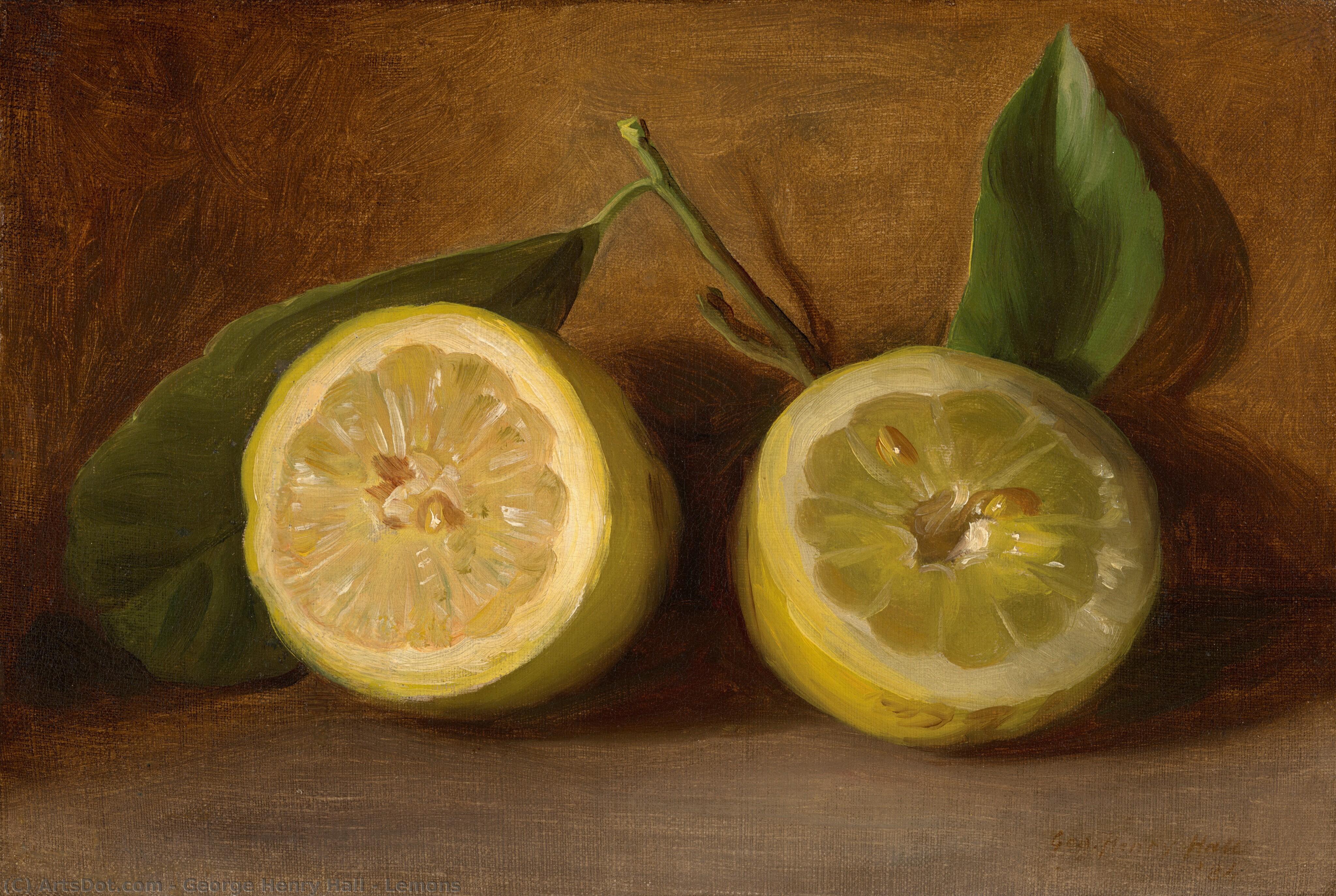
Lemons
Dimenzije reprodukcije
To step into the world of George Henry Hall is to enter a realm where time slows, and the ephemeral beauty of the natural world is captured with breathtaking permanence. Born in 1825, Hall was an artist whose life spanned the transformative decades of the nineteenth century, bridging the gap between American roots and European refinement. While his origins are often traced to Manchester, New Hampshire, and his early years were shaped by the cultural landscape of Boston, his artistic soul was forged in the great academies of Europe. His journey took him through the prestigious studios of Düsseldorf and Paris, allowing him to absorb the rigorous technical discipline of German realism and the atmospheric elegance of French painting. This international odyssey endowed his work with a unique versatility, making him one of the most respected still-life painters of his era, capable of rendering the simplest piece of fruit with the dignity of a classical masterpiece.
The essence of Hall’s artistry lies in his profound ability to marry scientific observation with Romantic sentiment. Influenced heavily by the writings of John Ruskin, Hall embraced a philosophy that sought truth in nature through meticulous detail and moral beauty. This influence is palpable in his approach to composition; he did not merely paint objects, but rather staged them within environments that felt alive and breathing. Whether he was depicting the rugged charm of a blacksmith's workshop in the Catskills or the delicate arrangement of Mediterranean flora, there is always an underlying sense of verisimilitude—a commitment to representing the world as it truly appears under the shifting play of light. His technique involved sophisticated glazing methods that allowed light to penetrate layers of oil paint, creating a luminous, inner glow that makes his peaches appear succulent and his grapes appear heavy with juice.
Hall’s oeuvre is a testament to the Victorian fascination with the tactile and the transient. He possessed an uncanny knack for capturing textures that invite the viewer to reach out and touch the canvas. In his celebrated still lifes, one can almost feel the velvet skin of a ripening peach or the cool, waxy surface of a leaf. This mastery extended beyond mere imitation; it was an exploration of symbolism and vitality. His paintings often served as celebrations of abundance and the fleeting perfection of the harvest. By placing his subjects in outdoor, natural settings rather than sterile studio interiors, he infused his still lifes with a sense of atmosphere, suggesting that these beautiful objects were part of a larger, interconnected ecosystem of light, air, and earth.
Throughout his prolific career, Hall achieved significant milestones that cemented his place in the annals of art history:
Ultimately, the historical significance of George Henry Hall resides in his ability to capture the spirit of an age. He lived through a period where the world was expanding through scientific discovery and industrial progress, yet he chose to focus his lens on the enduring, quiet wonders of the natural world. His paintings remain much more than mere records of botanical specimens; they are emotional evocations of peace, prosperity, and the sublime beauty found in the smallest details of life. Today, his works continue to enchant collectors and historians alike, serving as luminous windows into the heart of the nineteenth century.

1825 - 1913 , United Kingdom


Budite u toku sa najnovijim vestima o umetnosti, ekskluzivnim ponudama i idejama za dekoraciju.
Recite nam o vašem projektu i naši stručnjaci za umetnost će vam pružiti 3 personalizovana predloga umetničkih dela.
Dozvolite nam da odaberemo 3 opcije specijalno za Vas - Besplatno!


 Pregledaj u prostoru
 Pošalji
 Podeli
 Detalji o delu

 Преузми
 Slični predmeti
 Rendgenski snimak
 Slajdovi
 Pročitaj više




































 Opcija sa staklom dostupna je samo za dimenzije manje od 110 cm


