


x
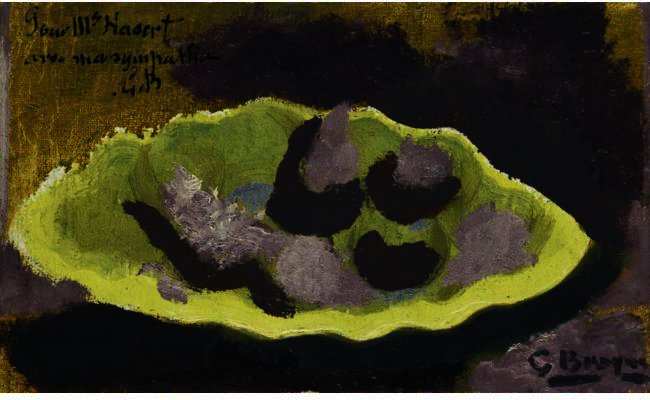
Ručno oslikano uljanim bojama na platnu u dimenzijama i okviru po vašem izboru, izrađeno po porudžbini od strane naših umetnika. ( Kupi print Kupi digitalnu sliku)





























Izaberite jednu od naših unapred definisanih veličina koje odgovaraju originalnim proporcijama umetničkog dela.

Можете унети сопствене димензије како бисте прилагодили дело одређеном оквиру или простору. Ако одабрана величина не одговара пропорцијама оригинала, слика ће бити исечена или проширена додатним елементима који се ручно насликавају. Дигитални prikaz ће вам бити послат на одобрење пре почетка производње.
Имајте на уму да преглед на екрану не одражава стварно исецање или проширење. Само приказ (mockup) ће тачно приказати коначну композицију.
Иако су доступне прилагођене величине, препоручујемо да одаберете димензију из дефинисане листе како бисте сачували оригиналне пропорције.
Isporuka širom sveta () za 3/4 nedelje umesto uobičajenih 5 nedelja. (16 август). Bez kompromisa po pitanju kvaliteta.


Dead nature
Dimenzije reprodukcije
To gaze upon Georges Braque’s “Dead Nature” is to witness a profound moment of stillness within the turbulent currents of modern art history. Created in 1930, this work serves as a masterful testament to the artist's ability to find complexity within simplicity. While at first glance the painting appears to be a humble arrangement of fruit and glass, it is, in truth, a sophisticated exploration of how we perceive the physical world. Braque does not merely present a bowl of fruit; he invites the viewer into a reconstructed reality where the boundaries between object and space begin to dissolve. For the discerning collector or interior designer, this piece offers a captivating focal point that brings an intellectual depth and a sense of timelessness to any curated space.
The composition centers on a ceramic bowl, rendered in soft greenish-yellow tones, which holds a collection of fruit that seems to pulse with a muted, internal light. Beside it, a glass vessel catches the ambient light, its transparency interrupted by the rhythmic application of paint. Braque’s mastery lies in his ability to use geometric planes—subtle cubes and cylinders—to overlap and intersect, disrupting traditional perspective. This technique, a hallmark of his Cubist evolution, forces the eye to move across the canvas, discovering new facets of form with every glance. The interplay of light and shadow is not merely decorative but structural, creating a sense of weight and presence that anchors the entire composition.
Braque’s technical prowess is most evident in his deliberate use of color and texture to evoke emotion. He moves away from the vibrant, almost aggressive palettes of his earlier Fauvist influences, opting instead for a harmonious arrangement of earthy ochres, deep umbers, and subtle creams. These muted tones create a sophisticated atmosphere that feels both grounded and ethereal. The artist employs delicate glazing techniques to build layers of depth, allowing light to seemingly trapped beneath the surface of the paint. This creates a tactile quality; one can almost feel the coolness of the glass and the matte smoothness of the ceramic bowl.
The emotional impact of “Dead Nature” is one of contemplative peace. There is no frantic movement here, only the quiet dignity of objects existing in a state of permanent repose. For those looking to decorate a sanctuary-like environment—perhaps a study, a library, or a minimalist living area—this artwork provides a sense of stability and intellectual rigor. It does not demand attention through loud colors but earns it through its nuanced textures and the subtle tension between its fragmented shapes. It is a piece that rewards slow looking, offering new layers of meaning to anyone willing to linger before its surface.
Understanding “Dead Nature” requires acknowledging the historical weight Braque carried as a pioneer of the Cubist movement. Alongside Pablo Picasso, Braque dismantled the "window onto the world" that had defined Western art since the Renaissance. He replaced it with a multidimensional experience, prioritizing how an object is known by the mind rather than just how it is seen by the eye. This painting represents a mature stage of this journey, where the radical experiments of his youth have settled into a refined, poetic language of form.
Owning a high-quality reproduction of such a seminal work allows for the integration of art history into the modern home. It is more than a decorative element; it is an invitation to participate in the dialogue of the avant-garde. Whether placed in a contemporary setting with clean lines or nestled within a classic, traditional interior, “Dead Nature” acts as a bridge between the revolutionary spirit of the early 20th century and the aesthetic sensibilities of today. It remains a profound symbol of how art can transform the mundane into the extraordinary.

Georges Braque, geboren in Argenteuil, Frankreich, im Jahr 1882, begann eine Lebensbahn tief verwurzelt in der sich entwickelnden Landschaft der modernen Kunst. Seine Kindheit innerhalb einer Familie von Hausmalern und Dekorateuren vermittelte ihm nicht nur technische Meisterschaft über Materialien, sondern auch eine frühe Wertschätzung für Form und Struktur. Obwohl er zunächst seinem Vater folgte und dessen Beruf ausübte, führten seine natürlichen künstlerischen Neigungen ihn bald zu einer Ausbildung am École des Beaux-Arts in Le Havre hinweg, wodurch sein Weg zum Erreichen eines der einflussreichsten Maler des 20. Jahrhunderts begann. Diese Grundlage – eine Mischung aus praktischem Handwerk und akademischem Studium – würde sich als entscheidend herausstellen, als er später traditionelle künstlerische Konventionen aufbrach und neu imaginierte.
Er zog im Jahr 1902 nach Paris um und setzte seine Ausbildung an der Académie Humbert fort, indem er sich in der lebhaften künstlerischen Umgebung der Stadt eintauchte. Dort lernte er Künstler wie Marie Laurencin und Francis Picabia kennen und schuf Verbindungen, die seinen frühen Entwicklungsprozess prägten. Seine ersten Arbeiten reflektierten die vorherrschenden Einflüsse von Impressionismus und Post-Impressionismus, aber ein entscheidender Begegnung mit der lebhaften Farbe und dem expressiven Freiheitsgefühl des Fauvismus im Jahr 1905 entzündete eine neue Richtung in seiner künstlerischen Erkundung.
Braques Übernahme von Fauvist Prinzipien – gekennzeichnet durch intensive, nicht natürliche Farbe und emotionale Ausdruckskraft – wird eindrucksvoll dargestellt in Gemälden wie Die Geduld. Diese Periode sah ihn bei der Arbeit mit Künstlern wie Henri Matisse und André Derain, die mit lebhaften Farbpaletten und vereinfachten Formen experimentierten. Braques Engagement mit Fauvismus war jedoch nicht nur imitativ; er infundierte es mit einer einzigartigen Sensibilität und ließ damit die ungezügelte Ekstase der Bewegung mit einem ausgeglicheneren und analytischeren Ansatz maßstabieren.
Ein Wendepunkt gelang ihm im Jahr 1907 durch seine Begegnung mit der Retrospektive Ausstellung von Paul Cézannes Werk. Cézannes Betonung geometrischer Formen und mehrfacher Perspektiven hatte tiefgreifenden Einfluss auf Braque und bereitete den Weg für seine bahnbrechende Zusammenarbeit mit Pablo Picasso vor. Seit 1908 begannen diese beiden künstlerischen Titanen eine intensive intellektuelle Begegnung, die zur Geburt von Kubismus führte – einer revolutionären Bewegung, die traditionelle Vorstellungen von Darstellung zerstörte.
Gemeinsam entwickelten Braque und Picasso Analytical Cubism, indem sie Objekte in fragmentierte geometrische Formen zerteilten und mehrere Perspektiven gleichzeitig präsentierten. Werke wie Haus Nr. L'Estaque demonstrieren diese frühe Phase und zeigen damit einen radikalen Bruch mit konventioneller Perspektive und eine Fokussierung auf die zugrunde liegende Struktur von Formen.
Die Zusammenarbeit zwischen Braque und Picasso setzte sich fort und drängte die Grenzen künstlerischen Ausdrucks hinaus, was zur Entwicklung von Synthetischem Kubismus um 1912 führte. Diese Phase brachte die Einführung von Collage ein – die Aufnahme echter Weltmaterialien wie Zeitungsartikel, Tapeten und Stoff in Gemälde. Diese Innovation stellte die hierarchische Beziehung zwischen Malerei und Bildhauerei in Frage und verschwärte die Grenzen zwischen Kunst und Leben.
Braques Pionierarbeit mit *papier collé* (pasted paper) markierte einen bedeutenden Wendepunkt in seiner künstlerischen Entwicklung. Indem er Fragmente alltäglicher Objekte in seine Kompositionen integrierte, störte er den illusionistischen Raum traditioneller Malerei und brachte damit eine neue Ebene der Materialität und Textur hervor. Diese Technik erweiterte nicht nur die formalen Möglichkeiten von Kunst, sondern spiegelte auch ein wachsendes Interesse an der Beziehung zwischen Darstellung und Realität wider.
Die Ausbruch des Ersten Weltkriegs im Jahr 1914 unterbrach diese intensive Zusammenarbeit, als Braque zum Militärdienst verpflichtet wurde. Seine Kriegserfahrungen prägten seine künstlerische Vision tiefgreifend und führten ihn dazu, persönlichere und lyrische Themen in seinen Nachkriegsarbeiten zu erkunden.
Nach dem Krieg entwickelte sich Braques Stil über die engen Grenzen von Kubismus hinaus und integrierte Elemente klassischer Komposition und ein erneutes Interesse an Landschaftsgemälden. Während er die geometrischen Einflüsse bewahrte, die seine frühere Arbeit definiert hatten, entwickelte er einen nuancierteren und kontemplativeren Ansatz zum Malen. Seine späteren Landschaften und Innenräume zeichnen sich durch ihre ruhige Atmosphäre und subtile Harmonie von Farbe aus.
Er blieb seinen gesamten Karriere über seinem Ziel verpflichtet, die grundlegenden Prinzipien von Form, Raum und Darstellung zu erforschen. Er experimentierte weiterhin mit verschiedenen Materialien und Techniken und drängte damit die Grenzen künstlerischen Ausdrucks bis zu seinem Tod im Jahr 1963.
Braques Vermächtnis geht über seine einzelnen Gemälde hinaus; er veränderte grundlegend unser Verständnis davon, wie wir die Welt um uns herum wahrnehmen und darstellen. Seine Zusammenarbeit mit Picasso, geprägt von seinem einzigartigen künstlerischen Blickwinkel sowie seinem eigenen Mut zur Herausforderung von Konventionen und zum Neuwirken der Möglichkeiten von Malerei festigte seinen Platz als echter Pionier moderner Kunst – ein Meister, der sich nicht scheute, Traditionen aufzubrüchen und die Entwicklung der modernen Kunst zu prägen.
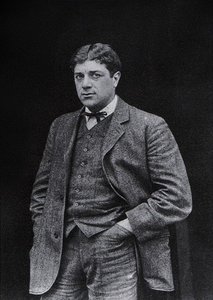
1882 - 1963 , Франција

Explore the revolutionary world of Cubism. Discover how Pablo Picasso and Georges Braque dismantled perspective to redefine modern art through geometric innovation and analytical mastery. An essential guide for art students, collectors, and history enthusiasts.

Explore the revolutionary world of Cubism. Discover how masters Pablo Picasso and Georges Braque dismantled reality through geometric abstraction to redefine modern art history.

Master the complexities of Cubism with our expert guide. Explore how Picasso and Braque revolutionized modern art through fragmentation, multiple perspectives, and geometric innovation. Perfect for art students and collectors seeking deep historical insight.

Explore the revolutionary world of Cubism. From Picasso's analytical deconstruction to Braque's geometric forms, master the history of fragmentation and modern art through this expert guide for students and collectors.

Explore the revolutionary evolution of Cubist still life. From deconstructed forms to the mastery of Braque and Picasso, discover how this movement redefined modern art through an expert historical lens.


Budite u toku sa najnovijim vestima o umetnosti, ekskluzivnim ponudama i idejama za dekoraciju.
Recite nam o vašem projektu i naši stručnjaci za umetnost će vam pružiti 3 personalizovana predloga umetničkih dela.
Dozvolite nam da odaberemo 3 opcije specijalno za Vas - Besplatno!


 Pregledaj u prostoru
 Pošalji
 Podeli
 Detalji o delu

 Преузми
 Slični predmeti
 Rendgenski snimak
 Slajdovi

 Pročitaj više







 Opcija sa staklom dostupna je samo za dimenzije manje od 110 cm


