x

 1463
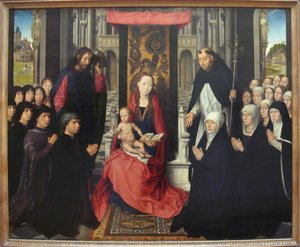
1463 154.0 x 43.0 cm
 Pinacoteca di Brera
Kupite digitalnu sliku visoke rezolucije i poboljšanog kvaliteta, koja je znatno superiornija od onoga što vidite u online prikazu.
Svaka datoteka je pedantno pripremljena od strane naših stručnjaka koristeći napredne alate i profesionalnu ručnu retušu. Osiguravamo da svaka slika ima izuzetnu oštrinu, preciznu reprodukciju boja i fine detalje.
Konačna datoteka se dostavlja putem e-pošte u roku od 72 sata, optimizovana za neposrednu upotrebu u profesionalnim, izdavačkim i štamparskim okruženjima. To je isti kvalitet kojem veruju vrhunski studiji dizajna, izdavači i galerije.
Preuzmite datoteku visoke rezolucije za ličnu upotrebu, štampanje i kreativne projekte. ( Kupi print Kupi ručno naslikanu sliku)
Kada odaberete Most-Famous-Paintings.com, ne dobijate samo sliku – vi primate profesionalno unapređeno digitalno umetničko delo, izrađeno sa najvećom preciznošću i uz garanciju zadovoljstva. Evo svega što automatski dolazi uz vašu porudžbinu:

Vaša digitalna slika visoke rezolucije biće vam poslata putem e-pošte u roku od 72 sata od poručivanja – spremna za trenutnu upotrebu.

Vaše umetničko delo je profesionalno optimizovano korišćenjem naprednih AI alata i ručne obrade, čime se osiguravaju maksimalni detalji, oštrina i preciznost boja.

Slučajno ste obrisali ili izgubili svoju datoteku? Ne brinite – poslaćemo vam je ponovo u bilo kom trenutku, potpuno besplatno.

Uživajte u svojim umetničkim delima trenutno, bez carine, dažbina ili troškova dostave – digitalni download je uvek bez poreza.

Uz pomoć profesionalnih alata i upravljanja bojama, osiguravamo da vaša digitalna slika što vernije odražava originalne boje.

Ako niste zadovoljni svojom digitalnom slikom, revidirat ćemo je ili vratiti 100% novca u roku od 60 dana – bez ikakvih pitanja.

Niste zadovoljni? Obezbedite pun povrat novca u roku od 60 dana od trenutka kada ste primili svoju digitalnu datoteku – bez suvišnih pitanja.

Kupite 3 slike, uštedite 10% - Kupite 5 slika, uštedite 15% - Kupite 10+ slika, uštedite 20%. Odlično za kreativne projekte, galerije i agencije.

John Michael Wright, a name often relegated to the footnotes of 17th-century English art history, emerges as a remarkably sophisticated and subtly powerful portraitist. Born in London around 1617 – though his precise origins remain tantalizingly debated – Wright’s life was a tapestry woven with threads of Scottish heritage, Roman artistic influence, and a complex engagement with the volatile political landscape of Restoration England. His work, characterized by an intimate realism and a profound understanding of human psychology, deserves renewed attention as a significant voice within a period dominated by the flamboyant style of Sir Peter Lely.
Wright’s early training unfolded in Edinburgh under the tutelage of George Jamesone, a Scottish painter who instilled in him a foundational knowledge of composition and technique. However, it was his extended sojourn in Rome that truly shaped his artistic vision. Admitted to the prestigious Accademia di San Luca in 1648, Wright immersed himself in the vibrant art scene of the Italian capital, absorbing the techniques of masters like Caravaggio and studying the classical ideals of Renaissance portraiture. This Roman period wasn’t merely a vacation; it was a deliberate investment in his artistic development, providing him with a critical understanding of light, shadow, and the nuances of human expression – elements he would later masterfully employ in his English portraits.
Returning to England in 1656, Wright quickly established himself as a sought-after portraitist, attracting patronage from both Protestant and Catholic circles. This period coincided with the tumultuous years of the Interregnum and the subsequent Restoration, creating a uniquely challenging environment for an artist navigating religious and political divisions. Wright’s ability to secure commissions from figures across the spectrum – including prominent Catholics like Charles II and James II – speaks volumes about his diplomatic skill and his capacity to transcend sectarian boundaries through his art.
His style diverged subtly from Lely's more overtly polished aesthetic. While Lely favored a glamorous, idealized representation of his subjects, Wright’s portraits possessed a greater sense of introspection and psychological depth. His sitters often appear thoughtful, engaged in private contemplation – a marked contrast to the carefully constructed smiles prevalent in many contemporary portraits. This subtle shift reflects a growing interest in capturing not just outward appearances but also the inner lives of his subjects.
Wright’s artistic development was profoundly influenced by the principles of Baroque painting, particularly as he encountered them during his time in Rome. The dramatic use of chiaroscuro – the interplay of light and shadow – became a defining characteristic of his work, lending depth and intensity to his portraits. He skillfully employed tenebrism, creating strong contrasts between illuminated areas and deep shadows, which heightened the drama and focused attention on key features of the subject’s face and expression. Furthermore, Wright's compositions often featured dynamic arrangements of figures and objects, reflecting a Baroque emphasis on movement and theatricality.
His engagement with the Accademia di San Luca also exposed him to contemporary Italian artists, including Rubens and Van Dyck, whose techniques he subtly incorporated into his own style. This cross-cultural fertilization resulted in a portraiture that was both distinctly English and infused with the sophistication of European artistic trends.
Despite facing periods of relative obscurity following his death in 1681, John Michael Wright’s work has been increasingly recognized for its remarkable realism and psychological insight. His portraits offer a rare glimpse into the inner lives of his subjects, revealing their thoughts, emotions, and personalities with subtle yet profound accuracy. Works like “Portrait of Mrs. Salesbury with her Grandchildren” exemplify this ability to capture not just physical likeness but also the complex relationships between individuals.
Today, Wright’s paintings are treasured within collections worldwide, serving as a testament to his artistic skill and his enduring contribution to the history of English portraiture. Further research continues to shed light on the complexities of his life and career, solidifying his place as a significant, though often overlooked, figure in the art world.

1617 - 1666 , Italy


Budite u toku sa najnovijim vestima o umetnosti, ekskluzivnim ponudama i idejama za dekoraciju.
Recite nam o vašem projektu i naši stručnjaci za umetnost će vam pružiti 3 personalizovana predloga umetničkih dela.
Dozvolite nam da odaberemo 3 opcije specijalno za Vas - Besplatno!


 Pregledaj u prostoru
 Pošalji
 Podeli
 Detalji o delu

 Преузми
 Slični predmeti
 Rendgenski snimak
 Slajdovi
 Pročitaj više