


x

 Kupi štampu Kupi digitalnu sliku
 Pošalji
 Detalji o delu
 Dodaj u omiljene
 Преузми
 Slični predmeti
 Rendgenski snimak
 Slajdovi
 Oil On CanvasWallArtRealist Observation
 1865
1865 27.0 x 21.0 cm
 Metropolitan Museum of Art
Ručno oslikano uljanim bojama na platnu u dimenzijama i okviru po vašem izboru, izrađeno po porudžbini od strane naših umetnika.





























Izaberite jednu od naših unapred definisanih veličina koje odgovaraju originalnim proporcijama umetničkog dela.

Можете унети сопствене димензије како бисте прилагодили дело одређеном оквиру или простору. Ако одабрана величина не одговара пропорцијама оригинала, слика ће бити исечена или проширена додатним елементима који се ручно насликавају. Дигитални prikaz ће вам бити послат на одобрење пре почетка производње.
Имајте на уму да преглед на екрану не одражава стварно исецање или проширење. Само приказ (mockup) ће тачно приказати коначну композицију.
Иако су доступне прилагођене величине, препоручујемо да одаберете димензију из дефинисане листе како бисте сачували оригиналне пропорције.
Isporuka širom sveta () za 3/4 nedelje umesto uobičajenih 5 nedelja. (18 јул). Bez kompromisa po pitanju kvaliteta.


Two Men
Dimenzije reprodukcije
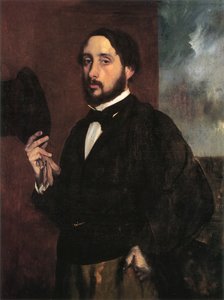
Edgar Degas's "Two Men," painted in 1865, isn’t merely a depiction of two figures; it’s a carefully constructed tableau brimming with unspoken narratives and the quiet observation that defined the artist’s unique approach to painting. Often considered a pivotal work in his oeuvre, this piece reveals Degas’s fascination with capturing candid moments – individuals caught in their everyday routines, revealing glimpses into their personalities and the atmosphere of their surroundings. The scene, likely situated within an artist's studio, immediately draws the viewer in with its muted palette and the palpable sense of a shared, yet private, conversation.
The painting’s composition is deliberately asymmetrical. The man on the right, seated and partially turned away, exudes a certain reserve, perhaps even weariness. His posture suggests contemplation or perhaps simply the burden of artistic endeavor. Conversely, the figure standing before us—the identity of whom remains tantalizingly unknown – possesses an openness, his gaze directed squarely at the viewer. This directness creates an immediate connection, inviting speculation about their relationship and the subject of their discussion. Degas masterfully uses this contrast to generate a dynamic tension within the frame, suggesting a complex interplay between observation and engagement.
Degas’s distinctive style is immediately apparent in “Two Men.” He eschews the smooth, polished surfaces favored by many of his contemporaries, opting instead for loose, expressive brushstrokes that imbue the painting with a remarkable sense of movement. The paint isn't blended; rather, it’s applied in visible dabs and dashes, creating an almost tactile quality to the surface. This technique perfectly captures the fleeting nature of the moment – the suggestion of conversation, the rustle of clothing, the play of light on skin. The artist’s use of color is equally deliberate, relying on a restrained palette of earthy tones—ochres, browns, and grays—that contribute to the painting's somber mood and reinforce its sense of realism.
Notably, Degas employed oil paint on wood panel, a medium that allowed for both textural richness and a subtle sheen. The way light reflects off the surface reveals the artist’s meticulous attention to detail, highlighting the textures of fabric and the contours of the figures' faces. The visible brushwork isn’t simply an aesthetic choice; it’s integral to conveying the immediacy and spontaneity of the scene.
“Two Men” offers a valuable window into the artistic milieu of 19th-century Paris. The setting, likely Degas's studio, was a hub for creative exchange—a space where artists gathered to discuss ideas, critique each other’s work, and simply observe the world around them. The presence of Émile Lévy, a student at the French Academy in Rome when Degas met him, adds another layer of historical context. This encounter likely fueled Degas's interest in portraying figures engaged in intellectual pursuits – a recurring theme throughout his career.
Beyond its biographical details, the painting speaks to a broader cultural shift. Degas’s focus on everyday life and ordinary people represented a departure from the grand historical narratives favored by earlier generations of artists. He sought to capture the essence of modern existence—the complexities of human interaction, the rhythms of daily routine, and the subtle nuances of personality.
Despite its apparent simplicity, “Two Men” possesses a profound emotional resonance. The painting’s quiet intimacy invites viewers to contemplate the unspoken connections between individuals—the shared experiences that shape our lives and the mysteries that lie beneath the surface of everyday interactions. The ambiguity surrounding the figures' identities further enhances this effect, prompting us to project our own interpretations onto the scene.
A hand-painted reproduction of “Two Men” by Most-Famous-Paintings.com offers a remarkable opportunity to bring this captivating artwork into your home or office. The meticulous detail and vibrant colors faithfully recreate Degas’s original vision, allowing you to appreciate the artist's genius and immerse yourself in the atmosphere of his Parisian studio. It is more than just a painting; it’s a portal to another time, a testament to the enduring power of observation, and a celebration of the beauty found in the ordinary.

1834 - 1917 , Француска
Istražite 25 remek-dela Paula Cézanna, revolucionarnog slikara impresionizma i postimpresionizma. Otkrijte priče iza ikoničnih pejzaža, portreta i mrtve prirode. Kupite luksuzne reprodukcije slika na Most-Famous-Paintings.com!

Explore 10 iconic portrait paintings – from Mona Lisa to Van Gogh’s self-portraits. Discover the stories behind these masterpieces, artistic techniques & find museum-quality art reproductions for your home at Most-Famous-Paintings.com.

Uronite u svet Claudea Moneta sa 25 remek-dela impresionizma! Otkrijte priče iza poznatih slika, tehnike i inspiraciju. Reprodukcije vrhunskog kvaliteta za luksuzni dekor doma na Most-Famous-Paintings.com.
Explore 10 iconic gray paintings by masters like Rembrandt, Hopper & Whistler. Discover the stories behind these atmospheric artworks and find museum-quality art reproductions for your home decor at . Explore the full collection online.
Explore 25 captivating portraits by Sir Joshua Reynolds, a master of British art. Discover stories behind his iconic paintings, elegant style & historical influence. Find museum-quality reproductions and elevate your home decor on Most-Famous-Paintings.com.


Budite u toku sa najnovijim vestima o umetnosti, ekskluzivnim ponudama i idejama za dekoraciju.
Recite nam o vašem projektu i naši stručnjaci za umetnost će vam pružiti 3 personalizovana predloga umetničkih dela.
Dozvolite nam da odaberemo 3 opcije specijalno za Vas - Besplatno!


 Podeli

 Pročitaj više







 Opcija sa staklom dostupna je samo za dimenzije manje od 110 cm


