


x
Kupite digitalnu sliku visoke rezolucije i poboljšanog kvaliteta, koja je znatno superiornija od onoga što vidite u online prikazu.
Svaka datoteka je pedantno pripremljena od strane naših stručnjaka koristeći napredne alate i profesionalnu ručnu retušu. Osiguravamo da svaka slika ima izuzetnu oštrinu, preciznu reprodukciju boja i fine detalje.
Konačna datoteka se dostavlja putem e-pošte u roku od 72 sata, optimizovana za neposrednu upotrebu u profesionalnim, izdavačkim i štamparskim okruženjima. To je isti kvalitet kojem veruju vrhunski studiji dizajna, izdavači i galerije.
Preuzmite datoteku visoke rezolucije za ličnu upotrebu, štampanje i kreativne projekte. ( Kupi print Kupi ručno naslikanu sliku)
Kada odaberete Most-Famous-Paintings.com, ne dobijate samo sliku – vi primate profesionalno unapređeno digitalno umetničko delo, izrađeno sa najvećom preciznošću i uz garanciju zadovoljstva. Evo svega što automatski dolazi uz vašu porudžbinu:

Vaša digitalna slika visoke rezolucije biće vam poslata putem e-pošte u roku od 72 sata od poručivanja – spremna za trenutnu upotrebu.

Vaše umetničko delo je profesionalno optimizovano korišćenjem naprednih AI alata i ručne obrade, čime se osiguravaju maksimalni detalji, oštrina i preciznost boja.

Slučajno ste obrisali ili izgubili svoju datoteku? Ne brinite – poslaćemo vam je ponovo u bilo kom trenutku, potpuno besplatno.

Uživajte u svojim umetničkim delima trenutno, bez carine, dažbina ili troškova dostave – digitalni download je uvek bez poreza.

Uz pomoć profesionalnih alata i upravljanja bojama, osiguravamo da vaša digitalna slika što vernije odražava originalne boje.

Ako niste zadovoljni svojom digitalnom slikom, revidirat ćemo je ili vratiti 100% novca u roku od 60 dana – bez ikakvih pitanja.

Niste zadovoljni? Obezbedite pun povrat novca u roku od 60 dana od trenutka kada ste primili svoju digitalnu datoteku – bez suvišnih pitanja.

Kupite 3 slike, uštedite 10% - Kupite 5 slika, uštedite 15% - Kupite 10+ slika, uštedite 20%. Odlično za kreativne projekte, galerije i agencije.

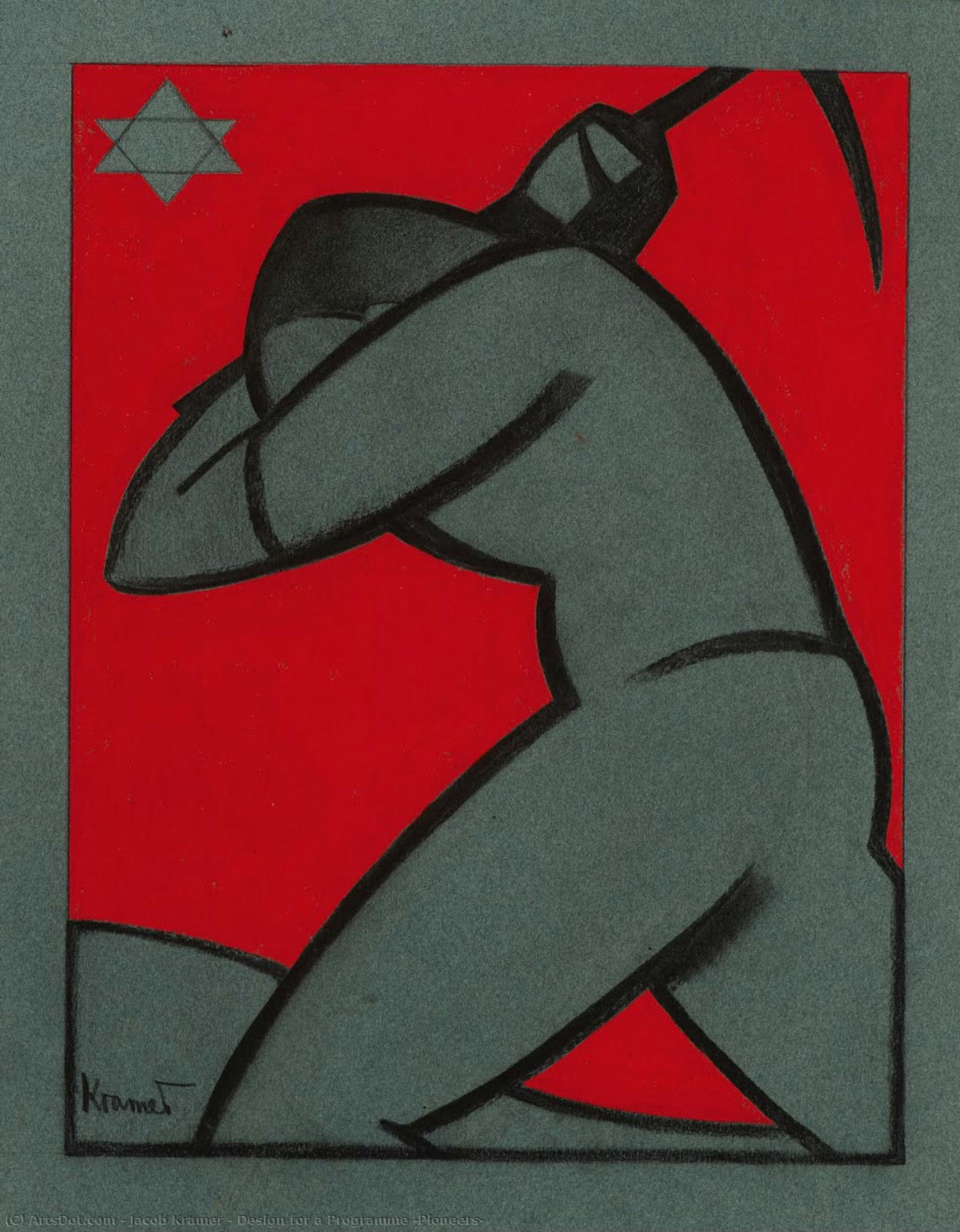
The story of Jacob Kramer is one of profound movement, a journey that began in the heart of Ukraine and found its spiritual and artistic anchor in the industrial landscapes of England. Born in 1892 in Klyntsi to a middle-class Jewish family, Kramer’s early years were steeped in a rich cultural tapestry. His father, Max Kramer, was an accomplished painter, and his mother, Cecilia, was a gifted performer of Slavic and Hebrew folk songs. This lineage of creativity provided the fertile soil from which Jacob’s talent would grow. When the family migrated to Leeds in 1900, the young artist brought with him a heritage that would forever inform the emotional depth and spiritual resonance of his work. His early life was not merely a period of settling into a new land, but a foundational era where the echoes of Eastern European tradition met the burgeoning modernism of the British art scene.
Kramer’s artistic evolution was shaped by a series of pivotal encounters and educational milestones that propelled him toward the vanguard of modern art. After attending evening classes at the Manchester School of Art, he returned to Leeds to study at the Leeds School of Art, where his talent was quickly recognized with prestigious scholarships. However, it was his involvement with the radical Leeds Arts Club that truly ignited his creative spirit. This influential circle exposed him to the revolutionary ideas of Expressionism and the profound spiritual concepts championed by masters like Wassily Kandinsky. His education continued at the Slade School of Fine Art in London, where he moved within a circle of legendary figures such as David Bomberg and Mark Gertler. These connections placed him at the heart of the Vorticist movement and the broader modernist dialogue, allowing him to weave together the raw energy of contemporary movements with his own deeply personal, introspective vision.
To encounter a painting by Jacob Kramer is to enter a world where color serves as a direct conduit for the soul. His technique was characterized by a bold, rhythmic use of pigment and a dynamic brushwork that felt both controlled and spontaneous. Eschewing mere imitation of reality, Kramer sought to capture the underlying emotional truth of his subjects. Whether he was rendering a quiet still life, a rugged landscape, or an intimate portrait, there was always a palpable sense of contemplation and movement. His canvases often pulsated with a vibrant intensity, utilizing thick applications of paint to create texture that mirrored the complexity of human emotion. This expressive approach allowed him to bridge the gap between the physical world and a higher spiritual plane, making his work a testament to the power of Expressionism in the British tradition.
The themes within his oeuvre often reflected a delicate balance between beauty and melancholy. His ability to infuse even the most mundane subjects with a sense of cosmic significance is perhaps best exemplified in his celebrated works held in prestigious collections like the Yale University Art Gallery. In pieces such as “Manikin in the Snow,” one can witness his mastery of atmosphere—the way he uses light and shadow to evoke a sense of isolation and quiet wonder. His work was never static; it was an ongoing quest to find the sacred within the secular, the eternal within the ephemeral. This spiritual quest, deeply rooted in his Jewish heritage and his exposure to modern mysticism, gave his art a unique gravity that set him apart from many of his contemporaries.
The historical significance of Jacob Kramer lies in his role as a vital bridge between diverse cultural influences and the development of Modern British Art. He was not merely a participant in the movements of his time, such as Vorticism or the London Group, but an artist who synthesized these disparate elements into a cohesive, personal language. His career, marked by solo exhibitions in London and Bradford, demonstrated a resilience and a commitment to artistic integrity that commanded respect across the art world. Even as he navigated the complexities of the twentieth century, his focus remained steadfast on the expressive potential of his medium.
Today, Kramer’s legacy is preserved through his presence in the most esteemed institutions in the world, including the Tate and the National Portrait Gallery. His contributions are recognized not just for their aesthetic brilliance, but for their role in expanding the boundaries of what British art could achieve. He remains an exemplar of how an artist can take the fragments of a displaced life—the memories of Ukraine, the grit of Leeds, and the intellectual rigor of London—and forge them into a singular, timeless vision that continues to resonate with viewers seeking depth, color, and soul.

1892 - 1962 , Ukraine


Budite u toku sa najnovijim vestima o umetnosti, ekskluzivnim ponudama i idejama za dekoraciju.
Recite nam o vašem projektu i naši stručnjaci za umetnost će vam pružiti 3 personalizovana predloga umetničkih dela.
Dozvolite nam da odaberemo 3 opcije specijalno za Vas - Besplatno!


 Pregledaj u prostoru
 Pošalji
 Podeli
 Detalji o delu

 Преузми
 Slični predmeti
 Rendgenski snimak
 Slajdovi
 Pročitaj više


