x

Ručno oslikano uljanim bojama na platnu u dimenzijama i okviru po vašem izboru, izrađeno po porudžbini od strane naših umetnika. ( Kupi print Kupi digitalnu sliku)





























Izaberite jednu od naših unapred definisanih veličina koje odgovaraju originalnim proporcijama umetničkog dela.

Можете унети сопствене димензије како бисте прилагодили дело одређеном оквиру или простору. Ако одабрана величина не одговара пропорцијама оригинала, слика ће бити исечена или проширена додатним елементима који се ручно насликавају. Дигитални prikaz ће вам бити послат на одобрење пре почетка производње.
Имајте на уму да преглед на екрану не одражава стварно исецање или проширење. Само приказ (mockup) ће тачно приказати коначну композицију.
Иако су доступне прилагођене величине, препоручујемо да одаберете димензију из дефинисане листе како бисте сачували оригиналне пропорције.
Isporuka širom sveta () za 3/4 nedelje umesto uobičajenih 5 nedelja. (17 август). Bez kompromisa po pitanju kvaliteta.


Portrait de Dario de Regoyos
Dimenzije reprodukcije
James Ensor (1860-1949), a titan amongst Belgian artists, stands as a pivotal figure in the burgeoning Expressionist movement. His oeuvre is characterized by unsettling imagery and psychological depth—a stark contrast to the polished surfaces of academic painting—and “Portrait of Dario de Regoyos” exemplifies this distinctive aesthetic perfectly. Painted circa 1884, this artwork transcends mere representation; it’s a deliberate provocation designed to unsettle the viewer and invite contemplation on themes of identity, anxiety, and the complexities of human experience.
Ensor’s artistic preoccupation with masks is evident throughout his work, and “Portrait of Dario de Regoyos” is no exception. The guitar itself can be interpreted as a symbol of creativity and performance, but also as a barrier—a mask concealing vulnerability beneath a veneer of composure. Furthermore, the presence of two additional figures adds to this symbolic dimension. They represent unseen forces shaping human relationships and highlighting the anxieties inherent in social interaction.
The muted palette – predominantly browns and ochres – reinforces the painting’s melancholic mood. Ensor deliberately avoids vibrant hues, opting for tones that convey a sense of isolation and repression. This stylistic choice underscores the artist's desire to portray not just what is seen but also what lies beneath the surface—the hidden emotions and psychological burdens carried by his subjects.
"Portrait of Dario de Regoyos" isn’t simply a depiction of a musician; it's an exploration of the human condition. Ensor compels us to confront uncomfortable truths about identity, performance, and the masks we wear in social contexts. The painting lingers in the mind long after viewing, prompting reflection on the anxieties that permeate everyday life.
Its enduring appeal lies in its ability to capture a profound psychological state—a quiet contemplation punctuated by subtle hints of unease. Ensor’s masterful technique—particularly his impasto – invites tactile engagement and reinforces the painting's emotional intensity. Reproductions of this artwork offer an opportunity to experience the unsettling beauty of Expressionist art firsthand.

James Sidney Edouard, Baron Ensor (Ostend, 13 April 1860 – 19 November 1949) was a Belgian painter and printmaker who stands as one of the most influential figures in the development of Expressionism and Surrealism. Born into an English father and Belgian mother amidst the vibrant atmosphere of Ostend’s seaside resort town, Ensor’s upbringing instilled within him a profound fascination with observation and detail—a foundation upon which he would construct his distinctive artistic vision.
From a young age, Ensor demonstrated an exceptional talent for drawing and painting. Encouraged by his parents' operation of a souvenir shop brimming with curiosities and carnival masks – a veritable cabinet of wonders that ignited his imagination – he pursued formal artistic training at the Académie Royale des Beaux-Arts in Brussels. Despite encountering resistance from the rigid academic conventions of the time, Ensor quickly recognized the necessity of forging his own path, prioritizing experimentation and personal expression above all else.
Around 1886–87, Ensor embarked on a transformative artistic journey, rejecting Impressionistic ideals in favor of a bold embrace of grotesque imagery. Influenced by Rembrandt’s masterful use of chiaroscuro, the unsettling visions of Francisco Goya, and the evocative symbolism of Japanese woodcuts, he developed a highly personal iconography characterized by jarring juxtapositions of color and form.
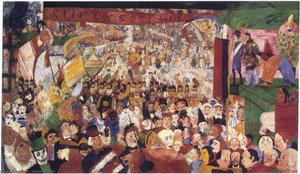
Ensor's oeuvre is marked by an unparalleled exploration of psychological complexity and social critique. Paintings like *The Oyster-eater* (1882) exemplify his meticulous attention to detail and his ability to convey profound emotional resonance, while *Christ’s Entry into Brussels* (1888–89), arguably his magnum opus, remains a monumental satire of religious hypocrisy—a painting initially met with vehement disapproval but now universally recognized as a cornerstone of Expressionist art.
James Ensor's uncompromising artistic vision profoundly impacted subsequent generations of artists. His rejection of academic formalism, coupled with his fearless confrontation of taboo subjects and his masterful manipulation of visual language—particularly the use of bold brushstrokes and vibrant hues—established him as a pivotal figure in the genesis of Expressionism and Surrealism. Today, Ensor’s work continues to inspire awe and provoke contemplation, serving as a timeless reminder that art possesses the capacity to unsettle conventions and illuminate the darkest recesses of human consciousness.

1860 - 1949 , Бележија

Explore the profound history of Expressionism. From Edvard Munch to Jackson Pollock, discover how artists used distortion and color to convey raw emotion. A definitive guide for art lovers seeking deep historical context and mastery in fine art reproductions.


Budite u toku sa najnovijim vestima o umetnosti, ekskluzivnim ponudama i idejama za dekoraciju.
Recite nam o vašem projektu i naši stručnjaci za umetnost će vam pružiti 3 personalizovana predloga umetničkih dela.
Dozvolite nam da odaberemo 3 opcije specijalno za Vas - Besplatno!


 Pregledaj u prostoru
 Pošalji
 Podeli
 Detalji o delu

 Преузми
 Slični predmeti
 Rendgenski snimak
 Slajdovi
 Pročitaj više







 Opcija sa staklom dostupna je samo za dimenzije manje od 110 cm