x
Ručno oslikano uljanim bojama na platnu u dimenzijama i okviru po vašem izboru, izrađeno po porudžbini od strane naših umetnika. ( Pređi na štampu Prebacite na sliku)





























Izaberite jednu od naših unapred definisanih veličina koje odgovaraju originalnim proporcijama umetničkog dela.

Можете унети сопствене димензије како бисте прилагодили дело одређеном оквиру или простору. Ако одабрана величина не одговара пропорцијама оригинала, слика ће бити исечена или проширена додатним елементима који се ручно насликавају. Дигитални prikaz ће вам бити послат на одобрење пре почетка производње.
Имајте на уму да преглед на екрану не одражава стварно исецање или проширење. Само приказ (mockup) ће тачно приказати коначну композицију.
Иако су доступне прилагођене величине, препоручујемо да одаберете димензију из дефинисане листе како бисте сачували оригиналне пропорције.
Isporuka širom sveta () za 3/4 nedelje umesto uobičajenih 5 nedelja. (10 август). Bez kompromisa po pitanju kvaliteta.


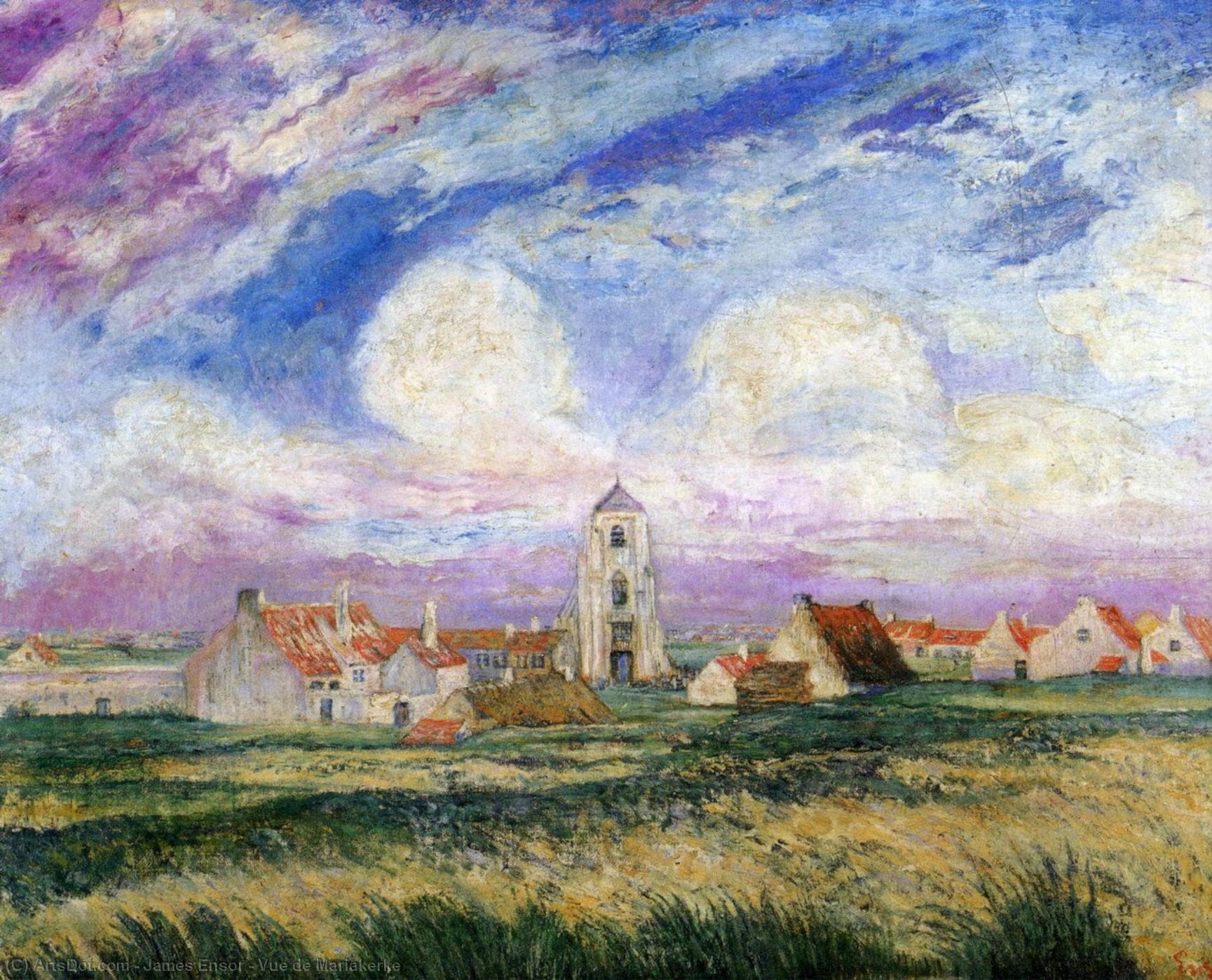
Vue de Mariakerke
Dimenzije reprodukcije
James Ensor's Vue de Mariakerke, a captivating depiction of the Flemish village nestled beside the North Sea, is more than just a picturesque landscape; it’s a profound meditation on identity, anxiety, and the unsettling nature of reality. Painted in approximately 1920, this work exemplifies Ensor’s unique artistic vision – a world steeped in symbolism, psychological depth, and a deliberate rejection of conventional academic styles. The scene itself is deceptively tranquil: a small village centered around its church, framed by a dramatic sky pregnant with brooding clouds. Yet, beneath the surface of this seemingly idyllic composition lies a palpable sense of unease, characteristic of Ensor’s oeuvre.
Born in 1860 into an unusual family—his father English and his mother Belgian—James Ensor's life was profoundly shaped by this dual heritage. This background fueled his lifelong preoccupation with themes of disguise, duality, and the hidden aspects of human nature. His childhood spent amidst the vibrant chaos of Ostend’s seaside resort town, coupled with his parents’ souvenir shop filled with masks and curiosities, provided a rich visual vocabulary that would inform his artistic explorations. Ensor's early struggles with academic training – he initially resisted traditional approaches before eventually studying at the Académie Royale des Beaux-Arts in Brussels – highlight his determination to forge his own path, one defined by emotional intensity and symbolic resonance.
Vue de Mariakerke is not simply a representation of a village; it’s an emotional landscape rendered in paint. The painting's power lies in its ability to evoke a sense of melancholy, apprehension, and perhaps even a touch of horror. Ensor was a master of manipulating the viewer’s emotions through color, composition, and subject matter. This work demonstrates his skill at creating a scene that is both beautiful and deeply unsettling, inviting contemplation on the darker aspects of human existence. Ensor's influence extends far beyond the Belgian art world, impacting movements such as Expressionism and Surrealism. A hand-painted reproduction of *Vue de Mariakerke* offers an unparalleled opportunity to experience the full force of Ensor’s artistic vision – a testament to his enduring legacy as one of the most original and challenging artists of the 20th century.
This stunning reproduction captures the essence of Ensor's unique style, making it an ideal addition to any art collection or interior design scheme. The textured surface and evocative imagery will bring a touch of artistic drama to your space, while its historical significance adds a layer of intellectual depth. Most-Famous-Paintings offers museum-quality reproductions meticulously crafted by skilled artisans, ensuring that you receive a faithful representation of this iconic artwork.
James Sidney Edouard, Baron Ensor (Ostend, 13 April 1860 – 19 November 1949) was a Belgian painter and printmaker who stands as one of the most influential figures in the development of Expressionism and Surrealism. Born into an English father and Belgian mother amidst the vibrant atmosphere of Ostend’s seaside resort town, Ensor’s upbringing instilled within him a profound fascination with observation and detail—a foundation upon which he would construct his distinctive artistic vision.
From a young age, Ensor demonstrated an exceptional talent for drawing and painting. Encouraged by his parents' operation of a souvenir shop brimming with curiosities and carnival masks – a veritable cabinet of wonders that ignited his imagination – he pursued formal artistic training at the Académie Royale des Beaux-Arts in Brussels. Despite encountering resistance from the rigid academic conventions of the time, Ensor quickly recognized the necessity of forging his own path, prioritizing experimentation and personal expression above all else.
Around 1886–87, Ensor embarked on a transformative artistic journey, rejecting Impressionistic ideals in favor of a bold embrace of grotesque imagery. Influenced by Rembrandt’s masterful use of chiaroscuro, the unsettling visions of Francisco Goya, and the evocative symbolism of Japanese woodcuts, he developed a highly personal iconography characterized by jarring juxtapositions of color and form.
Ensor's oeuvre is marked by an unparalleled exploration of psychological complexity and social critique. Paintings like *The Oyster-eater* (1882) exemplify his meticulous attention to detail and his ability to convey profound emotional resonance, while *Christ’s Entry into Brussels* (1888–89), arguably his magnum opus, remains a monumental satire of religious hypocrisy—a painting initially met with vehement disapproval but now universally recognized as a cornerstone of Expressionist art.
James Ensor's uncompromising artistic vision profoundly impacted subsequent generations of artists. His rejection of academic formalism, coupled with his fearless confrontation of taboo subjects and his masterful manipulation of visual language—particularly the use of bold brushstrokes and vibrant hues—established him as a pivotal figure in the genesis of Expressionism and Surrealism. Today, Ensor’s work continues to inspire awe and provoke contemplation, serving as a timeless reminder that art possesses the capacity to unsettle conventions and illuminate the darkest recesses of human consciousness.

1860 - 1949 , Бележија

Pretvorite dragocene uspomene u večno nasleđe uz ručno oslikane portrete vrhunskog kvaliteta od Most-Famous-Paintings-a. Majstorski rad, personalizovani pristup i garancija zadovoljstva. Kreirajte jedinstveni poklon ili investiciju za buduće generacije!

Explore the captivating world of James Ward (1769-1859), a master of British Romantic landscape & animal painting. Discover his iconic 'Gordale Scar' and exquisite portraits – a timeless art investment. Learn about his influences, style, and enduring legacy.

Journey through art history with our guide to 10 legendary oil on canvas masterpieces! Explore iconic works by Van Gogh, Monet & Rembrandt. Find museum-quality reproductions and elevate your home decor at . Discover all masterpieces online.

Explore the life & works of Daniel Maclise, a leading Victorian historical painter. Discover his captivating murals, Shakespearean scenes, and portraits at Most-Famous-Paintings.com – handmade oil paintings & museum-quality prints.

Journey through 10 legendary 'Oil on Panel' masterpieces by Van Eyck, Bosch & Bruegel. Explore the stories behind these iconic Renaissance & Baroque paintings and find museum-quality art reproductions to elevate your home decor. Discover all masterpieces on !


Budite u toku sa najnovijim vestima o umetnosti, ekskluzivnim ponudama i idejama za dekoraciju.
Recite nam o vašem projektu i naši stručnjaci za umetnost će vam pružiti 3 personalizovana predloga umetničkih dela.
Dozvolite nam da odaberemo 3 opcije specijalno za Vas - Besplatno!


 Pregledaj u prostoru
 Pošalji
 Podeli
 Detalji o delu

 Преузми
 Slični predmeti
 Rendgenski snimak
 Slajdovi

 Pročitaj više







 Opcija sa staklom dostupna je samo za dimenzije manje od 110 cm