x

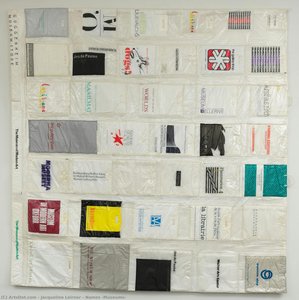
 1987
1987 20.0 x 13.0 cm
 Auckland Art Gallery Toi o Tāmaki
Ručno oslikano uljanim bojama na platnu u dimenzijama i okviru po vašem izboru, izrađeno po porudžbini od strane naših umetnika. ( Pređi na štampu Prebacite na sliku)
Izaberite jednu od naših unapred definisanih veličina koje odgovaraju originalnim proporcijama umetničkog dela.

Можете унети сопствене димензије како бисте прилагодили дело одређеном оквиру или простору. Ако одабрана величина не одговара пропорцијама оригинала, слика ће бити исечена или проширена додатним елементима који се ручно насликавају. Дигитални prikaz ће вам бити послат на одобрење пре почетка производње.
Имајте на уму да преглед на екрану не одражава стварно исецање или проширење. Само приказ (mockup) ће тачно приказати коначну композицију.
Иако су доступне прилагођене величине, препоручујемо да одаберете димензију из дефинисане листе како бисте сачували оригиналне пропорције.
Isporuka širom sveta () za 3/4 nedelje umesto uobičajenih 5 nedelja. (11 август). Bez kompromisa po pitanju kvaliteta.


Young Nick
Dimenzije reprodukcije

Julian Dashper (1960–2009) stood as one of New Zealand’s most profound contemporary voices, an artist whose practice functioned as a sophisticated bridge between the local landscape and the global currents of art history. Born in Auckland, Dashper possessed a rare ability to navigate the tension between Aotear and the wider world, exploring how visual information is received, disseminated, and reinterpreted across geographical boundaries. His work was never merely about the creation of objects; rather, it was an intellectual inquiry into the very nature of seeing. To look at a Dashper piece is to engage with a self-conscious dialogue, where the artist’s hand meets the weight of modernist tradition, questioning how much of our understanding of "great art" is shaped by the reproductions and catalogues that reach us from afar.
His artistic journey began in the vibrant, transformative atmosphere of the late 1970s and early 1980s at the Elam School of Fine Arts, University of Auckland. During these formative years, Dashper’s practice emerged through the lens of expressive abstraction, a style that mirrored the burgeoning influences of European Minimalism and American Conceptualism. However, even in these early stages, a distinct conceptual rigor was evident. He did not simply paint; he interrogated the medium itself. As his career progressed, his focus shifted from the purely formal properties of paint to a more complex investigation of seriality and repetition. This evolution saw him move away from the singular, heroic gesture toward meticulously crafted installations and multi-media projects that challenged the boundaries between painting, sculpture, and performance.
One of the most captivating dimensions of Dashper’s oeuvre was his fascination with the concept of the series. He utilized repetition not as a way to create monotony, but as a tool to explore rhythm, memory, and the persistence of imagery. This is perhaps most famously embodied in his ambitious project, The Big Bang Theory. In this work, Dashper moved beyond the canvas to incorporate drum-kit installations, creating a sensory experience that merged visual abstraction with the visceral energy of sound. These works were not merely visual representations but were deeply embedded in the idea of performance and the temporal nature of art. His practice frequently expanded into other realms, including:
Through these varied mediums, Dashper maintained a consistent preoccupation with how art exists within its environment. He was acutely aware of the artist's role within the market and the institution, often using wry, conceptual approaches to critique or celebrate the structures that house creativity. His work functioned as a mirror, reflecting both the prestige and the limitations of the art world.
Dashper’s influence extended far beyond the shores of New Zealand. His pursuit of international dialogue led him to prestigious opportunities, most notably a Senior Fulbright Fellowship and a residency at the Chinati Foundation in Marfa, Texas, in 2001. This period in the American desert, a landscape synonymous with Minimalism, further refined his understanding of how scale and site-specificity interact with abstract form. His ability to hold his own within this global context earned him significant recognition, with his work being featured in major exhibitions across America and Australia, including notable showcases in Sydney and Sioux City.
Despite his untimely passing in 2009, the historical significance of Julian Dashper remains undiminished. He left behind a legacy that continues to challenge how we perceive the relationship between the local and the universal. By treating New Zealand’s geographical position not as an isolation, but as a unique vantage point from which to view the world, he redefined the possibilities for contemporary Pacific art. His work remains a vital testament to the power of intellectual curiosity, reminding us that art is not just a window into beauty, but a complex, ongoing conversation with history, culture, and the very way we perceive our place in the universe.

1960 - 2009 , New Zealand


Budite u toku sa najnovijim vestima o umetnosti, ekskluzivnim ponudama i idejama za dekoraciju.
Recite nam o vašem projektu i naši stručnjaci za umetnost će vam pružiti 3 personalizovana predloga umetničkih dela.
Dozvolite nam da odaberemo 3 opcije specijalno za Vas - Besplatno!


 Pregledaj u prostoru
 Pošalji
 Podeli
 Detalji o delu

 Преузми
 Slični predmeti
 Rendgenski snimak
 Slajdovi
 Pročitaj više




































 Opcija sa staklom dostupna je samo za dimenzije manje od 110 cm