x

Ručno oslikano uljanim bojama na platnu u dimenzijama i okviru po vašem izboru, izrađeno po porudžbini od strane naših umetnika. ( Kupi print Kupi digitalnu sliku)





























Izaberite jednu od naših unapred definisanih veličina koje odgovaraju originalnim proporcijama umetničkog dela.

Можете унети сопствене димензије како бисте прилагодили дело одређеном оквиру или простору. Ако одабрана величина не одговара пропорцијама оригинала, слика ће бити исечена или проширена додатним елементима који се ручно насликавају. Дигитални prikaz ће вам бити послат на одобрење пре почетка производње.
Имајте на уму да преглед на екрану не одражава стварно исецање или проширење. Само приказ (mockup) ће тачно приказати коначну композицију.
Иако су доступне прилагођене величине, препоручујемо да одаберете димензију из дефинисане листе како бисте сачували оригиналне пропорције.
Isporuka širom sveta () za 3/4 nedelje umesto uobičajenih 5 nedelja. (17 август). Bez kompromisa po pitanju kvaliteta.


Pietà
Dimenzije reprodukcije
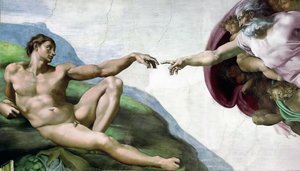
Michelangelo Buonarroti's Pietà, completed in 1499 and currently residing within the Museo dell’Opera del Duomo in Florence, stands as a monumental achievement—a testament not only to the artist’s unparalleled technical skill but also to his profound understanding of human emotion. More than just a sculpture, it's an experience; a deeply moving meditation on grief, loss, and ultimately, divine grace. The work immediately captivates with its serene beauty, yet beneath the polished marble lies a complex tapestry of symbolism and artistic innovation that continues to fascinate art historians and viewers alike.
At first glance, the sculpture depicts the Virgin Mary cradling the lifeless body of Jesus Christ after his crucifixion. However, Michelangelo’s genius transcends mere representation. He masterfully captures the moment *between* sorrow and acceptance—Mary's face a delicate balance of grief and profound love, her youthful appearance defying the expected age of a mother mourning her son. The composition itself is meticulously crafted, employing the principles of classical geometry to create a sense of perfect harmony and stability. Notice how Mary’s drapery, cascading around her like a protective veil, not only serves as a visual anchor but also subtly directs the viewer's eye towards Jesus’s serene face, offering a poignant contrast between life and death.
Michelangelo’s approach to this demanding subject is revolutionary. He employed his signature “non-finito” technique—leaving portions of the marble deliberately rough and unpolished—to create a dynamic, almost breathing quality within the sculpture. This wasn't simply an aesthetic choice; it was a deliberate attempt to convey the raw emotion of the scene. The unfinished surfaces suggest the vulnerability and fragility of both Mary and Jesus, inviting viewers to contemplate their shared suffering. The contrast between the smooth, polished areas—particularly around the faces—and the textured, exposed marble highlights the emotional intensity of the moment.
Furthermore, Michelangelo’s understanding of anatomy is breathtakingly evident. The musculature of Christ's body, rendered with exquisite detail despite his lifeless state, speaks to a deep knowledge of human form. Mary’s pose, too, is remarkably naturalistic—a subtle curve of her spine, the delicate placement of her hand—reflecting Michelangelo’s commitment to portraying realistic emotions and gestures.
The Pietà emerged during a pivotal period in Florentine art history – the High Renaissance. Michelangelo, already establishing himself as a prodigious talent, was deeply influenced by classical sculpture, particularly the works of ancient Greek and Roman masters. He sought to emulate their ideals of beauty, proportion, and anatomical accuracy while simultaneously imbuing his work with a distinctly Christian sensibility. The commission itself reflects the patronage system prevalent in Renaissance Florence, where wealthy families like the Medici commissioned artists to create works that glorified both God and themselves.
Interestingly, the sculpture was initially intended for a private chapel within St. Peter's Basilica in Rome, but it ultimately found its home in Florence, becoming one of the most iconic pieces within the Museo dell’Opera del Duomo. This relocation underscores the importance of Florentine artistic identity and the city’s role as a cradle of Renaissance innovation.
Today, the Pietà remains a powerful symbol of faith, grief, and maternal love. Its beauty continues to inspire awe and reflection in viewers around the world. For those unable to witness this masterpiece firsthand, Most-Famous-Paintings.com offers a meticulously crafted oil painting reproduction that captures the essence of Michelangelo’s vision. This hand-painted rendition allows art enthusiasts to bring the emotional depth and artistic brilliance of the Pietà into their own homes, fostering a deeper appreciation for this timeless work of art.
To explore more of Michelangelo's extraordinary body of work, we invite you to visit Michelangelo Buonarroti: Pietà (detail) and List of works by Michelangelo on Wikipedia for further insights into the life and legacy of this Renaissance titan.


1475 - 1564 , Италија

Explore the profound history of sculpture, from classical realism to modern abstraction. Discover the mastery of form, texture, and medium through an expert art-historical lens designed for discerning collectors and enthusiasts.


Budite u toku sa najnovijim vestima o umetnosti, ekskluzivnim ponudama i idejama za dekoraciju.
Recite nam o vašem projektu i naši stručnjaci za umetnost će vam pružiti 3 personalizovana predloga umetničkih dela.
Dozvolite nam da odaberemo 3 opcije specijalno za Vas - Besplatno!


 Pregledaj u prostoru
 Pošalji
 Podeli
 Detalji o delu

 Преузми
 Slični predmeti
 Rendgenski snimak
 Slajdovi


 Pročitaj više







 Opcija sa staklom dostupna je samo za dimenzije manje od 110 cm