x

 Ulje na platnuUmetnost za zidoveПостимпрезионизам
 188219. vek
 43.0 x 53.0 cm
Giclée štampa ili print na platnu muzejskog kvaliteta uz brzu proizvodnju i fleksibilne opcije završne obrade. ( Kupi ručno naslikanu sliku Kupi digitalnu sliku)





























Izaberite jednu od naših unapred definisanih veličina koje odgovaraju originalnim proporcijama umetničkog dela.

Možete uneti sopstvene dimenzije kako biste umetničko delo prilagodili specifičnom okviru ili prostoru. Ako odabrani format ne odgovara proporcijama originalne slike, mi ćemo ili iscrtati deo dela ili proširiti sliku pomoću ogledane ivice ili jednobojnog popunjavanja. Digitalni prikaz će vam biti poslat na odobrenje pre početka proizvodnje.
Imajte na umu da pregled na ekranu ne odražava stvarno iscrtavanje ili proširivanje. Samo će prikaz (mockup) precizno pokazati finalnu kompoziciju.
Iako su prilagođene dimenzije dostupne, preporučujemo da odaberete dimenziju sa unapred definisane liste kako biste očuvali originalne proporcije.
Dostava širom sveta () za 2 nedelje umesto uobičajenih 4/5 nedelja. (18 август)


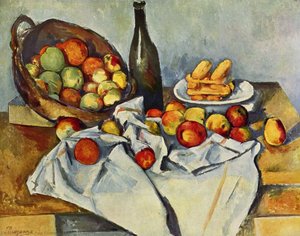
Kompozicija jabuka i frut боца
Dimenzije reprodukcije
Paul Cézanne's Still Life with Apples and Fruit Bowl, painted in 1882, stands as a cornerstone of the Post-Impressionist movement. This seemingly simple depiction of everyday objects—apples nestled within a fruit bowl on a table—is far more than a mere representation; it’s an exploration of form, color, and perspective that profoundly influenced the course of modern art. As a reproduction from Most-Famous-Paintings.com, this artwork offers a chance to experience Cézanne's revolutionary vision firsthand.
Measuring 43 x 53 cm, the painting is executed in oil on canvas. Cézanne’s technique departs significantly from traditional still life conventions. Rather than striving for photographic realism, he employed a methodical approach, building up the image through short, deliberate brushstrokes. These strokes aren't blended smoothly; instead, they create a textured surface that emphasizes the materiality of the paint itself. The apples are not rendered as perfectly spherical forms but rather as planes and volumes, subtly shifting in color and light. A vase sits to the bottom right corner, contributing to the overall balance of the composition. Cézanne’s deliberate use of perspective—or lack thereof—challenges conventional spatial representation, creating a sense of depth that is both intriguing and slightly unsettling.
Still Life with Apples and Fruit Bowl emerged during a period of artistic transition. The Impressionist movement had emphasized capturing fleeting moments of light and color, but Cézanne sought to move beyond this purely optical approach. He aimed to reveal the underlying structure of objects, anticipating the geometric explorations of Cubism. This work exemplifies Post-Impressionism's focus on subjective interpretation and formal experimentation. It represents a pivotal moment where artists began questioning traditional artistic conventions and paving the way for new forms of expression.
While seemingly devoid of overt symbolism, Cézanne’s still life evokes a sense of quiet contemplation. The apples, symbols of abundance and ripeness, are presented with an almost scientific precision. The fruit bowl itself becomes a vessel for exploring the interplay of light and shadow, form and space. The painting's emotional impact lies in its understated beauty and intellectual rigor. It invites viewers to slow down, observe closely, and appreciate the inherent poetry within everyday objects. Cézanne’s focus on structure and solidity conveys a sense of permanence and stability, offering a respite from the fleeting nature of modern life.
Cézanne's Still Life with Apples and Fruit Bowl had an immeasurable impact on subsequent generations of artists. His emphasis on geometric form and his rejection of traditional perspective directly influenced Pablo Picasso and Henri Matisse, key figures in the Cubist movement. The term "father of us all" was coined by both Matisse and Picasso to acknowledge Cézanne's pioneering role in modern art. Owning a reproduction of this iconic work allows you to connect with a pivotal moment in artistic history and appreciate the enduring legacy of Paul Cézanne.


1839 - 1906 , Француска

Explore the transformative era of Post-Impressionism. Discover how masters like Van Gogh moved beyond light to embrace emotion, structure, and vibrant color, redefining modern art history through expressive brushwork and symbolic depth.


Budite u toku sa najnovijim vestima o umetnosti, ekskluzivnim ponudama i idejama za dekoraciju.
Recite nam o vašem projektu i naši stručnjaci za umetnost će vam pružiti 3 personalizovana predloga umetničkih dela.
Dozvolite nam da odaberemo 3 opcije specijalno za Vas - Besplatno!


 Pregledaj u prostoru
 Pošalji
 Podeli
 Detalji o delu

 Преузми
 Slični predmeti
 Rendgenski snimak
 Slajdovi
 Pročitaj više







 Opcija sa staklom dostupna je samo za dimenzije manje od 110 cm