x

 Akril na platnuUmetnost za zidoveCubism
 1913Rano srednjevekovno doba
 96.0 x 64.0 cm
 Kröller-Müller Muzej
Ručno oslikano uljanim bojama na platnu u dimenzijama i okviru po vašem izboru, izrađeno po porudžbini od strane naših umetnika. ( Kupi print Kupi digitalnu sliku)





























Izaberite jednu od naših unapred definisanih veličina koje odgovaraju originalnim proporcijama umetničkog dela.

Можете унети сопствене димензије како бисте прилагодили дело одређеном оквиру или простору. Ако одабрана величина не одговара пропорцијама оригинала, слика ће бити исечена или проширена додатним елементима који се ручно насликавају. Дигитални prikaz ће вам бити послат на одобрење пре почетка производње.
Имајте на уму да преглед на екрану не одражава стварно исецање или проширење. Само приказ (mockup) ће тачно приказати коначну композицију.
Иако су доступне прилагођене величине, препоручујемо да одаберете димензију из дефинисане листе како бисте сачували оригиналне пропорције.
Isporuka širom sveta () za 3/4 nedelje umesto uobičajenih 5 nedelja. (14 август). Bez kompromisa po pitanju kvaliteta.


Tableau no. 1
Dimenzije reprodukcije
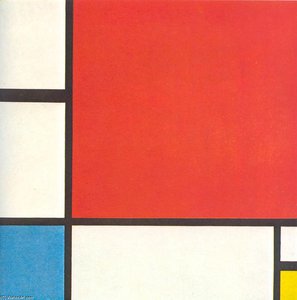
Piet Mondriaan's *Tableau no. 1*, painted in 1913, isn’t merely a composition of rectangles and lines; it’s a pivotal moment in the birth of abstract art, a visual distillation of the artist’s relentless pursuit of pure form and underlying reality. Emerging from his early training as a landscape painter – works like *The Red Mill* demonstrating a meticulous study of nature – Mondrian embarked on a radical transformation, driven by encounters with Cubism and a profound desire to transcend the limitations of representation. This piece embodies that journey, offering a glimpse into the nascent stages of his groundbreaking style.
The painting’s immediate impact is one of controlled dynamism. A dense network of grey, ochre, and muted brown rectangles and squares dominates the canvas, creating an intricate tapestry that seems to both contain and explode outwards. The lines are crisp and decisive, defining each shape with unwavering precision, yet there's a subtle suggestion of curvature within them – a delicate balance between rigidity and fluidity. It’s not a chaotic jumble, but rather a carefully orchestrated structure, reflecting Mondrian’s belief that the universe itself operates according to geometric principles. The underdrawing of a tree, barely discernible beneath the layered paint, hints at his previous life, a ghost of naturalism fading into abstraction.
*Tableau no. 1* firmly establishes Mondrian’s engagement with analytical cubism, a movement characterized by its deconstruction of objects into fragmented planes. Unlike the more sculptural approach of Picasso and Braque, Mondrian reduces his subject to its essential components – lines and shapes – stripping away all extraneous detail. The object isn't presented as it appears; instead, it’s dissected, broken down, and reassembled in a complex, multi-faceted structure. This process is evident in the overlapping planes and the blurring of edges, creating an illusion of depth without relying on traditional perspective. The painting feels like a carefully constructed puzzle, inviting the viewer to actively engage with its spatial relationships.
A significant departure from his earlier work is Mondrian’s restricted palette – primarily shades of grey, ochre, and brown. This deliberate limitation wasn't a rejection of color entirely, but rather a strategic choice to emphasize the underlying structure of the composition. Color becomes less about describing reality and more about defining relationships between forms. The warm tones of ochre provide a subtle grounding, while the cool greys create a sense of balance and restraint. This move towards a monochromatic aesthetic reflects Mondrian’s belief that color could be reduced to its purest essence – a means of conveying spiritual truth rather than merely imitating the visual world.
While *Tableau no. 1* is undeniably abstract, it's not devoid of symbolic meaning. The geometric forms themselves can be interpreted as representing fundamental building blocks – lines for verticality and horizontality, squares and rectangles for stability and order. Mondrian described his artistic ambition as moving “towards ‘the unchanging pure reality behind the changeable forms of nature’”. This painting represents a crucial step in that direction, suggesting an attempt to capture not the appearance of things, but their underlying essence – a timeless, universal truth expressed through simple geometric shapes. The piece invites contemplation on the relationship between form and content, structure and meaning, ultimately offering a glimpse into Mondrian's profound philosophical vision.

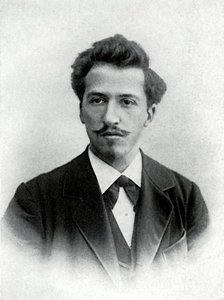
1872 - 1944 , Немачка

Explore the revolutionary world of Cubism. Discover how masters Pablo Picasso and Georges Braque dismantled reality through geometric abstraction to redefine modern art history.

Explore the profound impact of Minimalism and Geometric Abstraction. From Mondrian to Malevich, discover how stripping art to its essential forms revolutionized modern aesthetics through our expert-led historical guide.


Budite u toku sa najnovijim vestima o umetnosti, ekskluzivnim ponudama i idejama za dekoraciju.
Recite nam o vašem projektu i naši stručnjaci za umetnost će vam pružiti 3 personalizovana predloga umetničkih dela.
Dozvolite nam da odaberemo 3 opcije specijalno za Vas - Besplatno!


 Pregledaj u prostoru
 Pošalji
 Podeli
 Detalji o delu

 Преузми
 Slični predmeti
 Rendgenski snimak
 Slajdovi
 Pročitaj više







 Opcija sa staklom dostupna je samo za dimenzije manje od 110 cm