x

Giclée štampa ili print na platnu muzejskog kvaliteta uz brzu proizvodnju i fleksibilne opcije završne obrade. ( Kupi ručno naslikanu sliku Kupi digitalnu sliku)





























Izaberite jednu od naših unapred definisanih veličina koje odgovaraju originalnim proporcijama umetničkog dela.

Možete uneti sopstvene dimenzije kako biste umetničko delo prilagodili specifičnom okviru ili prostoru. Ako odabrani format ne odgovara proporcijama originalne slike, mi ćemo ili iscrtati deo dela ili proširiti sliku pomoću ogledane ivice ili jednobojnog popunjavanja. Digitalni prikaz će vam biti poslat na odobrenje pre početka proizvodnje.
Imajte na umu da pregled na ekranu ne odražava stvarno iscrtavanje ili proširivanje. Samo će prikaz (mockup) precizno pokazati finalnu kompoziciju.
Iako su prilagođene dimenzije dostupne, preporučujemo da odaberete dimenziju sa unapred definisane liste kako biste očuvali originalne proporcije.
Dostava širom sveta () za 2 nedelje umesto uobičajenih 4/5 nedelja. (18 август)


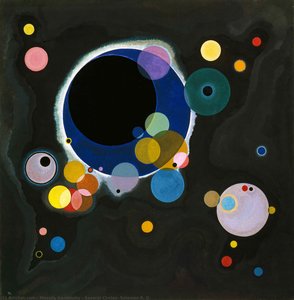
Division-Unity
Dimenzije reprodukcije
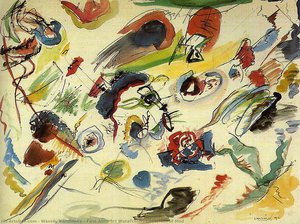
Wassily Kandinsky’s “Division-Unity,” painted in 1934, stands as a cornerstone of abstract expressionism and a testament to the artist's profound exploration of spirituality through visual language. This striking canvas embodies Kandinsky’s revolutionary vision—that art should transcend representational imagery and tap into the realm of pure feeling, mirroring the harmonies of music.
Wassily Wassilyevich Kandinsky (1866-1944) irrevocably altered the trajectory of modern art, establishing himself as one of the foremost figures in abstract expressionism. Initially drawn to Impressionist painting—particularly Claude Monet’s “Haystacks”—Kandinsky experienced a transformative moment witnessing Wagner's opera "Lohengrin," sparking an unwavering desire to pursue artistic exploration beyond conventional boundaries.
His journey began with formal training at the Moscow State University, where he studied law and economics alongside his burgeoning interest in art. However, it was this encounter with music—specifically Wagner’s dramatic use of color and sound—that fundamentally reshaped Kandinsky's artistic worldview. He recognized that painting could aspire to achieve a similar level of expressive power, mirroring the harmonies of musical composition.
Moving to Munich in 1896, Kandinsky enrolled at Franz von Stuck’s Academy of Fine Arts, continuing his exploration of form and color theory. Influenced by Russian folk art and Eastern mysticism—particularly Rudolf Steiner's Anthroposophy—Kandinsky developed a distinctive aesthetic characterized by spontaneity and intuition.
Kandinsky’s involvement with the Bauhaus school in Weimar solidified his commitment to uniting art and craft, challenging prevailing academic conventions. Under Franz Meyer’s guidance, Kandinsky championed the use of geometric abstraction as a means of achieving functional beauty—a principle that resonated throughout the Bauhaus curriculum.
His teaching at Bauhaus instilled in students a belief in the transformative potential of color and form, fostering experimentation with innovative materials and techniques. The Bauhaus ethos profoundly impacted Kandinsky’s artistic practice, shaping his approach to composition and contributing to the development of influential designs for furniture and textiles.
"Division-Unity," alongside other seminal works like “Improvisation No. 28” and “Composition VIII,” exemplifies Kandinsky’s unwavering pursuit of artistic truth—a belief that art should transcend representational illusion and communicate directly with the human soul. His pioneering exploration of abstraction continues to inspire artists and designers worldwide, cementing his place as a visionary whose legacy endures in the vibrant hues and dynamic forms of contemporary visual culture.


1866 - 1944 , Русија

Master the complexities of Geometric Abstraction. Our expert guide explores the evolution from Cubist deconstruction to Bauhaus precision, decoding the power of shape and form. Perfect for art students seeking deep historical context and academic insight into modern masterpieces.
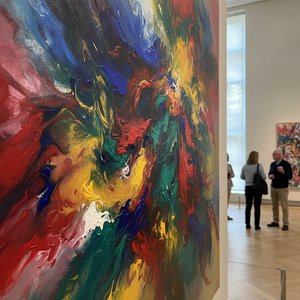
Explore the profound emotional depth of Lyrical Abstraction. Discover how masters like Raymond Parker used color and form to bridge Impressionism and Abstract Expressionism. Learn about this pivotal movement through our expert-led art history guide.

Explore the profound emotional depth of Color Field painting. Discover the history of mid-century abstraction, from Rothko to Newman, and learn how pure color transforms the viewer's experience through our expert art history guide.

Discover the profound emotional depth and investment potential of contemporary abstraction. Our expert guide explores how texture, movement, and form create timeless value for discerning art collectors and sophisticated interiors.


Budite u toku sa najnovijim vestima o umetnosti, ekskluzivnim ponudama i idejama za dekoraciju.
Recite nam o vašem projektu i naši stručnjaci za umetnost će vam pružiti 3 personalizovana predloga umetničkih dela.
Dozvolite nam da odaberemo 3 opcije specijalno za Vas - Besplatno!


 Pregledaj u prostoru
 Pošalji
 Podeli
 Detalji o delu

 Преузми
 Slični predmeti
 Rendgenski snimak
 Slajdovi
 Pročitaj više







 Opcija sa staklom dostupna je samo za dimenzije manje od 110 cm