x


Giclée- eller canvasprint av museumskvalitet med snabb produktion och flexibla ytbehandlingsalternativ. ( Byt till handmålad reproduktion Byt till bild)





























Välj bland våra förinställda storlekar som motsvarar konstverkets ursprungliga proportioner.

Du kan ange egna mått för att passa en specifik ram eller yta. Om det valda måttet inte överensstämmer med originalbildens proportioner kommer vi antingen att beskära konstverket eller utöka bilden med en speglad eller enfärgad kant. En digital mockup skickas för ditt godkännande innan produktionen påbörjas.
Vänligen notera att förhandsvisningen på skärmen inte återspeglar den faktiska beskärningen eller utökningen. Endast mockuppen visar den slutgiltiga kompositionen korrekt.
Även om anpassade storlekar är möjliga, rekommenderar vi att du väljer ett mått från den fördefinierade listan för att bevara de ursprungliga proportionerna.
Leverans över hela världen () på 2 veckor istället för standard 4/5 veckor. (30 juli)


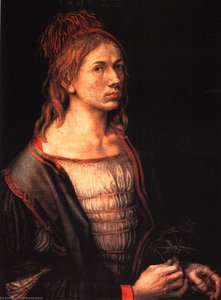
Harebells
Storlek på reproduktion
Albrecht Dürer's "Harebells," a captivating oil painting brimming with the vibrant energy of nature, stands as a testament to the artist’s unparalleled skill and his pivotal role in shaping the Northern Renaissance. Executed around 1507, this work transcends a simple depiction of flowers; it is an intensely personal exploration of beauty, proportion, and the very essence of observation – qualities that would define Dürer's legacy. The painting immediately draws the eye to the meticulously rendered bouquet, a riot of color and form that speaks volumes about the artist’s deep understanding of both botanical detail and artistic composition. It’s a piece that invites prolonged contemplation, revealing new nuances with each viewing.
Beyond its technical brilliance, “Harebells” resonates with the symbolic language of the Renaissance. Flowers held profound meaning within this era, often representing virtues, emotions, or allegorical concepts. While the precise symbolism of each bloom in Dürer’s bouquet remains open to interpretation, the overall effect evokes a sense of harmony and balance – a core tenet of Renaissance artistic philosophy. The meticulous detail with which he renders each flower suggests an appreciation for the natural world and a desire to capture its beauty with scientific precision. This reflects the humanist ideals that were gaining prominence during Dürer’s time, emphasizing human potential and the importance of observation.
Created in the early 16th century, “Harebells” reflects a period of immense artistic and intellectual ferment. Dürer was deeply influenced by Italian Renaissance masters like Leonardo da Vinci and Botticelli, yet he forged his own distinctive style—one characterized by rigorous observation, technical virtuosity, and a profound understanding of perspective and proportion. This painting exemplifies his commitment to exploring the relationship between art and science, reflecting a growing interest in natural history and anatomical accuracy that was characteristic of the era. Dürer’s work served as an important bridge between the Gothic and Renaissance artistic traditions, solidifying his place as one of the most influential artists of the Northern Renaissance.

Dürers inflytande ekar genom århundradena av konsthistoria. Hans tekniska realism, hans innovativa användning av tryckkonst och hans teoretiska skrifter fortsätter att inspirera konstnärer och forskare världen över.

1471 - 1528 , Tyskland
Utforska Katsushika Hokusais 25 mest ikoniska ukiyo-e konstverk. Lär känna historien bakom 'The Great Wave' och andra mästerverk från japansk konst. Köp högkvalitativa reproduktioner & inred med tidlös skönhet på Most-Famous-Paintings.com.
Upptäck 10 renässansmästerverk av Botticelli, Leonardo da Vinci & Michelangelo! Fördjupa dig i italiensk konsthistoria och tidig renässans. Hitta inspiration för ditt hem med museumskvalitets reproduktioner på Most-Famous-Paintings.com.
Utforska Raphaels 25 mest ikoniska mästerverk – en resa genom renässanskonstens guldålder. Lär känna historien, tekniken och skönheten bakom varje tavla. Hitta konsttryck & inspiration för ditt hem på Most-Famous-Paintings.com.

Upptäck de 10 mest ikoniska konstverken i nyansen 'Dusty Rose'! Lär känna Monet, Renoir och Cassatt – deras tekniker & historier. Hitta inspiration till din inredning med vackra prints på Most-Famous-Paintings.com. Utforska samlingen online!
Utforska Goyas 25 mest ikoniska målningar! Fördjupa dig i spansk konsthistoria, romantikens dramatik och mörka färger. Köp museumkvalitativa reproduktioner & inred med tidlösa klassiker på Most-Famous-Paintings.com.


Håll dig uppdaterad med de senaste konstnyheterna, exklusiva erbjudanden och inredningsidéer.
Berätta om ditt projekt så kommer våra konstexperter att ge dig 3 personliga konstförslag.
Vi skapar ett urval av 3 alternativ helt anpassat för dig – gratis!


 Förhandsvisa
 Skicka
 Dela
Dela
 Visa detaljer

 Ladda ner
 Liknande objekt
 Röntgen
 Bildspel

 Visa mer







 Glasalternativet är endast tillgängligt i storlekar under 110 cm.