Konstnärsbiografi
A Life Bridging Worlds: The Artistic Odyssey of Aleksandra Ekster
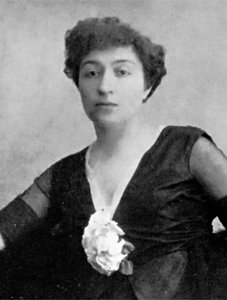
Aleksandra Ekster, a name that echoes through the halls of 20th-century art history, was far more than simply a painter; she was a cultural architect, a vibrant conduit connecting artistic currents between Russia and Europe. Born Aleksandra Aleksandrovna Grigorovich on January 6, 1882, in Białystok – then part of the Russian Empire, now Poland – her life unfolded against a backdrop of profound social and artistic transformation. Her upbringing within a prosperous Belarusian family provided her with an exceptional education, nurturing not just a refined aesthetic sensibility but also a remarkable cosmopolitan outlook that would shape her entire career. The move to Kiev proved to be a pivotal moment, establishing her within the heart of Ukraine’s burgeoning artistic scene, where she encountered fellow pioneers like Alexander Bogomazov and Alexander Archipenko – individuals who would become integral figures in the Russian avant-garde movement. Even from an early age, Ekster's studio became a crucible for intellectual exchange, attracting poets such as Anna Akhmatova and Osip Mandelstam, writers like Ilya Ehrenburg, and dancers including Bronislava Nijinska, solidifying her position at the very center of Kiev’s vibrant cultural landscape.
Embracing Innovation: From Cubo-Futurism to Constructivism
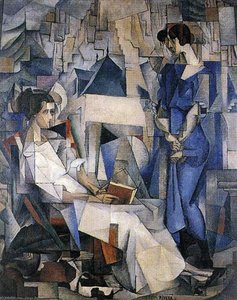
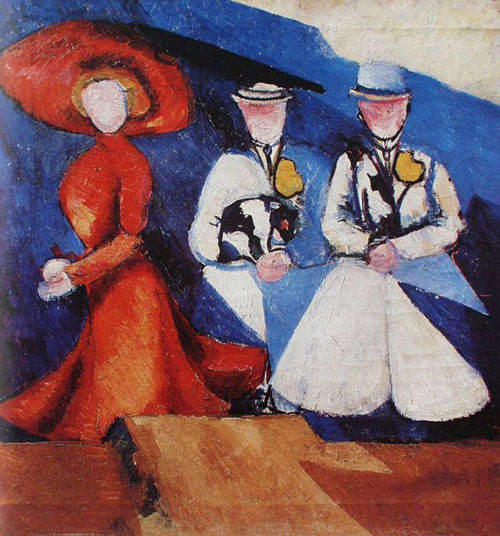
Ekster's artistic journey was defined by an unyielding pursuit of innovation and a willingness to embrace diverse influences. A transformative sojourn in Paris with her husband, Nikolai Evgenyevich Ekster, beginning in 1907, ignited within her a passion for experimentation that would fuel her subsequent work. Exposure to the fermenting avant-garde at the Académie de la Grande Chaumière in Montparnasse sparked a desire to break free from traditional artistic conventions. Returning to Russia, she quickly became a key player in several groundbreaking artistic groups and exhibitions. Her early works demonstrate an immediate assimilation of Cubist principles – fractured forms, multiple perspectives, and a deliberate disruption of conventional spatial relationships – but Ekster’s vision extended far beyond mere imitation. She rapidly developed her own distinct style, infused with the spirit of Russia while simultaneously engaging with international trends. This period witnessed her participation in pivotal exhibitions such as the Salon des Indépendants, alongside luminaries like Kazimir Malevich and Sonia Delaunay-Terk, further cementing her place within the vanguard of modern art. The influence of Futurism is also powerfully evident in her work from this time, characterized by a dynamic embrace of movement, speed, and the energy of the modern world – themes that resonated deeply with the revolutionary spirit of the era. She forged connections with Pablo Picasso and Georges Braque, even being introduced to Gertrude Stein, solidifying her position within the international art scene.
A Synthesis of Styles: The Ukrainian Avant-Garde and Early Experimentation
Ekster’s artistic activity in Kiev during this period was particularly significant. Her studio became a hub for intellectual discourse, attracting figures like Vadim Meller, Anatole Petrytsky, and many other artists who would shape the future of Ukrainian art. She actively participated in the development of new visual languages, experimenting with abstraction and geometric forms. Notably, she contributed to *The Triangle* and *Union of Youth* exhibitions, showcasing her evolving style and engaging with contemporary artistic debates. Her involvement extended beyond painting; Ekster was a key figure in designing abstract motifs for street decorations during the revolutionary fervor of 1918-1920, reflecting the dynamic spirit of the time. This period also saw her collaborating with other artists on stage designs for Alexander Tairov’s Chamber Theatre, demonstrating her versatility and commitment to integrating art into various forms of expression. Her work during this time was characterized by a bold use of color, a fascination with geometric abstraction, and an exploration of new visual possibilities – all hallmarks of the Ukrainian avant-garde.
The Parisian Period: Suprematism, Constructivism, and Artistic Refinement
Following the Russian Revolution, Ekster relocated to Paris in 1924, seeking new creative horizons. This period marked a significant shift in her artistic focus, as she embraced Suprematist principles under the influence of Kazimir Malevich. She began experimenting with pure geometric abstraction, exploring the fundamental elements of form and color – red, black, white, and yellow – to express universal truths. Simultaneously, she continued to engage with Constructivist ideas, seeking ways to integrate art into everyday life through design and production. Her Parisian years were also marked by a growing interest in decorative arts, leading her to create exquisite book illustrations for the Groupe Flammarion publishing house, showcasing her refined aesthetic sensibilities. This period culminated in the creation of the *Callimaque* manuscript (circa 1939), a stunning work that exemplifies her mastery of color, typography, and illustration – a testament to her artistic versatility and intellectual depth.
A Lasting Legacy: Influence and Recognition
Aleksandra Ekster’s legacy extends far beyond her individual artworks. She was a pioneering educator, shaping the minds of countless young artists through her teaching at VKhUTEMAS in Moscow and later at the Fernand Léger Academy in Paris. Her emphasis on fundamental principles – form, color, composition – instilled in her students a deep understanding of artistic technique and a commitment to creative exploration. Despite facing challenges in gaining widespread recognition during her lifetime, Ekster’s contributions to the Russian and international art scenes are now widely celebrated. She remains an influential figure in the history of modern art, a testament to the power of innovation, experimentation, and a truly cosmopolitan spirit. Her work continues to inspire artists and designers today, demonstrating the enduring relevance of her artistic vision. Ekster’s ability to seamlessly blend diverse influences and consistently push boundaries cemented her position as one of the most important artists of her generation.



 Köp tryck
 Skicka
 Visa detaljer
 Lägg till i favoriter
 Ladda ner
 Liknande objekt
 Röntgen
 Bildspel






 Dela
Dela


 Visa mer




































 Glasalternativet är endast tillgängligt i storlekar under 110 cm.