Sälj din konst
Önskelista Varukorg Cart
FörhandsvisaFörhandsvisa Förhandsgranska i ARFörhandsgranska i AR Beställ handmålad reproduktion Beställ handmålad reproduktionKöp högupplöst bild Köp högupplöst bild SkickaSkicka
Visa detaljerVisa detaljer Lägg till i favoriter Lägg till i favoriter Ladda nerLadda ner Liknande objektLiknande objekt RöntgenRöntgen BildspelBildspel

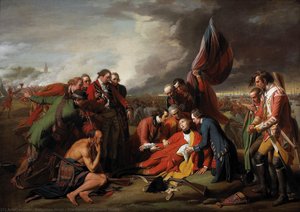
Cymon and Iphigenia

A serene Neoclassical scene featuring two women resting on a bed amidst men in conversation by Benjamin West invites you to explore the elegance of this historical masterpiece through a hand-painted reproduction.

Upptäck Benjamin West (1738-1820), en pionjär inom amerikansk konst & Kungliga akademins president! Utforska hans historiebilder, neoklassisk stil och arv.

Giclée / Konsttryck

Giclée- eller canvasprint av museumskvalitet med snabb produktion och flexibla ytbehandlingsalternativ. (Beställ handmålad reproduktion Beställ handmålad reproduktionKöp högupplöst bild Köp högupplöst bild)

P118B $10
P118H $10
P118W $10
P438Z $10
P508JH $12
P508YH $12
P805H $10
P805Z $10
P919BZ $10
P919G $10
P919XJ $10
P959ZH $10
P968JZ $12
W106C $8
W218G $10
W218JH $8
W218Y $10
W307PJ $10
W316G $10
W316PJ $8
W316Y $10
W398PJ $8
W4111J $10
W500HY $15
W500JH $15
W692G $12
W849H $8
W940BG $15
W953PJ $8

Standard
custom
CM
INCH

Välj bland våra förinställda storlekar som motsvarar konstverkets ursprungliga proportioner.

bredd
höjd

Du kan ange egna mått för att passa en specifik ram eller yta. Om det valda måttet inte överensstämmer med originalbildens proportioner kommer vi antingen att beskära konstverket eller utöka bilden med en speglad eller enfärgad kant. En digital mockup skickas för ditt godkännande innan produktionen påbörjas.
Vänligen notera att förhandsvisningen på skärmen inte återspeglar den faktiska beskärningen eller utökningen. Endast mockuppen visar den slutgiltiga kompositionen korrekt.
Även om anpassade storlekar är möjliga, rekommenderar vi att du väljer ett mått från den fördefinierade listan för att bevara de ursprungliga proportionerna.

Leverans över hela världen () på 2 veckor istället för standard 4/5 veckor. (18 augusti)

why_choose_icon
Fri expressfrakt över hela världen
why_choose_icon
Högkvalitativ linnecanvas
why_choose_icon
Fullständig fraktförsäkring
why_choose_icon
Garantier för återbetalning av tullavgifter
why_choose_icon
Garantier för exakt färgåtergivning
why_choose_icon
60 dagars returrätt (endast vid fabrikationsfel)
why_choose_icon
100% pengarna tillbaka-garanti
why_choose_icon
Mängdrabatt erbjuds

Totalpris

$ 68

reproduction

Cymon and Iphigenia

Giclée / Konsttryck

Storlek på reproduktion

-

Slutgiltigt pris

$ 68

Snabbfakta

  • Subject or theme: Relaxation and leisure
  • Title: Cymon and Iphigenia
  • Location: Museum Casa Vasari, Arezzo, Italy
  • Artistic style: Neoclassical
  • Notable elements: Red canopy, reclining figures
  • Medium: Oil on canvas

Om samlarobjektet

A Neoclassical Dream: The Elegance of Cymon and Iphigenia

In the grand tapestry of eighteenth-century art, few works capture the delicate intersection of mythic romance and classical repose as gracefully as Benjamin West’s Cymon and Iphigenia. This Neoclassical masterpiece invites the viewer into a private, hushed moment of intimacy and quietude. The scene unfolds within a richly appointed setting, where two women recline upon a bed, their forms draped in a state of peaceful slumber or gentle rest. They are surrounded by three men, whose presence is marked not by intrusion, but by a shared sense of calm conversation. As the eye wanders across the canvas, one is immediately struck by the masterful use of color—most notably the striking red canopy that hangs above the bed, casting a warm, regal glow over the assembly and anchoring the composition with a sense of theatrical grandeur.

The technique employed by West is nothing short of extraordinary, showcasing the precision and fluid grace characteristic of his most celebrated works. Utilizing oil on canvas, the artist achieves a luminous quality that breathes life into the skin tones of the reclining figures and the heavy, textured fabrics of the drapery. Every brushstroke serves to enhance the Neoclassical ideal, emphasizing clarity, balance, and an almost sculptural definition of form. The interplay of light and shadow creates a soft, atmospheric depth, making the room feel tangible, as if one could step directly into this sanctuary of leisure. For the discerning collector or interior designer, such a piece offers more than mere decoration; it provides a focal point of sophisticated texture and historical weight.

Historical Resonance and Symbolic Depth

To understand Cymon and Iphigenia is to understand the spirit of an era that looked backward to the glory of ancient Greece and Rome to find inspiration for the present. Benjamin West, a pioneer who bridged the gap between the American frontier and the prestigious Royal Academy in London, was uniquely positioned to translate these classical themes into a contemporary visual language. The painting functions as a window into a world of idealized beauty, where the boundaries between historical legend and human emotion are blurred. The arrangement of the figures—the men engaged in quiet dialogue while the women remain in a state of vulnerability and rest—suggests a narrative of trust, protection, and the serene coexistence of strength and grace.

Beyond its aesthetic allure, the artwork carries an emotional resonance that transcends time. There is a profound sense of tranquility embedded in the composition; it captures a fleeting moment of stillness in a world often characterized by movement and conflict. This atmosphere of relaxation makes the piece an ideal acquisition for those looking to infuse a living space or a formal study with a sense of timeless calm. Whether viewed as a study in Neoclassical light or as a window into a mythological past, Cymon and Iphigenia remains a testament to West's ability to capture the very essence of human repose, making it a breathtaking addition to any curated art collection.


Konstnärsbiografi

A Pioneer Bridging Worlds: The Life and Legacy of Benjamin West

Born in 1738 amidst the burgeoning landscape of colonial Pennsylvania, Benjamin West emerged as a pivotal figure in the transatlantic art world, a painter who skillfully navigated the currents of Neoclassicism and Romanticism while forging a uniquely American artistic identity. His story is one of remarkable self-education, unwavering ambition, and an extraordinary ability to connect with both aristocratic patrons and revolutionary ideals. From humble beginnings—his father an innkeeper in Springfield—West’s innate talent was nurtured by early exposure to the arts, reportedly learning rudimentary techniques from Native Americans before receiving any formal training. This unconventional start instilled within him a spirit of innovation that would characterize his entire career. He quickly established himself as a sought-after portraitist in Philadelphia and New York, but a thirst for deeper artistic knowledge propelled him towards Europe in 1760, embarking on a journey that would irrevocably alter the course of American art.

From Italy to London: Forging a Path to Recognition

West’s arrival in Italy marked a turning point. Immersing himself in the artistic heartland of Europe, he studied the masters—Titian, Raphael—and engaged with contemporary Neoclassical thinkers like Anton Rafael Mengs and Angelica Kauffman. This period was crucial in shaping his aesthetic sensibilities, instilling within him an appreciation for classical form and historical narrative. He meticulously copied works by these great artists, absorbing their techniques and understanding of composition. However, it was London that ultimately became his adopted home and artistic center. Arriving in 1763, West swiftly ascended the ranks of the British art scene, captivating audiences with his ambitious canvases and securing the patronage of King George III. This royal endorsement not only provided financial stability but also cemented his position as a leading figure within the establishment. A defining moment came with his election to the Royal Academy in 1769, an institution he would later preside over as President from 1792 until his death. His influence extended beyond his own artistic production; West became a champion for American artists seeking training in Europe, offering guidance and support to generations of aspiring painters like Allston, Copley, and Morse.

Revolutionizing Historical Painting: Technique and Controversy

West’s impact on the art world wasn't merely about achieving technical mastery; it was about challenging conventions. He dared to reimagine historical painting, moving away from rigid adherence to classical precedent and embracing a more contemporary sensibility. The Death of General Wolfe (1770), arguably his most famous work, exemplifies this revolutionary approach. By depicting the fallen general surrounded by figures in *contemporary* military attire rather than traditional Roman garb, West sparked considerable debate. Critics questioned the historical accuracy, but audiences were captivated by the immediacy and emotional resonance of the scene. This bold move signaled a shift towards greater realism and narrative power in history painting, influencing countless artists who followed. His style evolved over time, incorporating elements of Romanticism into his later works, yet always retaining a commitment to ambitious composition and detailed execution. Other notable pieces like Thetis Bringing the Armor to Achilles, The Three Sisters, The Fright of Astyanax, and The Cave of Despair demonstrate his versatility and mastery across a range of mythological and historical themes. The meticulous detail in his brushwork, combined with dramatic lighting and dynamic compositions, created works that were both visually stunning and emotionally engaging.

A Lasting Legacy: Shaping Artistic Identity

Benjamin West’s legacy extends far beyond the canvases he created. He fundamentally altered the landscape of American art, establishing history painting as a viable genre for American artists and fostering a sense of national artistic identity. His presidency of the Royal Academy solidified his influence on British art, promoting innovation and supporting emerging talent.
  • He championed a more accessible and emotionally engaging style of historical representation.
  • His studio became a haven for American artists seeking training in Europe.
  • He bridged the gap between Neoclassicism and the burgeoning Romantic movement.
West’s innovative spirit, coupled with his diplomatic skills and unwavering dedication to his craft, earned him lasting recognition as “the American Raphael.” He died in London in 1820, leaving behind a body of work that continues to inspire awe and admiration. His story serves as a testament to the power of artistic vision, the importance of cultural exchange, and the enduring legacy of an artist who dared to challenge conventions and forge his own path.

Key Works

* The Death of General Wolfe (1770): A pivotal work that redefined historical painting with its contemporary setting and dramatic composition. * Thetis Bringing the Armor to Achilles (c. 1769): Demonstrates West’s skill in rendering mythological subjects with a classical sensibility. * Agrippina with Germanicus’ Ashes (1768): A poignant portrait reflecting themes of loss and remembrance. * Kleombrotos’ Departure (c. 1770): A dynamic depiction of a historical event, showcasing West's ability to capture movement and emotion.

Influences

West drew inspiration from a diverse range of sources, including: * **Italian Renaissance Masters:** Titian, Raphael, and Michelangelo profoundly influenced his understanding of composition, color theory, and human anatomy. * **Neoclassical Thinkers:** Mengs and Angelica Kauffman shaped his approach to classical form and historical narrative. * **Contemporary Artists:** West’s work was also impacted by the innovations of artists like Joshua Reynolds and Gavin Hamilton.

Legacy

Benjamin West's contributions to art history are significant. He not only produced a vast body of influential paintings but also played a crucial role in fostering artistic exchange between America and Europe, shaping the development of American painting for generations to come. His legacy continues to be celebrated as an example of artistic innovation, cultural diplomacy, and enduring creative vision.
Benjamin West

Benjamin West

1738 - 1820 , USA

Kortfakta

  • Artistic Movement Or Style: Neoklassisk, Romantisk
  • Artists Or Movements Influenced By This Artist:
    • Allston
    • Copley
    • Morse
  • Artists Who Influenced This Artist:
    • Tizian
    • Rafael
    • Mengs
  • Date Of Birth: 1738-10-10
  • Date Of Death: 1820-03-11
  • Full Name: Benjamin West
  • Nationality: Amerikansk
  • Notable Artworks:
    • Döden för general Wolfe
    • Thetis
    • De tre systrarna
  • Place Of Birth: Springfield, USA
Utforska konstverk sorterade efter tema, stil och egenskaper.