


x


 Oil On CanvasWallArtVorticism
 Modern
 152.0 x 224.0 cm
 Tate Britain
Handmålad olja på duk i din valda storlek och ram, tillverkad efter beställning av våra konstnärer. ( Byt till tryck Byt till bild)





























Välj bland våra förinställda storlekar som motsvarar konstverkets ursprungliga proportioner.

Du kan ange egna mått för att passa en specifik ram eller yta. Om den valda storleken inte matchar originalbildens proportioner kommer vi antingen att beskära konstverket eller utöka målningen med ytterligare handmålade element. En digital skiss skickas till dig för godkännande innan produktionen påbörjas.
Observera att förhandsvisningen på skärmen inte återspeglar den faktiska beskärningen eller utökningen. Endast skissen visar den slutgiltiga kompositionen korrekt.
Även om anpassade storlekar är möjliga, rekommenderar vi att du väljer en dimension från den fördefinierade listan för att bevara originalproportionerna.
Leverans över hela världen () på 3–4 veckor istället för standard 5 veckor. (31 juli). Inga kompromisser med kvaliteten.


The Mud Bath
Storlek på reproduktion
In the realm of early twentieth-century modernism, few works capture the raw, pulsating energy of the machine age quite like David Bomberg’s The Mud Bath. This Vorticist masterpiece serves as a breathtaking exploration of movement, where the boundaries between form and void dissolve into a rhythmic dance of geometry. At first glance, the viewer is met with a controlled chaos—a complex web of interlocking triangles, rectangles, and irregular polygons that seem to vibrate against a muted, earthy backdrop. The composition is anchored by a central vertical axis, reminiscent of a structural pillar or a primordial tree, which acts as a stabilizer for the swirling, angular fragments that orbit it. It is a painting that does not merely sit upon the canvas but seems to actively construct itself before the eyes of the observer.
The color palette of this work is both disciplined and profoundly impactful, utilizing a limited spectrum to achieve maximum visual tension. A dominant, fiery red provides an intense warmth that surges through the composition, while sharp strikes of cobalt blue offer a cooling contrast, adding much-needed depth to the flattened pictorial plane. These primary tones are punctuated by brilliant whites that highlight the edges of the geometric shards, creating a crisp, staccato rhythm. The background, a soft and understated beige, provides a grounding element that prevents the vibrant shapes from feeling untethered, allowing the structural complexity of the work to remain the focal point.
To understand The Mud Bath, one must look toward the radical artistic movements of the post-war era. Bomberg, a prominent figure among the 'Whitechapel Boys,' was deeply immersed in the avant-garde currents of Cubism and Futurism. This specific piece exemplifies the essence of Vorticism—a movement that sought to find the "vortex" at the heart of modern life, capturing the dynamism and mechanical precision of an industrializing world. Unlike the more fluid abstractions found in other movements, Bomberg’s approach here is architectural and structural; he strips away the superficiality of nature to reveal the underlying skeletal energy of the subject matter.
While the title might suggest a literal depiction of a landscape or a natural process, the painting functions primarily as an exploration of pure form. Any connection to the organic—the suggestion of foliage, water, or earth—is purely symbolic, serving as a ghostly echo of reality beneath the heavy layers of abstraction. For the discerning collector or interior designer, this artwork offers more than just visual interest; it provides a sophisticated focal point that commands attention through its historical weight and structural integrity. A high-quality reproduction of this piece brings with it an aura of intellectual depth and a bold, modern aesthetic that can transform a contemporary space into a gallery of profound artistic significance.

Bomberg föddes i Birmingham som son till de polsk-judiska immigrantföräldrarna Abraham och Rebecca Bomberg. Hans konstnärliga resa tog sin början vid City and Guilds Technical Art School, innan han vidareutbildade sig till litograf i Birmingham.
Under åren 1908–1910 studerade han för Walter Sickert vid Westminster School of Art, där han påverkades djupt av Sickers fokus på form och det urbana livet. Ett avgörande möte med Paul Cézanne skedde genom Roger Fryts utställning "Manet and the Post-Impressionists" år 1910. Vid Slade School of Art (1911) belönades han med Tonks Prize för sin teckning av medstudenten Isaac Rosenberg.
Erfarenheterna som menig soldat under första världskriget fick en genomgripande inverkan på hans konstnärliga vision och ledde till en rörelse bort från abstraktionen.
Under 1920-talet antog Bomberg en mer figurativ stil, med fokus på porträtt och landskap hämtade direkt från naturen. Han utvecklade en alltmer expressionistisk teknik, präglad av texturerad impasto och emotionell intensitet.
Omfattande resor genom Mellanöstern (särsk vare sig Palestina) och Europa influerade hans senare verk i betydande grad. Hans skildringar av Jerusalem är särskilt anmärkningsvärda.

1890 - 1957 , Storbritannien
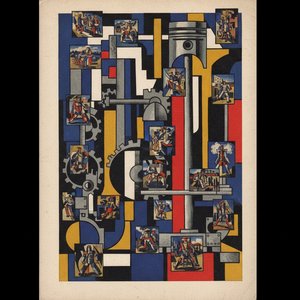
Utforska Fernand Légers 25 mest ikoniska målningar! Fördjupa dig i kubismens värld, maskinålderns färgstarka estetik och tidlösa konstverk. Köp reproduktioner av högsta kvalitet på Most-Famous-Paintings.com – för din inredning.
Utforska Wassily Kandinskys 25 mest ikoniska verk – från expressionism till abstrakt konst. Lär känna historien bakom mästerverken och hitta inspiration för din heminredning med Most-Famous-Paintings.com. Upptäck hela samlingen online!

Utforska de 25 mest ikoniska konstverken på Metropolitan Museum of Art i New York! Upptäck van Gogh, Monet, Rembrandt och mer – deras historia, teknik & inspiration. Hitta museumskvalitativa tryck och inred ditt hem med tidlös skönhet hos Most-Famous-Paintings.com.
Upptäck MOMA:s 25 mest ikoniska konstverk – från van Gogh till Warhol! Lär känna historien bakom mästerverken och hitta inspiration för din heminredning. Köp museumskvalitativa reproduktioner på Most-Famous-Paintings.com.

Explore the groundbreaking work of David Bomberg, a pivotal figure in British abstraction. Discover his artistic evolution, influences, and lasting legacy through insightful analysis & expert commentary.


Håll dig uppdaterad med de senaste konstnyheterna, exklusiva erbjudanden och inredningsidéer.
Berätta om ditt projekt så kommer våra konstexperter att ge dig 3 personliga konstförslag.
Vi skapar ett urval av 3 alternativ helt anpassat för dig – gratis!


 Förhandsvisa
 Skicka
 Dela
Dela
 Visa detaljer

 Ladda ner
 Liknande objekt
 Röntgen
 Bildspel
 Visa mer







 Glasalternativet är endast tillgängligt i storlekar under 110 cm.


