x

 Acrylic On CanvasWallArtSpiritual Expressionism
 1612
1612 115.0 x 85.0 cm
 Worcester Art Museum
Giclée- eller canvasprint av museumskvalitet med snabb produktion och flexibla ytbehandlingsalternativ. ( Beställ handmålad reproduktion Köp högupplöst bild)





























Välj bland våra förinställda storlekar som motsvarar konstverkets ursprungliga proportioner.

Du kan ange egna mått för att passa en specifik ram eller yta. Om det valda måttet inte överensstämmer med originalbildens proportioner kommer vi antingen att beskära konstverket eller utöka bilden med en speglad eller enfärgad kant. En digital mockup skickas för ditt godkännande innan produktionen påbörjas.
Vänligen notera att förhandsvisningen på skärmen inte återspeglar den faktiska beskärningen eller utökningen. Endast mockuppen visar den slutgiltiga kompositionen korrekt.
Även om anpassade storlekar är möjliga, rekommenderar vi att du väljer ett mått från den fördefinierade listan för att bevara de ursprungliga proportionerna.
Leverans över hela världen () på 2 veckor istället för standard 4/5 veckor. (20 augusti)


St. Sebastian
Storlek på reproduktion
El Greco's "St. Sebastian," painted in 1612, is not merely a depiction of martyrdom; it’s an intensely felt embodiment of anguish and spiritual torment. The painting immediately confronts the viewer with a stark image: a naked man, prostrate on what appears to be a simple wooden beam, his body riddled with arrows. Yet, this isn't a scene of dramatic action or heroic resistance. Instead, there is a profound stillness, an almost unbearable quietude that speaks volumes about the saint’s ordeal. The darkness enveloping the figure—a deliberate choice by El Greco—amplifies the sense of isolation and vulnerability, drawing our gaze directly to the wounds themselves.
The artist's mastery lies in his ability to convey emotion through form and color. While the palette is restrained – primarily deep browns, ochres, and muted reds – each brushstroke vibrates with a palpable energy. Notice how El Greco uses elongated forms, a hallmark of his style, to exaggerate the contours of Sebastian’s body, emphasizing the agony etched into every line. The arrows themselves aren't rendered with sharp detail; rather, they are suggested through subtle shading and texture, contributing to an overall impression of overwhelming pain. This deliberate ambiguity invites contemplation – we don’t see the precise mechanism of his suffering, but feel its devastating weight.
St. Sebastian's story is rooted in early Christian tradition. He was a Roman soldier who lived during the persecution of Christians under Diocletian. He volunteered to guard the imperial lupanar (brothel) as a form of penance for his past sins, and when he discovered that the guards were also engaging in illicit activities, he exposed them to the authorities. As a result, he was imprisoned and eventually sentenced to death by being shot with arrows – a punishment often reserved for those deemed enemies of the state. El Greco’s painting powerfully captures this moment of brutal execution, transforming it into a timeless meditation on faith, sacrifice, and enduring suffering.
It's crucial to understand that El Greco painted this work during a period of significant religious upheaval in Spain. The Spanish Inquisition was actively suppressing heresy, and the Catholic Church was seeking to reinforce its authority through art. Sebastian’s image resonated deeply with contemporary audiences, serving as a potent symbol of Christian virtue and resilience in the face of persecution. His nakedness, while shocking at first glance, can be interpreted as a stripping away of worldly possessions and pride – a preparation for his ultimate reward in heaven.
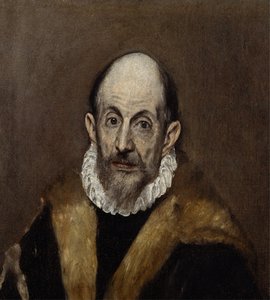
Doménikos Theotokópoulos, known simply as El Greco, was an artist utterly unlike any other. Born on Crete, he initially trained in the traditions of the Byzantine Empire – a style characterized by its rich colors, intricate detail, and spiritual intensity. However, his time in Venice exposed him to Renaissance influences, particularly the works of Titian and Veronese, which broadened his understanding of composition and color theory. Upon arriving in Toledo, Spain, El Greco synthesized these diverse influences into a uniquely personal style that is both emotionally charged and formally innovative.
His elongated figures, dramatic use of light and shadow (chiaroscuro), and expressive gestures are all hallmarks of his distinctive approach. He frequently employed a flattened perspective, creating an almost theatrical effect, as if pulling the viewer directly into the scene. This departure from traditional realism was revolutionary at the time and continues to captivate viewers today. The dynamism within this seemingly static image is remarkable – it’s a testament to El Greco's ability to imbue his subjects with profound psychological depth.
Most-Famous-Paintings offers meticulously crafted, hand-painted reproductions of El Greco’s “St. Sebastian,” allowing you to experience the power and beauty of this iconic work in your own space. Our artists replicate El Greco's nuanced techniques with exceptional care, capturing the depth of color, the texture of the paint, and the emotional intensity of the original. Whether displayed in a grand salon or a contemplative study, this reproduction serves as a constant reminder of faith, suffering, and the enduring legacy of one of art history’s most singular figures.
The 115 x 85 cm size is ideal for creating a focal point within your interior design. Consider pairing it with complementary colors – deep blues or purples – to enhance its dramatic impact. More than just a decorative piece, this reproduction invites contemplation and offers a profound connection to the artistic genius of El Greco.

1541 - 1614 , Griechenland
Explore the dramatic transition from High Renaissance harmony to Mannerist tension. Discover how masters like El Greco redefined art through distortion and spiritual intensity. An expert guide for art enthusiasts seeking deep historical context and museum-quality inspiration.

Explore the profound elegance of Baroque Classicism. Discover how 17th-century masters synthesized dramatic emotion with classical order through the lens of the Counter-Reformation and the works of legends like Carlo Maratta and Andrea Sacchi.

Explore the dramatic evolution from Mannerist distortion to Baroque grandeur. Discover how light, shadow, and emotion redefined art history through a masterclass in technical mastery and religious fervor.

Explore the profound drama of 17th-century Baroque art. Discover how masters used chiaroscuro, movement, and emotional intensity to redefine history through the lens of the Counter-Reformation. An expert guide for art historians and collectors seeking deep cultural insight.

Explore the profound differences between Baroque drama and Rococo elegance. Our expert guide delves into art history, chiaroscuro, and the evolution of European masterpieces for collectors and enthusiasts seeking deep historical context.


Håll dig uppdaterad med de senaste konstnyheterna, exklusiva erbjudanden och inredningsidéer.
Berätta om ditt projekt så kommer våra konstexperter att ge dig 3 personliga konstförslag.
Vi skapar ett urval av 3 alternativ helt anpassat för dig – gratis!


 Förhandsvisa
 Skicka
 Dela
Dela
 Visa detaljer

 Ladda ner
 Liknande objekt
 Röntgen
 Bildspel
 Visa mer







 Glasalternativet är endast tillgängligt i storlekar under 110 cm.