x

 Renaissance Expressionism
 1568
1568 37.0 x 23.0 cm
 Galleria Estense
Giclée- eller canvasprint av museumskvalitet med snabb produktion och flexibla ytbehandlingsalternativ. ( Beställ handmålad reproduktion Köp högupplöst bild)





























Välj bland våra förinställda storlekar som motsvarar konstverkets ursprungliga proportioner.

Du kan ange egna mått för att passa en specifik ram eller yta. Om det valda måttet inte överensstämmer med originalbildens proportioner kommer vi antingen att beskära konstverket eller utöka bilden med en speglad eller enfärgad kant. En digital mockup skickas för ditt godkännande innan produktionen påbörjas.
Vänligen notera att förhandsvisningen på skärmen inte återspeglar den faktiska beskärningen eller utökningen. Endast mockuppen visar den slutgiltiga kompositionen korrekt.
Även om anpassade storlekar är möjliga, rekommenderar vi att du väljer ett mått från den fördefinierade listan för att bevara de ursprungliga proportionerna.
Leverans över hela världen () på 2 veckor istället för standard 4/5 veckor. (16 augusti)


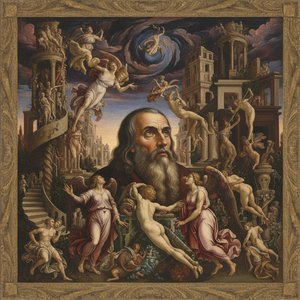
The Modena Triptych (back panels)
Storlek på reproduktion
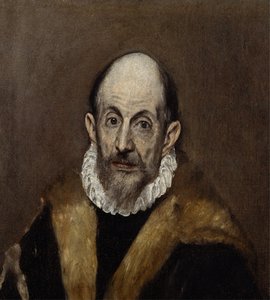
Doménikos Theotokópoulos, known universally as El Greco, was born in Crete in 1541, a world steeped in Byzantine tradition. His early training profoundly shaped his artistic sensibilities – a deep understanding of iconography and a reverence for religious subjects were ingrained from the outset. However, it wasn’t simply imitation he sought; he evolved, pushing the boundaries of representation with an almost visionary intensity. The turbulent political landscape of Spain during this period, marked by religious fervor and the rise of the Habsburg dynasty, undoubtedly influenced his work, providing a fertile ground for exploring themes of spirituality and salvation. His Greek heritage – signified by the “Krḗs” appended to his name – was a constant source of pride, informing both his artistic identity and his connection to the spiritual heartland he eventually called home in Toledo.
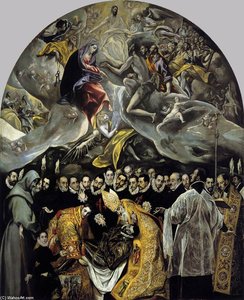
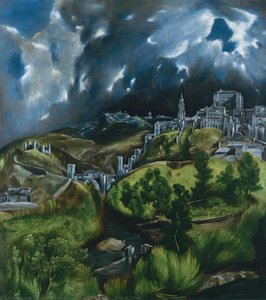
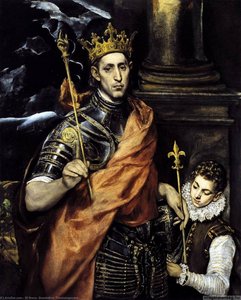
The scenes depicted on these panels are rich with symbolic meaning. While specific interpretations vary depending on scholarly analysis, the overall narrative likely draws from biblical accounts of salvation and judgment. The figures, rendered with a heightened sense of emotion, represent not just individuals but archetypes of faith – the mother and child, representing Mary’s devotion; the angelic figure, embodying divine grace; and the men standing beside each other, perhaps symbolizing humanity's struggle between good and evil. The crown worn by one of the figures could signify royalty or divine authority, adding another layer to the complex theological message.
Created in 1568, this “Modena Triptych” (back panels) stands as a testament to El Greco’s unparalleled vision and technical skill. Its emotional power transcends time, inviting contemplation on themes of faith, mortality, and the human condition. While this particular image is presented here as a photographic reproduction, it serves as a powerful reminder of the original's enduring legacy. Owning a high-quality reproduction allows you to bring this masterpiece into your own space, fostering a connection with one of art history’s most captivating figures – El Greco himself.

1541 - 1614 , Griechenland
Explore the dramatic transition from High Renaissance harmony to Mannerist tension. Discover how masters like El Greco redefined art through distortion and spiritual intensity. An expert guide for art enthusiasts seeking deep historical context and museum-quality inspiration.

Explore the dramatic evolution of Mannerism from High Renaissance perfection to El Greco's spiritual intensity. Discover the history, techniques, and enduring legacy of this transformative era through an expert art-history lens.

Explore the profound drama of Spanish Baroque art. Delve into the mastery of light, shadow, and realism through the legendary works of Diego Velázquez and the Spanish Golden Age with our expert-led historical guide.


Håll dig uppdaterad med de senaste konstnyheterna, exklusiva erbjudanden och inredningsidéer.
Berätta om ditt projekt så kommer våra konstexperter att ge dig 3 personliga konstförslag.
Vi skapar ett urval av 3 alternativ helt anpassat för dig – gratis!


 Förhandsvisa
 Skicka
 Dela
Dela
 Visa detaljer

 Ladda ner
 Liknande objekt
 Röntgen
 Bildspel
 Visa mer







 Glasalternativet är endast tillgängligt i storlekar under 110 cm.