x

 62.0 x 75.0 cm
Giclée- eller canvasprint av museumskvalitet med snabb produktion och flexibla ytbehandlingsalternativ. ( Beställ handmålad reproduktion Köp högupplöst bild)
Välj bland våra förinställda storlekar som motsvarar konstverkets ursprungliga proportioner.

Du kan ange egna mått för att passa en specifik ram eller yta. Om det valda måttet inte överensstämmer med originalbildens proportioner kommer vi antingen att beskära konstverket eller utöka bilden med en speglad eller enfärgad kant. En digital mockup skickas för ditt godkännande innan produktionen påbörjas.
Vänligen notera att förhandsvisningen på skärmen inte återspeglar den faktiska beskärningen eller utökningen. Endast mockuppen visar den slutgiltiga kompositionen korrekt.
Även om anpassade storlekar är möjliga, rekommenderar vi att du väljer ett mått från den fördefinierade listan för att bevara de ursprungliga proportionerna.
Leverans över hela världen () på 2 veckor istället för standard 4/5 veckor. (20 augusti)


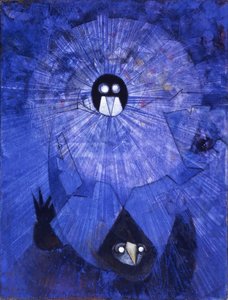
The River
Storlek på reproduktion

Esther Margaret Grainger (1912–1990) stands as a remarkable figure in Welsh art history—a painter deeply rooted in the landscape traditions of her homeland yet passionately committed to fostering artistic creativity within underserved communities. Her life’s work embodies a synthesis of meticulous observation and humanist concern, resulting in paintings that capture both the beauty of Welsh scenery and the spirit of collaborative endeavor.
Born in Cardiff, Grainger’s formative years were marked by a privileged education—a scholarship to Howell’s School instilled in her a foundational understanding of artistic principles. This academic grounding complemented practical training at Cardiff School of Art under William Pickles, Heinz Koppel and George Mayer-Marton, exposing her to diverse stylistic approaches.
Her involvement with the Pontypridd Settlement proved pivotal, shaping not only her artistic practice but also her worldview. Collaborating closely with Cedric Morris and John Dennithorne, Grainger championed the idea that art could empower individuals facing hardship—organizing painting classes and exhibitions aimed at enriching the lives of unemployed miners’ families. This dedication to social engagement profoundly influenced her aesthetic sensibilities.
Grainger's artistic style evolved over time, reflecting influences from Impressionism and Celtic Art. She favored watercolor as her medium, skillfully blending pigments to achieve luminous effects that conveyed the subtle nuances of Welsh light and color. Her landscapes—particularly depictions of Snowdonia and the Lleyn Peninsula—are characterized by a quiet confidence and an unwavering attention to detail—capturing textures and atmospheric conditions with remarkable accuracy.
Throughout her career, Grainger’s work gained recognition within Wales and beyond. Exhibitions at venues like Newport Museum and Art Gallery, Cardiff University and Colchester showcased her distinctive vision—demonstrating a commitment to both artistic excellence and social responsibility. Her legacy continues to inspire artists and educators alike, reminding us of the transformative power of art as a tool for fostering empathy and enriching human experience.
Her paintings—such as “The Orchard, Summer” and “Ryder Street”—remain treasured examples of Welsh Impressionism, embodying Grainger’s belief that art could illuminate the human condition while celebrating the splendor of the natural world.


Håll dig uppdaterad med de senaste konstnyheterna, exklusiva erbjudanden och inredningsidéer.
Berätta om ditt projekt så kommer våra konstexperter att ge dig 3 personliga konstförslag.
Vi skapar ett urval av 3 alternativ helt anpassat för dig – gratis!


 Förhandsvisa
 Skicka
 Dela
Dela
 Visa detaljer

 Ladda ner
 Liknande objekt
 Röntgen
 Bildspel
 Visa mer




































 Glasalternativet är endast tillgängligt i storlekar under 110 cm.