Sälj din konst
Önskelista Varukorg Cart
FörhandsvisaFörhandsvisa Förhandsgranska i ARFörhandsgranska i AR Beställ tryck Beställ tryckBeställ handmålad reproduktion Beställ handmålad reproduktion SkickaSkicka
Visa detaljerVisa detaljer Lägg till i favoriter Lägg till i favoriter Ladda nerLadda ner Liknande objektLiknande objekt RöntgenRöntgen BildspelBildspel

Beatrice

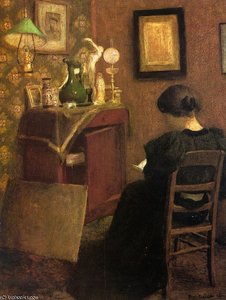
Discover 'Beatrice' by Fedir Krychevsky (1911), an evocative Symbolist portrait capturing a young woman’s contemplative gaze and rich textures through masterful oil painting techniques.

Fedir Krychevsky (1879-1947): Ukrainian modernist painter blending Klimt's influence with folk art & religious themes. Founder of Ukraine's State Academy of Arts, embodying national identity & resilience.

Köp en högupplöst, förbättrad digital bild med betydligt högre kvalitet än förhandsvisningen online.

Varje fil är noggrant förberedd av våra interna specialister med hjälp av avancerade verktyg och professionell manuell retuschering. Vi säkerställer att varje bild har exceptionell skärpa, exakt färgåtergivning och fina detaljer.

Den slutgiltiga filen levereras via e-post inom 72 timmar, optimerad för omedelbar användning i professionella sammanhang, redaktionellt bruk och tryckmiljöer. Detta är samma kvalitet som med förtroende används av ledande designstudior, förlag och gallerier.

Digital bild

Ladda ner en högupplöst fil för personlig visning, utskrift och kreativa projekt. (Beställ tryck Beställ tryckBeställ handmålad reproduktion Beställ handmålad reproduktion)

Totalpris

$ 24,90

Ingår i varje beställning av digital bild

Professionell digital leverans, garanterad

När du väljer Most-Famous-Paintings.com får du inte bara en bild – du får ett professionellt förädlat digitalt konstverk, skapat med precision och med en garanterad tillfredsställelse. Här är allt som ingår i din beställning, automatiskt:

shipping_icon
Snabb leverans via e-post

Din högupplösta digitala bild skickas till dig via e-post inom 72 timmar efter beställning – redo för omedelbar användning.

canvas_icon
AI-förbättrad digital bild

Ditt konstverk optimeras professionellt med hjälp av avancerade AI-verktyg och manuell redigering, vilket garanterar maximal detaljrikedom, skärpa och färgnoggrannhet.

insurance_icon
Gratis livstidsåterutskick

Har du råkat radera eller tappa bort din fil? Ingen oro – vi skickar den kostnadsfritt till dig när som helst.

tax_icon
Inga importavgifter – någonsin

Njut av ditt konstverk omedelbart utan tull, importavgifter eller leveranskostnader – digitala nedladdningar är alltid skattefria.

color_icon
Garanterad färgåtergivning

Vi säkerställer att din digitala bild återger de ursprungliga färgerna så exakt som möjligt med hjälp av professionella verktyg och färghantering.

return_icon
60 dagars nöjdhetsgaranti

Om du inte är nöjd med din digitala bild kommer vi att revidera den eller återbetala 100% inom 60 dagar – utan frågor.

guarantee_icon
100% pengarna-tillbaka-garanti

Inte nöjd? Få full återbetalning inom 60 dagar efter att du har tagit emot din digitala fil – utan frågor och diskussioner.

discount_icon
Rabatt vid storköp

Köp 3 bilder, spara 10% – Köp 5, spara 15% – Köp 10+, spara 20%. Perfekt för kreativa projekt, gallerier och byråer.

Snabbfakta

  • Subject or theme: Portrait of Beatrice
  • Artist: Fedir Krychevsky
  • Location: National Art Museum, Kyiv
  • Title: Beatrice
  • Influences: Korman
  • Medium: Oil on canvas
  • Movement: Symbolism, Art Nouveau

Konstquiz

Det finns endast ett korrekt svar på varje fråga.

Fråga 1:
What is the primary style of Fedir Krychevsky’s ‘Beatrice’?
Fråga 2:
According to the description, what is a prominent feature of Beatrice’s portrait?
Fråga 3:
In what year was ‘Beatrice’ created?
Fråga 4:
The wreath adorning Beatrice's head likely symbolizes:
Fråga 5:
What medium was used to create ‘Beatrice’?

Beskrivning av samlarobjektet

A Window into the Soul: Exploring Fedir Krychevsky’s “Beatrice”

Fedir Krychevsky's "Beatrice," painted in 1911, isn’t merely a portrait; it’s an intimate glimpse into a young woman’s inner world. Born amidst shifting geopolitical landscapes – Ukraine under Russian rule, and later navigating the turbulent years of early 20th-century Europe – Krychevsky's artistic vision was profoundly shaped by this complex heritage. The painting immediately draws the viewer in with its muted palette of earthy browns, beiges, and subtle greens, a deliberate choice that evokes a sense of quiet contemplation and perhaps even melancholy. It’s a testament to his ability to capture not just likeness, but also the very essence of his subject – a feeling rather than a simple representation.

The composition itself is strikingly direct, yet subtly masterful. Krychevsky has opted for a close-up framing, focusing intently on Beatrice's face and shoulders. Her profile, turned slightly downward, creates an immediate connection with the viewer, inviting us to share in her quiet gaze. The wreath of leaves adorning her head adds a layer of symbolic richness – a nod to classical tradition, perhaps representing honor or even a veiled reference to the mythological associations of laurel wreaths. The deliberate darkness behind her contributes significantly to the painting’s mood, isolating Beatrice and intensifying the focus on her emotional state.

Impressionistic Techniques & Visible Brushwork

Krychevsky's style is best described as a compelling blend of Impressionism and Symbolism, with a strong grounding in realism. He skillfully employs loose brushstrokes – visible throughout the canvas – to capture the fleeting effects of light and shadow, creating an atmosphere that feels both immediate and deeply layered. The texture itself becomes a key element; you can almost feel the roughness of the paint, the delicate layering of colors, and the artist’s deliberate manipulation of surface quality. This tactile approach is particularly evident in the rendering of the foliage, where individual leaves are suggested through subtle shifts in tone and texture, adding depth and richness to the composition.

The use of oil paints allows for a remarkable level of detail while maintaining an overall sense of fluidity. Krychevsky’s technique isn't about precise replication; it’s about conveying feeling and atmosphere. The subtle highlights on Beatrice’s skin, the delicate shading around her eyes – these are not merely technical details but rather carefully considered choices designed to draw attention to her expression and imbue the portrait with a sense of vulnerability.

Symbolism & Historical Context

The painting's symbolism extends beyond the immediate visual elements. The wreath, as mentioned earlier, carries significant weight – it speaks to notions of beauty, honor, and perhaps even a connection to ancient traditions. Beatrice’s contemplative gaze invites interpretation; is she lost in thought? Is there a hint of sadness beneath her surface? Krychevsky's work reflects the artistic currents of his time, particularly the Symbolist movement, which sought to explore the inner world of emotions and ideas through evocative imagery. The painting was created during a period of immense social and political change in Europe – Ukraine’s struggle for independence, the rise of nationalism, and the burgeoning influence of modern art all contributed to the artistic climate of the era.

Further research reveals that “Beatrice” is part of a larger body of work by Krychevsky, reflecting his exploration of Ukrainian identity and his engagement with European artistic trends. The painting’s enduring appeal lies in its ability to transcend time and connect with viewers on an emotional level – a testament to the artist's skill and sensitivity.


Konstnärsbiografi

A Life Etched in Resilience: The World of Fedir Krychevsky

Fedir Hryhorovych Krychevsky, a name resonating with the spirit of Ukrainian early modernism, was born into a world of shifting identities and burgeoning artistic expression. Born in 1879 in Lebedyn, Ukraine—then part of the Russian Empire—his origins were uniquely complex: his father, a Jewish doctor who embraced Orthodox Christianity, married a Ukrainian woman. This confluence of cultures would subtly yet profoundly shape Krychevsky’s artistic vision, imbuing it with a sensitivity to both tradition and innovation. His initial training at the Moscow School of Painting, Sculpture and Architecture laid a foundational groundwork, but it was his subsequent studies at the prestigious Saint Petersburg Academy of Arts that truly honed his skills, culminating in 1910. However, Krychevsky understood that true artistic growth demanded immersion in the wider European landscape; thus, he embarked on an extensive journey through Germany, Austria, France and Italy in 1911-1912, absorbing the currents of Secessionist aesthetics and the masterpieces of Western art.

Blending Influences: The Formation of a Unique Artistic Voice

The impact of this European sojourn is readily apparent in Krychevsky’s early work. He skillfully absorbed the stylistic nuances of Gustav Klimt and Ferdinand Hodler, particularly their embrace of decorative patterns and symbolic depth. Yet, he didn't merely imitate; instead, he masterfully synthesized these influences with the rich tapestry of Ukrainian folk art and religious iconography. This fusion created a distinctive artistic voice—one that was both cosmopolitan and deeply rooted in his national heritage. His draftsmanship was often lauded, drawing comparisons to the meticulous detail of Adolph Menzel. Throughout his career, Krychevsky explored diverse themes, from grand narrative compositions brimming with historical weight to intimate portraits capturing the essence of individual character, and evocative landscapes reflecting the beauty of the Ukrainian countryside. He wasn’t confined by genre; rather, he saw each subject as an opportunity to express his evolving artistic sensibility.

A Pioneer of Ukrainian Art Education

Krychevsky's commitment extended beyond his personal artistic practice; he was a dedicated educator and institution-builder. From 1914 to 1918, he served as professor and director at the Kyiv Art School, nurturing the talents of a new generation of Ukrainian artists. This period coincided with a pivotal moment in Ukrainian history—the struggle for independence following the collapse of the Russian Empire. In 1917, Krychevsky became one of the founding members – and later rector (1920-1922) – of the Ukrainian State Academy of Arts, an institution designed to foster national artistic development and cultivate a uniquely Ukrainian aesthetic identity. Even after the academy’s abolishment, he continued his teaching career at the Kyiv State Art Institute, eventually assuming its rectorship. His dedication to education wasn't merely about imparting technical skills; it was about instilling a sense of cultural pride and artistic purpose in his students.

The Shadow of War and Political Persecution

Krychevsky’s life took a tragic turn with the onset of World War II. Remaining in Kyiv amidst the chaos of German occupation, he bravely worked to protect the Kyiv State Art Institute and served as chairman of the Union of Ukrainian Artists, striving to improve conditions for his colleagues during an incredibly difficult time. Remarkably, his Jewish origins were concealed by those around him—a testament to their loyalty and courage—saving him from the horrors of the Babi Yar massacre. However, this reprieve was short-lived. In 1943, while attempting to escape advancing Soviet troops in Königsberg, he was arrested by the NKVD. Despite a lack of incriminating evidence, he was stripped of his titles and exiled to Irpin near Kyiv, where he tragically succumbed to starvation during the famine of 1947. His death stands as a stark reminder of the political repression that stifled Ukrainian artistic expression for decades.

A Legacy Reclaimed: Krychevsky’s Enduring Significance

For years, Krychevsky's work remained largely obscured, overshadowed by ideological constraints and historical amnesia. It wasn’t until 1959, twelve years after his death, that he was posthumously rehabilitated, and the first exhibition of his works was held in Kyiv, sparking a renewed interest in his art. Today, Fedir Krychevsky is rightfully recognized as a pivotal figure in Ukrainian early modernism—a symbol of resilience, national identity, and artistic integrity. His most celebrated work, the triptych “Life” (“Love,” “Family,” and “Return”), exemplifies his ability to synthesize Art Nouveau aesthetics with the spiritual depth of Ukrainian religious painting. Krychevsky’s dedication to education, his commitment to preserving Ukrainian culture during times of political upheaval, and the enduring power of his artistic vision have cemented his place as a significant figure in the nation's artistic history—a legacy that continues to inspire artists and scholars alike. His life serves as a poignant reminder that art can not only reflect history but also transcend it.
Fedir Krychevsky

Fedir Krychevsky

1879 - 1947 , Ukraine

Snabbfakta

  • Artistic Movement Or Style: Early Modernism
  • Artists Who Influenced This Artist:
    • Gustav Klimt
    • Ferdinand Hodler
  • Date Of Birth: 1879
  • Date Of Death: 1947
  • Full Name: Fedir Krychevsky
  • Nationality: Ukrainian
  • Notable Artworks:
    • Life (triptych)
    • Beatrice
    • Three ages
    • The bride
  • Place Of Birth: Lebedyn, Ukraine