x

Giclée- eller canvasprint av museumskvalitet med snabb produktion och flexibla ytbehandlingsalternativ. ( Beställ handmålad reproduktion Köp högupplöst bild)





























Välj bland våra förinställda storlekar som motsvarar konstverkets ursprungliga proportioner.

Du kan ange egna mått för att passa en specifik ram eller yta. Om det valda måttet inte överensstämmer med originalbildens proportioner kommer vi antingen att beskära konstverket eller utöka bilden med en speglad eller enfärgad kant. En digital mockup skickas för ditt godkännande innan produktionen påbörjas.
Vänligen notera att förhandsvisningen på skärmen inte återspeglar den faktiska beskärningen eller utökningen. Endast mockuppen visar den slutgiltiga kompositionen korrekt.
Även om anpassade storlekar är möjliga, rekommenderar vi att du väljer ett mått från den fördefinierade listan för att bevara de ursprungliga proportionerna.
Leverans över hela världen () på 2 veckor istället för standard 4/5 veckor. (22 augusti)


Landscape2
Storlek på reproduktion
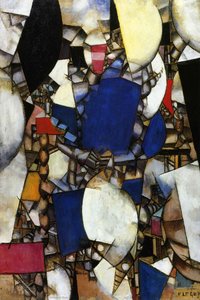
To encounter Fernand Léger’s 1913 masterpiece, Landscape, is to witness the precise moment where the pastoral past collided with the industrial future. This work serves as a profound cornerstone of Cubist aesthetics, capturing a world in transition. While the canvas draws its soul from the rolling greenery of rural Normandy—the artist's own formative landscape—it refuses to remain anchored in mere nostalgia. Instead, Léger orchestrates a deliberate reconciliation between the raw, organic beauty of nature and the burgeoning, rhythmic power of the machine age. It is a visual dialogue that speaks to the tension and the eventual harmony found between the earth and the engine.
The painting’s technique is a masterclass in the Cubist language of fragmentation and reconstruction. Rather than offering a window into a realistic scene, Léger utilizes flattened planes and multiple perspectives to deconstruct familiar elements like trees, buildings, and tracks into a dynamic arrangement of geometric forms. His brushwork possesses a tactile, muscular quality; thick impasto strokes lend a physical weight to the pigment, emphasizing the materiality of the paint itself. This approach does not merely depict a scene but engineers a visual experience, where the movement of a train on its tracks is felt through the very rhythm of the composition.
Beyond its striking geometry, Landscape is rich with the symbolic weight of the early twentieth century. Painted during the height of the Belle Époque, the work anticipates the frenetic energy of Futurism and the bold clarity of Pop Art. The inclusion of architectural structures alongside natural elements is far from decorative; it represents Léger’s deep-seated belief in the coexistence of civilization and the wilderness. Within this fractured landscape, a prominent clock emerges as a poignant symbol, acting as a silent sentinel reminding the viewer of time's relentless, mechanical march against the enduring stillness of the trees.
For the discerning collector or interior designer, this piece offers more than just aesthetic appeal; it provides a focal point of intellectual and emotional depth. The painting’s ability to blend the man-made—such as the sleek, moving train and structured buildings—with the organic creates an atmosphere of "mechanized harmony." It is a work that commands attention in any modern space, inviting contemplation on how technology reshapes our perception of the natural world. Whether viewed as a tribute to industrial progress or a study in structural beauty, Léger’s vision remains a vibrant, high-voltage celebration of modern life that continues to inspire awe and curiosity.

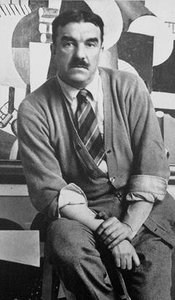
1881 - 1955 , Frankrike

Explore the sharp geometry and industrial soul of Precisionism. Discover how American Modernists like Charles Sheeler captured the Machine Age through Cubist-inspired landscapes and architectural precision in this definitive art history guide.

Explore the revolutionary world of Cubism. Discover how Pablo Picasso and Georges Braque dismantled perspective to redefine modern art through geometric innovation and analytical mastery. An essential guide for art students, collectors, and history enthusiasts.


Håll dig uppdaterad med de senaste konstnyheterna, exklusiva erbjudanden och inredningsidéer.
Berätta om ditt projekt så kommer våra konstexperter att ge dig 3 personliga konstförslag.
Vi skapar ett urval av 3 alternativ helt anpassat för dig – gratis!


 Förhandsvisa
 Skicka
 Dela
Dela
 Visa detaljer

 Ladda ner
 Liknande objekt
 Röntgen
 Bildspel

 Visa mer







 Glasalternativet är endast tillgängligt i storlekar under 110 cm.