


x

 OljaVäggkonstTubist Cubism
 1916Modernism
 130.0 x 97.0 cm
Handmålad olja på duk i din valda storlek och ram, tillverkad efter beställning av våra konstnärer. ( Beställ tryck Köp högupplöst bild)





























Välj bland våra förinställda storlekar som motsvarar konstverkets ursprungliga proportioner.

Du kan ange egna mått för att passa en specifik ram eller yta. Om den valda storleken inte matchar originalbildens proportioner kommer vi antingen att beskära konstverket eller utöka målningen med ytterligare handmålade element. En digital skiss skickas till dig för godkännande innan produktionen påbörjas.
Observera att förhandsvisningen på skärmen inte återspeglar den faktiska beskärningen eller utökningen. Endast skissen visar den slutgiltiga kompositionen korrekt.
Även om anpassade storlekar är möjliga, rekommenderar vi att du väljer en dimension från den fördefinierade listan för att bevara originalproportionerna.
Leverans över hela världen () på 3–4 veckor istället för standard 5 veckor. (17 augusti). Inga kompromisser med kvaliteten.


Soldier with a pipe
Storlek på reproduktion
Fernand Léger’s “Soldier with a Pipe,” painted in 1916, is far more than a simple portrait; it's a vibrant snapshot of a rapidly changing world grappling with the anxieties and transformations of the early 20th century. This artwork, housed at the Kunstsammlung Nordrhein-Westfalen in Düsseldorf, encapsulates Léger’s pivotal role as a bridge between the waning days of Cubism and the burgeoning movements that would define modern art – a testament to his unique “Tubist” style, characterized by its bold simplification and celebration of industrial forms. The painting immediately draws the eye with its dynamic composition and striking color palette; a deliberate departure from traditional military representations, Léger presents us not with a stoic warrior, but with an individual imbued with a quiet contemplation amidst the paraphernalia of modern life.
Léger’s artistic journey began in the rural landscapes of Normandy, profoundly shaped by his early experiences working as a farmhand. This connection to the physical world would later inform his distinctive style – a fusion of geometric abstraction and recognizable forms. He initially developed a personal brand of Cubism, characterized by fragmented perspectives and overlapping planes, but he soon moved towards a more figurative approach, one that embraced the dynamism of the machine age. “Soldier with a Pipe” exemplifies this shift; the soldier’s body is broken down into cylindrical shapes – a hallmark of Tubism – yet retains a discernible human presence. The use of bold primary colors—a striking red, blue, and yellow—further emphasizes this sense of mechanized vitality, creating an image that feels both familiar and strangely futuristic.
Tubism, named for its emphasis on cylindrical forms, was a radical departure from traditional artistic conventions. Léger sought to capture the essence of modern life – the rhythms of factories, the geometry of machines – through simplified shapes and bold colors. In “Soldier with a Pipe,” this is evident in the almost entirely circular composition: the soldier’s body, the cups, bottles, chair, and bowl all rendered as rounded volumes. This deliberate reduction of form creates a sense of immediacy and dynamism, suggesting movement and energy. The artist's technique is remarkably direct; broad brushstrokes and a lack of meticulous detail contribute to the painting’s raw, almost primitive quality – mirroring perhaps the experience of witnessing the relentless pace of industrialization.
Beyond its formal qualities, “Soldier with a Pipe” carries significant symbolic weight. The soldier, seated amidst his companions, is not engaged in battle or heroic action but rather enjoying a moment of respite—a shared drink and conversation. This subtle shift in focus speaks to Léger’s desire to portray everyday life as worthy of artistic attention. The inclusion of the pipe itself – a ubiquitous symbol of leisure and contemplation – reinforces this theme. The painting can be interpreted as a commentary on the changing role of the soldier in modern society, moving away from traditional notions of martial prowess towards a more civilian existence. It’s a poignant reflection on the impact of war on individuals and communities.
It's crucial to understand that “Soldier with a Pipe” was created during the tumultuous years of World War I, an experience that profoundly shaped Léger’s artistic vision. Having served in the French Army, he witnessed firsthand the horrors of trench warfare and the profound psychological impact on soldiers. This experience is subtly reflected in the painting's unsettling yet captivating atmosphere – a sense of detachment and alienation. The simplified forms and bold colors can be seen as a way to process and grapple with the trauma of war, transforming it into a visual language that transcends literal representation.
Léger’s work anticipated many developments in 20th-century art, including Pop Art and Abstract Expressionism. His embrace of modern subject matter – industrial objects, urban landscapes, everyday people – paved the way for artists who sought to challenge traditional notions of beauty and artistic expression. “Soldier with a Pipe” stands as a powerful example of Léger’s innovative spirit and his ability to capture the essence of his time. Today, reproductions of this iconic artwork offer a unique opportunity to experience the brilliance of Fernand Léger's vision – a timeless testament to the transformative power of art.
For art enthusiasts and collectors seeking a high-quality reproduction of “Soldier with a Pipe,” Fernand Léger: Soldier with a Pipe is available as a handmade oil painting reproduction at Most-Famous-Paintings.com. Visit Most-Famous-Paintings.com to explore more about art history and to own a piece of it.
Further resources:

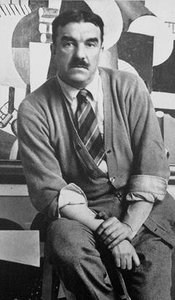
1881 - 1955 , Frankrike

Explore the dynamic world of Italian Futurism. Discover how masters like Umberto Boccioni captured speed, power, and modernity through revolutionary techniques. A definitive guide for art historians and collectors seeking to understand the movement that redefined the machine age.


Håll dig uppdaterad med de senaste konstnyheterna, exklusiva erbjudanden och inredningsidéer.
Berätta om ditt projekt så kommer våra konstexperter att ge dig 3 personliga konstförslag.
Vi skapar ett urval av 3 alternativ helt anpassat för dig – gratis!


 Förhandsvisa
 Skicka
 Dela
Dela
 Visa detaljer

 Ladda ner
 Liknande objekt
 Röntgen
 Bildspel
 Visa mer







 Glasalternativet är endast tillgängligt i storlekar under 110 cm.


