


x

Giclée- eller canvasprint av museumskvalitet med snabb produktion och flexibla ytbehandlingsalternativ. ( Beställ handmålad reproduktion Köp högupplöst bild)





























Välj bland våra förinställda storlekar som motsvarar konstverkets ursprungliga proportioner.

Du kan ange egna mått för att passa en specifik ram eller yta. Om det valda måttet inte överensstämmer med originalbildens proportioner kommer vi antingen att beskära konstverket eller utöka bilden med en speglad eller enfärgad kant. En digital mockup skickas för ditt godkännande innan produktionen påbörjas.
Vänligen notera att förhandsvisningen på skärmen inte återspeglar den faktiska beskärningen eller utökningen. Endast mockuppen visar den slutgiltiga kompositionen korrekt.
Även om anpassade storlekar är möjliga, rekommenderar vi att du väljer ett mått från den fördefinierade listan för att bevara de ursprungliga proportionerna.
Leverans över hela världen () på 2 veckor istället för standard 4/5 veckor. (18 augusti)


Still Life with key
Storlek på reproduktion
Fernand Léger's Still Life with Key is more than just a depiction of musical instruments; it’s a profound meditation on the burgeoning relationship between humanity and machinery, rendered in his signature “Tubism” style. Painted by this pivotal figure of the early 20th century, the artwork captures a moment of quiet contemplation amidst a carefully orchestrated tableau of objects – a violin, cello, piano, books, and a bowl – each imbued with a sense of deliberate arrangement that speaks to Léger’s fascination with geometric forms and industrial aesthetics. The painting's power lies not just in its subject matter but in the way Léger translates observed reality into an intensely abstract language, anticipating the radical shifts occurring within the art world at the time.
Created between 1920 and 1930, Still Life with Key firmly establishes Léger’s groundbreaking approach known as “Tubism.” Emerging from his earlier work, particularly the "Dynamic Cubes," Tubism sought to represent objects not as single, unified forms but as a series of interlocking geometric volumes – cylinders, cones, and cubes – reflecting the fragmented perspectives offered by modern urban life and the mechanized world. Léger was deeply influenced by the industrial landscape of Paris, witnessing firsthand the rise of factories, trains, and other machines that were reshaping society. This fascination is vividly expressed in the painting’s fractured representation of the instruments, suggesting their construction as a complex assembly of parts rather than a seamless whole.
Beyond its purely formal concerns, Still Life with Key carries significant symbolic weight. The musical instruments themselves – violin, cello, and piano – represent the enduring power of human creativity and expression in an increasingly mechanized world. Their placement within the composition is deliberate, creating a visual dialogue between organic forms (the instruments) and geometric ones (Léger’s fragmented representation). The books scattered throughout the scene could symbolize knowledge, tradition, or perhaps a yearning for stability amidst the rapid changes brought about by industrialization. Even the key, subtly integrated into the artwork, hints at unlocking new possibilities, accessing hidden structures, or controlling the forces of modernity.
Léger’s technique is characterized by bold brushstrokes, a vibrant palette dominated by blues, greens, and ochres, and a meticulous attention to detail within his abstracted forms. He employed a layering technique, building up the composition through multiple applications of paint, creating a textured surface that adds depth and dynamism to the work. The overall effect is one of controlled chaos – a visual representation of the energy and movement inherent in the machine age. Still Life with Key evokes a sense of both fascination and unease, inviting viewers to contemplate the complex relationship between humanity and technology, a theme that remains remarkably relevant today. This reproduction offers an exceptional opportunity to experience Léger’s revolutionary vision firsthand.

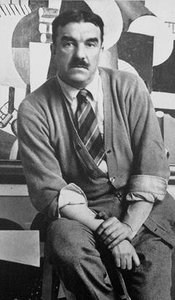
1881 - 1955 , Frankrike
Explore the profound emotional depth of Lyrical Abstraction. Discover how masters like Raymond Parker used color and form to bridge Impressionism and Abstract Expressionism. Learn about this pivotal movement through our expert-led art history guide.

Explore the profound emotional depth of Color Field painting. Discover the history of mid-century abstraction, from Rothko to Newman, and learn how pure color transforms the viewer's experience through our expert art history guide.


Håll dig uppdaterad med de senaste konstnyheterna, exklusiva erbjudanden och inredningsidéer.
Berätta om ditt projekt så kommer våra konstexperter att ge dig 3 personliga konstförslag.
Vi skapar ett urval av 3 alternativ helt anpassat för dig – gratis!


 Förhandsvisa
 Skicka
 Dela
Dela
 Visa detaljer

 Ladda ner
 Liknande objekt
 Röntgen
 Bildspel

 Visa mer







 Glasalternativet är endast tillgängligt i storlekar under 110 cm.


