


x

Giclée- eller canvasprint av museumskvalitet med snabb produktion och flexibla ytbehandlingsalternativ. ( Byt till handmålad målning Byt till bild)





























Välj bland våra förinställda storlekar som motsvarar konstverkets ursprungliga proportioner.

Du kan ange egna mått för att passa en specifik ram eller yta. Om det valda måttet inte överensstämmer med originalbildens proportioner kommer vi antingen att beskära konstverket eller utöka bilden med en speglad eller enfärgad kant. En digital mockup skickas för ditt godkännande innan produktionen påbörjas.
Vänligen notera att förhandsvisningen på skärmen inte återspeglar den faktiska beskärningen eller utökningen. Endast mockuppen visar den slutgiltiga kompositionen korrekt.
Även om anpassade storlekar är möjliga, rekommenderar vi att du väljer ett mått från den fördefinierade listan för att bevara de ursprungliga proportionerna.
Leverans över hela världen () på 2 veckor istället för standard 4/5 veckor. (11 augusti)


The big tug
Reproduktionsstorlek
Fernand Léger’s The Big Tug (1923) is a vibrant testament to the dynamism of the Machine Age, embodying the artist's signature “Tubism” – a uniquely mechanical and boldly colorful offshoot of Cubism. This captivating work isn’t a literal depiction of a tugboat, but rather an abstracted representation of its power, energy, and the industrial world it represents.
Léger moved beyond traditional representational art to capture the essence of modern life. The Big Tug eschews realistic imagery in favor of a dynamic composition built from overlapping geometric forms – cylinders, cones, and planes – reminiscent of machine parts and architectural structures. This deliberate fragmentation and reconstruction reflect the rapid industrialization and urbanization transforming Europe at the time. The artwork doesn’t *show* us a tugboat; it *evokes* its feeling: strength, movement, and the relentless pulse of progress.
Léger's technique is characterized by precise brushwork and a sophisticated use of color. Bold primary hues – reds, yellows, and blues – are juxtaposed with muted earth tones, creating a lively yet harmonious visual rhythm. The interplay of sharp, defined edges alongside softer curves adds depth and texture, suggesting both the rigidity of machinery and the fluidity of motion. Notice how Léger utilizes contrasting light and dark areas to further emphasize form and create a sense of spatial complexity within the abstract composition. The layering of shapes creates a feeling of forward momentum, mirroring the power of the vessel it alludes to.
Created in 1923, The Big Tug emerges from a period of profound societal change following World War I. Europe was rebuilding and embracing technological advancements with unprecedented enthusiasm. Léger’s work reflects this optimism, celebrating the harmony between humans and machines – viewing technology not as a threat, but as an integral part of modern existence. He saw beauty in the functional forms of industry, elevating them to artistic subjects. This fascination aligns him with other modernist movements like Futurism, though Léger's approach remained distinctly his own.
The Big Tug is more than just a visually striking artwork; it’s an energizing statement piece. Its bold colors and dynamic composition inspire feelings of optimism, progress, and forward-thinking energy. This work invites contemplation on the relationship between humanity and technology, prompting viewers to consider the forces shaping the modern world.
Display Recommendations: This artwork would be a stunning focal point in a contemporary living room, office, or gallery space. Its abstract nature allows it to complement a variety of interior styles – from minimalist to industrial chic. Consider pairing it with furniture featuring clean lines and geometric shapes to enhance the overall aesthetic. The vibrant color palette will particularly shine against neutral wall colors, allowing the artwork's energy to truly radiate.
Fernand Léger’s influence extends far beyond his own time. He paved the way for Pop Art with his embrace of popular culture and machine aesthetics, and continues to inspire artists today. Owning a reproduction of The Big Tug is not just acquiring a beautiful piece of art; it's investing in a legacy of innovation and a celebration of the modern spirit.


1881 - 1955 , Frankrike
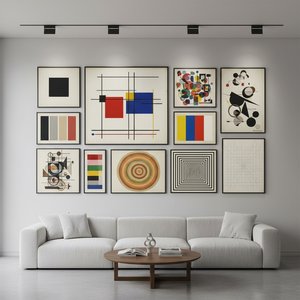
Utforska de 10 mästerverk som definierade geometrisk abstraktion! Lär känna Mondrian, Kandinsky & Malevich. Hitta inspiration och museumskvalitativa konsttryck för ditt hem på Most-Famous-Paintings.com. Upptäck hela samlingen online!

Explore the profound evolution of Modernist art with Most-Famous-Paintings. Discover key movements like Abstract Expressionism & Analytical Realism, artist insights, and expert collecting guidance. Invest in museum-quality reproductions today.

Explore the revolutionary world of Early Modernism! Discover key artists like Picasso & Léger, pivotal movements, and lasting philosophical influences. Uncover the seeds of change that shaped 20th-century art.

Explore the profound work of Penny Diane Wolin, a master of abstract expressionism & documentary photography. Discover her explorations of memory, identity, and cultural heritage – a compelling investment for discerning art collectors.

Explore the evolution of geometric abstraction from Cubism to contemporary art. Discover key artists like Malevich & Mondrian, investment insights, and expert collecting advice at Most-Famous-Paintings.


Håll dig uppdaterad med de senaste konstnyheterna, exklusiva erbjudanden och inredningsidéer.
Berätta om ditt projekt så kommer våra konstexperter att ge dig 3 personliga konstförslag.
Vi skapar ett urval av 3 alternativ helt anpassat för dig – gratis!


 Visa i rummet
 Skicka
 Dela
Dela
 Detaljer

 Ladda ner
 Liknande objekt
 Röntgen
 Bildspel

 Läs mer







 Glasalternativet är endast tillgängligt i storlekar under 110 cm.


