


x

Giclée- eller canvasprint av museumskvalitet med snabb produktion och flexibla ytbehandlingsalternativ. ( Beställ handmålad reproduktion Köp högupplöst bild)





























Välj bland våra förinställda storlekar som motsvarar konstverkets ursprungliga proportioner.

Du kan ange egna mått för att passa en specifik ram eller yta. Om det valda måttet inte överensstämmer med originalbildens proportioner kommer vi antingen att beskära konstverket eller utöka bilden med en speglad eller enfärgad kant. En digital mockup skickas för ditt godkännande innan produktionen påbörjas.
Vänligen notera att förhandsvisningen på skärmen inte återspeglar den faktiska beskärningen eller utökningen. Endast mockuppen visar den slutgiltiga kompositionen korrekt.
Även om anpassade storlekar är möjliga, rekommenderar vi att du väljer ett mått från den fördefinierade listan för att bevara de ursprungliga proportionerna.
Leverans över hela världen () på 2 veckor istället för standard 4/5 veckor. (15 augusti)


The Moulin Rouge
Storlek på reproduktion
Fernand Léger's “The Moulin Rouge” is not merely a depiction of a Parisian cabaret; it’s a vibrant, pulsating embodiment of the early 20th century’s fascination with industrialization and its impact on human form. Painted around 1923, this artwork captures a fleeting moment of performance within the iconic setting of the Moulin Rouge, yet Léger's distinctive style transcends simple representation, offering instead a powerful meditation on movement, geometry, and the burgeoning spirit of modernity. The painting’s subject – a woman in striking yellow attire – is rendered with an almost sculptural quality, her elongated neck and large head echoing the rigid lines and mechanical forms that would become hallmarks of Léger's oeuvre. This isn’t a portrait in the traditional sense; it’s an exploration of how human figures were being perceived and reimagined through the lens of a rapidly changing world.
“The Moulin Rouge” reflects Léger’s broader artistic concerns, which were deeply intertwined with the rise of industrialization and its influence on human life. The woman's pose, reminiscent of a dancer or performer, can be interpreted as a symbol of humanity adapting to – and perhaps even being shaped by – the mechanical forces of the modern age. The handbag, a small detail, adds another layer of intrigue, suggesting both practicality and the potential for consumerism within this new environment. Léger was profoundly interested in the relationship between humans and machines, believing that artists could find beauty and meaning in the forms of industry.
Created during a period of immense social and technological change, “The Moulin Rouge” aligns with Léger’s broader engagement with Cubism and Constructivism. While influenced by Picasso and Braque, Léger developed his own distinct style, characterized by its emphasis on geometric abstraction and its exploration of industrial forms. This painting represents a crucial moment in the development of modern art, demonstrating how artists were responding to the challenges and opportunities presented by the machine age. It’s a testament to Léger's vision that he managed to translate the raw energy of the industrial landscape into a powerfully expressive work of art.

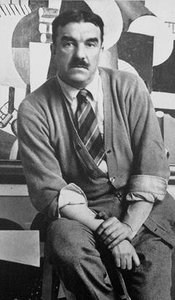
1881 - 1955 , Frankrike
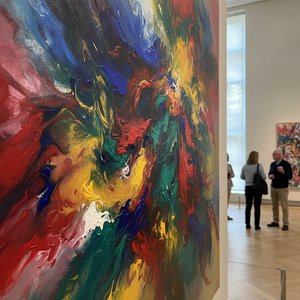
Explore the profound emotional depth of Lyrical Abstraction. Discover how masters like Raymond Parker used color and form to bridge Impressionism and Abstract Expressionism. Learn about this pivotal movement through our expert-led art history guide.

Explore the profound emotional depth of Color Field painting. Discover the history of mid-century abstraction, from Rothko to Newman, and learn how pure color transforms the viewer's experience through our expert art history guide.


Håll dig uppdaterad med de senaste konstnyheterna, exklusiva erbjudanden och inredningsidéer.
Berätta om ditt projekt så kommer våra konstexperter att ge dig 3 personliga konstförslag.
Vi skapar ett urval av 3 alternativ helt anpassat för dig – gratis!


 Förhandsvisa
 Skicka
 Dela
Dela
 Visa detaljer

 Ladda ner
 Liknande objekt
 Röntgen
 Bildspel
 Visa mer







 Glasalternativet är endast tillgängligt i storlekar under 110 cm.


