


x

Köp en högupplöst, förbättrad digital bild med betydligt högre kvalitet än förhandsvisningen online.
Varje fil är noggrant förberedd av våra interna specialister med hjälp av avancerade verktyg och professionell manuell retuschering. Vi säkerställer att varje bild har exceptionell skärpa, exakt färgåtergivning och fina detaljer.
Den slutgiltiga filen levereras via e-post inom 72 timmar, optimerad för omedelbar användning i professionella sammanhang, redaktionellt bruk och tryckmiljöer. Detta är samma kvalitet som med förtroende används av ledande designstudior, förlag och gallerier.
Ladda ner en högupplöst fil för personlig visning, utskrift och kreativa projekt. ( Beställ tryck Beställ handmålad reproduktion)
När du väljer Most-Famous-Paintings.com får du inte bara en bild – du får ett professionellt förädlat digitalt konstverk, skapat med precision och med en garanterad tillfredsställelse. Här är allt som ingår i din beställning, automatiskt:

Din högupplösta digitala bild skickas till dig via e-post inom 72 timmar efter beställning – redo för omedelbar användning.

Ditt konstverk optimeras professionellt med hjälp av avancerade AI-verktyg och manuell redigering, vilket garanterar maximal detaljrikedom, skärpa och färgnoggrannhet.

Har du råkat radera eller tappa bort din fil? Ingen oro – vi skickar den kostnadsfritt till dig när som helst.

Njut av ditt konstverk omedelbart utan tull, importavgifter eller leveranskostnader – digitala nedladdningar är alltid skattefria.

Vi säkerställer att din digitala bild återger de ursprungliga färgerna så exakt som möjligt med hjälp av professionella verktyg och färghantering.

Om du inte är nöjd med din digitala bild kommer vi att revidera den eller återbetala 100% inom 60 dagar – utan frågor.

Inte nöjd? Få full återbetalning inom 60 dagar efter att du har tagit emot din digitala fil – utan frågor och diskussioner.

Köp 3 bilder, spara 10% – Köp 5, spara 15% – Köp 10+, spara 20%. Perfekt för kreativa projekt, gallerier och byråer.
Fernand Léger's 1916 painting, "The Proof That Man Descended From Monkeys," is far more than a whimsical depiction of a man perched atop a ladder. It’s a pivotal work in the evolution of early 20th-century art, a bold statement about modernity, and a surprisingly poignant reflection on humanity's place within the natural world. Created during the tumultuous years of World War I, this piece embodies Léger’s innovative “Tubism” style – a movement he pioneered alongside Pablo Picasso and Georges Braque – that sought to capture the dynamism of industrial life through simplified, geometric forms.
The scene itself is instantly arresting. A man, rendered in Léger's signature blocky style, sits precariously on a ladder, chains encircling his neck. He’s not a heroic figure; rather, he appears bewildered and slightly absurd, a symbol of the disorientation felt by many during this period of rapid social and technological change. Below him, a chaotic scene unfolds – soldiers, engineers, and laborers engage in various tasks, all depicted with a raw, almost brutal honesty. The composition is deliberately fragmented, mirroring the shattered sense of order that war had brought to Europe.
Léger’s Tubism was born out of a desire to translate the impact of machinery and urban life onto canvas. Rejecting traditional representational techniques, he employed simplified forms – cylinders, cones, and cubes – to capture the essence of industrial objects and processes. This wasn't simply an aesthetic choice; it was a philosophical one. Léger believed that these geometric shapes represented a new way of seeing the world, a world dominated by technology and industry.
The painting’s palette is deliberately restrained, utilizing bold primary colors – reds, yellows, blues – punctuated by black and white. This stark contrast emphasizes the forms and creates a sense of visual energy. Léger's brushwork is loose and expressive, adding to the dynamism of the composition. Notice how he uses overlapping planes and fragmented perspectives to create a feeling of movement and instability.
The title itself – “The Proof That Man Descended From Monkeys” – immediately introduces a layer of complex symbolism. It’s a direct reference to Darwin's theory of evolution, which was gaining traction at the time. Léger wasn't simply illustrating scientific theory; he was using it as a metaphor for humanity’s relationship with nature and technology. The man on the ladder can be interpreted as representing mankind’s struggle to adapt to this new world, a world increasingly shaped by forces beyond our control.
Furthermore, the painting's creation coincided with the horrors of World War I. Léger’s depiction of industrial labor reflects the widespread mobilization of men and resources for war production. The chaotic scene below the ladder can be seen as a commentary on the senselessness and brutality of conflict. It is important to note that this artwork was created during a time of immense social upheaval, reflecting anxieties about progress, identity, and humanity's future.
"The Proof That Man Descended From Monkeys" remains a significant work in the history of modern art. It’s a testament to Léger’s innovative approach to form and color, and his ability to capture the spirit of modernity with remarkable clarity. Reproductions of this artwork offer a unique opportunity to experience this pivotal moment in artistic expression – a bold exploration of symbolism, technology, and the human condition.

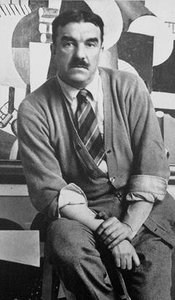
1881 - 1955 , Frankrike


Håll dig uppdaterad med de senaste konstnyheterna, exklusiva erbjudanden och inredningsidéer.
Berätta om ditt projekt så kommer våra konstexperter att ge dig 3 personliga konstförslag.
Vi skapar ett urval av 3 alternativ helt anpassat för dig – gratis!


 Förhandsvisa
 Skicka
 Dela
Dela
 Visa detaljer

 Ladda ner
 Liknande objekt
 Röntgen
 Bildspel

 Visa mer


