A Requiem in Paint: Exploring Francis Bacon’s “Triptych, May-June 1973”
Francis Bacon's "Triptych, May-June 1973" transcends mere visual representation; it embodies a profound grief and an unflinching confrontation with mortality. Created in the immediate aftermath of the tragic suicide of his lover, George Dyer, this monumental work stands as one of Bacon’s most intensely personal explorations of human suffering—a testament to his ability to distill emotion into form. It eschews traditional portraiture, opting instead for a stylistic approach that anticipates Expressionism and delves into the psychological landscape of trauma.
Historical Context & Personal Tragedy
The year 1973 marked a pivotal moment in Bacon’s artistic life. Just days before his ambitious retrospective at the Grand Palais in Paris commenced, he received devastating news: Dyer’s untimely death irrevocably altering his creative trajectory. This event spurred him to embark on a series of “Black Triptychs”—a visceral response to loss—characterized by jarring juxtapositions and unsettling imagery. The triptych format itself – harkening back to medieval religious altarpieces – lends an aura of solemn ritual to the depiction, mirroring the artist’s internal preoccupation with grief and remembrance. Bacon wasn't attempting a literal portrayal of Dyer’s demise; rather, he sought to externalize the turbulent emotions simmering beneath the surface—a reflection of his own psychological turmoil.
Stylistic Elements & Technique
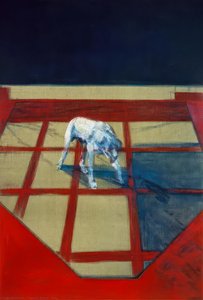
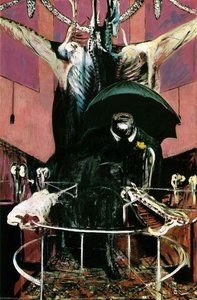
“Triptych, May-June 1973” represents a significant advancement in Bacon's artistic style, demonstrating an increased ambition and monumentality. The three panels – each measuring approximately 78 x 58 inches – present figures emerging from shadowy interiors bathed in oppressive reds and blacks. Bacon’s distinctive technique—characterized by energetic impasto brushwork—creates a palpable sense of vulnerability and decay. He deliberately avoids conventional representational conventions, favoring distorted forms that convey psychological states rather than physical likenesses. The composition is claustrophobic, trapping the figures within architectural structures or cage-like spaces, amplifying their isolation and conveying an overwhelming feeling of dread.
- Brushwork: Bacon’s impasto technique—applying paint thickly onto the canvas—generates a textured surface that pulsates with raw emotion, mirroring the artist's inner turmoil.
- Color Palette: Dominated by deep reds, blacks, and fleshy pinks, the palette evokes feelings of violence, pain, and impending doom – colors deliberately chosen to heighten the psychological impact of the artwork.
- Composition: Figures are positioned within architectural spaces—often arched doorways—that symbolize thresholds between life and death, reinforcing the overarching theme of mortality.
Symbolism & Interpretation
The symbolism woven into “Triptych, May-June 1973” is multilayered and open to interpretation. The recurring arched doorways represent transitions – passages from consciousness to unconsciousness—suggesting a preoccupation with existential questions. The figures themselves are fragmented and distorted representations of human form, embodying psychological states rather than physical accuracy. Scholars have posited that the central panel alludes to funerary rites, reflecting Bacon’s contemplation on death and decay. Furthermore, the small objects clutched by the figures—perhaps symbolic gestures of remembrance—underscore the enduring power of memory and connection amidst profound sorrow.
Emotional Impact & Legacy
“Triptych, May-June 1973” is undeniably unsettling yet profoundly captivating. It confronts viewers with the harsh realities of human suffering and mortality—a testament to Bacon’s artistic genius. Its enduring influence stems from its ability to evoke empathy and introspection, prompting contemplation on themes of grief, loss, and existential dread. The painting's remarkable commercial success – selling for $6.3 million in 1989 – solidified its position as a cornerstone of modern art history. Today, acquiring a high-quality reproduction offers an opportunity to introduce a powerful statement piece into any space—a visual echo of Bacon’s exploration of the human condition and his unflinching gaze upon life's inevitable darkness.
Photo Description: --Overall Impression-- The artwork presents a haunting and melancholic scene depicting a figure emerging from an arched doorway. The composition is dominated by verticality, with the doorway acting as a strong focal point. The subject matter centers around a pale, almost ghostly, human form seemingly in distress or mourning, clutching a small object – possibly a letter or keepsake – to its chest. The background consists of dark red walls and a shadowed floor, creating a sense of confinement and isolation. The use of lines is primarily linear and expressive, defining the doorway’s frame and the figure’s elongated form. Shapes are largely organic and flowing, particularly in the depiction of the figure’s limbs and drapery. Texture appears to be rendered through brushstrokes, suggesting a somewhat rough or impasto technique. Lighting is dramatic and directional, emphasizing the figure’s silhouette against the dark background. Perspective is slightly distorted, contributing to the unsettling atmosphere. Depth is created through layering and shading, with the doorway receding into shadow. The style leans towards Expressionism, characterized by emotional intensity and subjective representation. The technique appears to be oil on canvas, evidenced by visible brushwork and a rich color application. The materials used are traditional painting supplies – pigments, brushes, and canvas. Symbolically, the image evokes themes of loss, grief, solitude, and perhaps remembrance. The pale figure suggests vulnerability and fragility, while the object held close represents cherished memories or lost connections. The dark background reinforces feelings of despair and hopelessness. --
Size: Unknown
Date: Unknown