x


 Köp tryck Köp högupplöst digital bild
 Skicka
 Visa detaljer
 Lägg till i favoriter
 Ladda ner
 Liknande objekt
 Röntgen
 Bildspel
 Acrylic On CanvasWallArtRomanticism
 1799
1799 70.0 x 56.0 cm
 Walker Art Gallery
Handmålad olja på duk i din valda storlek och ram, tillverkad efter beställning av våra konstnärer.





























Välj bland våra förinställda storlekar som motsvarar konstverkets ursprungliga proportioner.

Du kan ange egna mått för att passa en specifik ram eller yta. Om den valda storleken inte matchar originalbildens proportioner kommer vi antingen att beskära konstverket eller utöka målningen med ytterligare handmålade element. En digital skiss skickas till dig för godkännande innan produktionen påbörjas.
Observera att förhandsvisningen på skärmen inte återspeglar den faktiska beskärningen eller utökningen. Endast skissen visar den slutgiltiga kompositionen korrekt.
Även om anpassade storlekar är möjliga, rekommenderar vi att du väljer en dimension från den fördefinierade listan för att bevara originalproportionerna.
Leverans över hela världen () på 3–4 veckor istället för standard 5 veckor. (21 juli). Inga kompromisser med kvaliteten.


A Monkey
Storlek på reproduktion
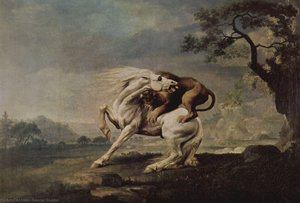
George Stubbs' "A Monkey," painted in 1799, isn’t merely a depiction of an animal; it’s a carefully constructed tableau brimming with layered meaning. The subject itself – a monkey seated upon what appears to be a weathered rock or piece of wood – possesses an almost unnerving stillness. Its head is turned slightly away from the viewer, lending it a contemplative air, as if lost in its own thoughts. The pose, combined with the subtle tension in its muscles and the alert expression around its eyes, suggests a creature both intelligent and wary. This isn’t a playful romp through a jungle; there's an underlying sense of observation, perhaps even judgment, radiating from this primate. The artist masterfully captures a fleeting moment of awareness, inviting us to contemplate the animal’s inner world.
Stubbs was renowned for his unparalleled anatomical accuracy, particularly in his depictions of animals. “A Monkey” exemplifies this skill, showcasing a meticulous attention to detail in rendering the monkey’s fur, musculature, and skeletal structure. This dedication stemmed from his early training as an assistant to a surgeon, Charles Atkinson at York County Hospital, where he dissected horses to understand their anatomy. This scientific rigor is evident in the painting's realistic portrayal of the animal’s form—a hallmark of the burgeoning Romantic movement. The emphasis on observation and detailed representation, rather than idealized beauty, was revolutionary for its time.
The painting reflects a shift away from Neoclassical ideals that prioritized order and restraint towards a celebration of nature's power and complexity – a core tenet of Romanticism.Beyond its anatomical brilliance, “A Monkey” is rich in symbolic potential. The monkey’s grasp of two apples—one held delicately in its hand, the other resting nearby—immediately evokes the biblical story of Adam and Eve. This imagery suggests themes of temptation, knowledge, and perhaps even a critique of humanity's relationship with nature. The shadowed background further reinforces this sense of mystery and foreboding. The artist’s choice to depict the monkey in a contemplative pose, rather than engaging in playful activity, adds another layer of complexity—suggesting an awareness of its own situation and the potential consequences of its actions.
Furthermore, some scholars suggest that the painting may be a commentary on the role of artists and their relationship to nature, mirroring the themes explored in Jean Siméon Chardin’s “The Monkey Painter,” which depicts a monkey holding a paintbrush.“A Monkey” stands as a testament to George Stubbs' extraordinary talent and his pivotal role in shaping the course of British art. Its meticulous detail, evocative atmosphere, and symbolic depth continue to captivate viewers today. Reproductions of this iconic painting offer an opportunity to experience firsthand the artistry and intellectual curiosity that defined one of England’s greatest painters. It is a piece that invites repeated viewing, revealing new nuances with each encounter—a true masterpiece of anatomical precision and Romantic vision.


1724 - 1806 , Storbritannien

Explore the rich history of animal painting across cultures & movements. Discover iconic artists, symbolism, collecting trends & expert art consultation at Most-Famous-Paintings.com.

Explore the life & work of Ramsay Richard Reinagle (1775-1862), a key figure in British sporting art and animal portraiture. Discover his landscapes, panoramas, and contributions to zoological illustration with Most-Famous-Paintings.

Explore the emotional depth of Romantic landscape painting (18th-19th century). Discover key artists like Friedrich & Cole, and the concepts of the sublime. Expert insights for art lovers & collectors.

Explore the rich history of 18th & 19th-century art! Discover Romanticism, Realism, and iconic masters like Delacroix & Courbet. Expert insights & high-quality reproductions at Most-Famous-Paintings.

Utforska Georges Braques 25 mest ikoniska verk – en resa genom kubismens värld och fransk modern konst. Lär känna historien bakom mästerverken, tekniken & färglärorna. Köp högkvalitativa konsttryck på Most-Famous-Paintings.com.


Håll dig uppdaterad med de senaste konstnyheterna, exklusiva erbjudanden och inredningsidéer.
Berätta om ditt projekt så kommer våra konstexperter att ge dig 3 personliga konstförslag.
Vi skapar ett urval av 3 alternativ helt anpassat för dig – gratis!


 Dela
Dela

 Visa mer







 Glasalternativet är endast tillgängligt i storlekar under 110 cm.