x

Handmålad olja på duk i din valda storlek och ram, tillverkad efter beställning av våra konstnärer. ( Beställ tryck Byt till bild)





























Välj bland våra förinställda storlekar som motsvarar konstverkets ursprungliga proportioner.

Du kan ange egna mått för att passa en specifik ram eller yta. Om den valda storleken inte matchar originalbildens proportioner kommer vi antingen att beskära konstverket eller utöka målningen med ytterligare handmålade element. En digital skiss skickas till dig för godkännande innan produktionen påbörjas.
Observera att förhandsvisningen på skärmen inte återspeglar den faktiska beskärningen eller utökningen. Endast skissen visar den slutgiltiga kompositionen korrekt.
Även om anpassade storlekar är möjliga, rekommenderar vi att du väljer en dimension från den fördefinierade listan för att bevara originalproportionerna.
Leverans över hela världen () på 3–4 veckor istället för standard 5 veckor. (11 augusti). Inga kompromisser med kvaliteten.


Sultane
Reproduktionsstorlek
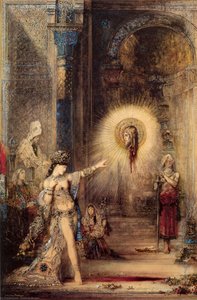
Gustave Moreau's *Sultane*, painted during his most intensely Symbolist period, is not merely a depiction of a man in red; it’s an immersion into a world of veiled secrets and potent symbolism. Created between 1882 and 1885, this enigmatic work embodies the core tenets of the Symbolist movement – a deliberate rejection of objective representation in favor of exploring subjective emotions, spiritual ideas, and fantastical narratives. Moreau, deeply influenced by mythology, religion, and the burgeoning field of psychology, sought to evoke an atmosphere of dreamlike intensity rather than offering a straightforward visual record.
Moreau's *Sultane* is deeply rooted in the Symbolist fascination with ancient myths and religious iconography. Sultan Ibrahim Effendi himself was a renowned collector of oriental artifacts, including a famed collection of Persian carpets, which heavily influenced Moreau’s artistic vision. The scene evokes elements of the Ottoman court, but more importantly, it functions as a symbolic representation of power, knowledge, and perhaps even madness. The raised hands of the Sultan suggest a moment of revelation or contemplation – a descent into the subconscious. The kneeling attendant could represent submission, obedience, or perhaps a conduit for divine inspiration.
Beyond its immediate visual impact, *Sultane* is laden with symbolic meaning. The Sultan’s raised hands can be interpreted as a gesture of prayer, contemplation, or even madness – a common motif in Symbolist art. The kneeling attendant represents subservience and loyalty, but also potentially the vulnerability of those who seek knowledge. The overall composition suggests a fragmented narrative, inviting viewers to actively participate in constructing their own interpretations. Moreau deliberately avoided providing clear answers, preferring instead to stimulate the viewer’s imagination and emotional response.

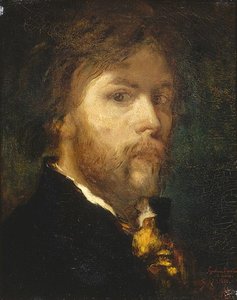
1826 - 1898 , Frankrike

Explore the evocative world of Symbolist painting. Discover how masters like Gustave Moreau rejected realism to capture dreams, myths, and the subconscious through fine art history and expert analysis.

Explore the profound history and technical mastery of woodcut relief printing. From ancient origins to German Expressionism, discover how artists use the subtractive process to create iconic works. A definitive guide for art students, collectors, and historians.

Discover the technical mastery behind Most-Famous-Paintings.com's premium Giclée canvas prints. Our guide for elite collectors explores archival pigment inks, museum-grade substrates, and the science of high-fidelity reproduction to ensure lasting beauty and historical accuracy.


Håll dig uppdaterad med de senaste konstnyheterna, exklusiva erbjudanden och inredningsidéer.
Berätta om ditt projekt så kommer våra konstexperter att ge dig 3 personliga konstförslag.
Vi skapar ett urval av 3 alternativ helt anpassat för dig – gratis!


 Visa i rummet
 Skicka
 Dela
Dela
 Detaljer

 Ladda ner
 Liknande objekt
 Röntgen
 Bildspel

 Läs mer







 Glasalternativet är endast tillgängligt i storlekar under 110 cm.