x

Giclée- eller canvasprint av museumskvalitet med snabb produktion och flexibla ytbehandlingsalternativ. ( Beställ handmålad reproduktion Köp högupplöst bild)
Välj bland våra förinställda storlekar som motsvarar konstverkets ursprungliga proportioner.

Du kan ange egna mått för att passa en specifik ram eller yta. Om det valda måttet inte överensstämmer med originalbildens proportioner kommer vi antingen att beskära konstverket eller utöka bilden med en speglad eller enfärgad kant. En digital mockup skickas för ditt godkännande innan produktionen påbörjas.
Vänligen notera att förhandsvisningen på skärmen inte återspeglar den faktiska beskärningen eller utökningen. Endast mockuppen visar den slutgiltiga kompositionen korrekt.
Även om anpassade storlekar är möjliga, rekommenderar vi att du väljer ett mått från den fördefinierade listan för att bevara de ursprungliga proportionerna.
Leverans över hela världen () på 2 veckor istället för standard 4/5 veckor. (13 augusti)


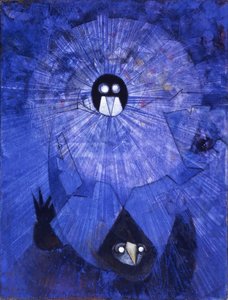
Tranquility
Storlek på reproduktion

Born amidst the vibrant, bohemian pulse of Montmartre in January 1848, Henri Biva emerged as a master of the French landscape, a painter whose brush captured the very soul of the Parisian countryside. Growing up in an environment steeped in artistic tradition, Biva was destined for the canvas; his creative lineage was furthered by his brother, Paul Biva, and later by his son, Lucien Biva. His early years in Paris provided more than just a backdrop; they offered a profound connection to the natural world that would become the cornerstone of his oeuvre. As he matured, Biva developed a singular ability to bridge the gap between the meticulous precision of Realism and the emotive, light-drenched spontaneity of Impressionism, creating works that feel both timelessly grounded and ethereally fleeting.
The technical foundation of Biva’s artistry was forged in the prestigious halls of the École des Beaux-Arts and the rigorous Académie Julian. Under the watchful eyes of masters such as Léon Tanzi and Alexandre Nozal, he learned to navigate the delicate balance between academic discipline and the burgeoning avant-garde movements of his era. His studies with legendary figures like William-Adolphe Bouguereau and Jules Joseph Lefebvre instilled in him a respect for form and structure, yet it was his devotion to the plein air tradition that truly liberated his style. By stepping out of the studio and into the western suburbs of Paris, Biva began to experiment with the interplay of shadow and sun, learning to translate the warmth of a summer afternoon or the quiet stillness of a backwater into a language of pure color and intricate brushwork.
Biva’s work is often celebrated for its profound Naturalist sentiment, characterized by an almost tactile intimacy with his subjects. He possessed a rare, unparalleled skill in capturing the ephemeral magic of the seasons, particularly the way light dances across a garden or settles upon a tranquil pond. His compositions frequently invite the viewer into a serene, idealized version of the French landscape—places where sunlight feels tangible and the atmosphere is heavy with the scent of summer blooms. This mastery was not merely about visual accuracy but about emotional resonance; through his use of a pure, vibrant palette, he could evoke a sense of peace and nostalgia that transcends the mere depiction of scenery.
Beyond his sweeping landscapes, Biva also demonstrated a remarkable talent for still life painting. In these works, the same attention to light and texture found in his outdoors scenes is applied to the intimate details of the natural world—the velvety petal of a chrysanthemum or the rustic charm of a wicker basket. This versatility allowed him to command respect across different genres, proving that his true subject was not just the landscape itself, but the very essence of light as it interacts with all forms of life.
The trajectory of Biva’s career was marked by significant professional triumphs that cemented his status within the French art establishment. His frequent exhibitions at the Salon des Artistes Français garnered critical acclaim, leading to a series of prestigious accolades that reflected his rising importance in the late 19th and early 20th centuries:
Today, Henri Biva remains a significant figure for collectors and historians alike. He stands as a vital link in the evolution of French painting, representing a period where the rigid boundaries of academic tradition began to dissolve into the luminous freedom of modernism. His ability to harmonize the structural integrity of Realism with the atmospheric brilliance of Post-Impressionism ensures that his landscapes continue to offer a window into a beautifully captured, sun-drenched past.

1848 - 1929 , France


Håll dig uppdaterad med de senaste konstnyheterna, exklusiva erbjudanden och inredningsidéer.
Berätta om ditt projekt så kommer våra konstexperter att ge dig 3 personliga konstförslag.
Vi skapar ett urval av 3 alternativ helt anpassat för dig – gratis!


 Förhandsvisa
 Skicka
 Dela
Dela
 Visa detaljer

 Ladda ner
 Liknande objekt
 Röntgen
 Bildspel
 Visa mer




































 Glasalternativet är endast tillgängligt i storlekar under 110 cm.