


x

Giclée- eller canvasprint av museumskvalitet med snabb produktion och flexibla ytbehandlingsalternativ. ( Beställ handmålad reproduktion Köp högupplöst bild)
Välj bland våra förinställda storlekar som motsvarar konstverkets ursprungliga proportioner.

Du kan ange egna mått för att passa en specifik ram eller yta. Om det valda måttet inte överensstämmer med originalbildens proportioner kommer vi antingen att beskära konstverket eller utöka bilden med en speglad eller enfärgad kant. En digital mockup skickas för ditt godkännande innan produktionen påbörjas.
Vänligen notera att förhandsvisningen på skärmen inte återspeglar den faktiska beskärningen eller utökningen. Endast mockuppen visar den slutgiltiga kompositionen korrekt.
Även om anpassade storlekar är möjliga, rekommenderar vi att du väljer ett mått från den fördefinierade listan för att bevara de ursprungliga proportionerna.
Leverans över hela världen () på 2 veckor istället för standard 4/5 veckor. (23 augusti)


Blue Pitcher
Storlek på reproduktion
Henri Matisse's “Blue Pitcher,” painted in 1901, stands as a cornerstone of Fauvist art—a movement that irrevocably altered the course of twentieth-century painting. More than just a depiction of domestic objects, it embodies Matisse’s revolutionary approach to color and composition, reflecting his profound belief that art should express emotion rather than merely imitate reality.
The canvas presents a deceptively simple arrangement: a blue vase dominates the center stage, perched atop a pitcher. Surrounding it are two bottles positioned on either side, creating an equilibrium that’s subtly reinforced by the inclusion of a spoon resting upon the tabletop. Matisse eschewed traditional perspective and shading techniques, prioritizing instead the vibrancy of color to convey feeling. This deliberate rejection of academic conventions was precisely what defined Fauvism—a bold assertion that color could be its own reward.
Matisse’s masterful brushwork is instantly recognizable. Thick, impasto strokes – meaning paint applied thickly – imbue the canvas with palpable energy and texture. Each stroke isn't merely a mark; it’s an instrument of expression, channeling Matisse’s inner vision onto the surface. The artist meticulously layered hues of blue—ranging from cerulean to indigo—creating depth and luminosity that transcends mere visual representation.
"Blue Pitcher" emerged during a period of artistic ferment, challenging the prevailing aesthetic sensibilities of Impressionism. While Impressionists sought to capture fleeting moments of light and atmosphere, Matisse deliberately prioritized color as its primary vehicle for conveying emotion. This decision aligns with broader intellectual currents of the time—a burgeoning interest in psychology and symbolism—reflecting Matisse’s conviction that art should resonate beyond superficial appearances.
The choice of blue itself is significant. Often associated with tranquility, spirituality, and introspection, it serves as a counterpoint to the darker tones surrounding it. The vase and pitcher—familiar objects imbued with everyday life—become symbols of domestic harmony and contemplation. Ultimately, “Blue Pitcher” invites viewers into Matisse’s emotional landscape, prompting reflection on beauty, color, and the expressive power of art. It remains an enduring testament to Matisse's genius and a pivotal work in the history of Fauvist painting.


1869 - 1954 , Frankrike
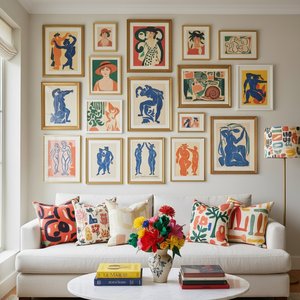
Utforska Henri Matisse' 25 mest ikoniska målningar! Lär känna Fauvismens färgstarka värld och hans tidlösa konst. Upptäck historien bakom varje mästerverk & hitta inspiration för din inredning på Most-Famous-Paintings.com.

Upptäck fauvismens 10 mästerverk! Fördjupa dig i Henri Matisses och André Derains djärva färger & expressionistiska konst. Köp reproduktioner av kända målningar online hos Most-Famous-Paintings – museumkvalitet för ditt hem. Utforska samlingen nu!
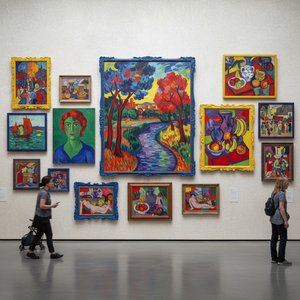
Utforska fauvismens 10 mest ikoniska mästerverk! Lär känna Matisse, Derain och andra pionjärer. Starka färger & djärva penseldrag definierade epoken. Hitta konsttryck av högsta kvalitet på Most-Famous-Paintings.com – för din heminredning.

Utforska de 10 mest ikoniska målningarna dominerade av nyansen 'skifferblått'. Lär känna Monet, Van Gogh & andra mästare. Hitta inspiration för din inredning och köp museumkvalitativa konsttryck på Most-Famous-Paintings.com – din källa till tidlös skönhet.

Upptäck 10 djärva konstverk som utstrålar styrka och passion! Från expressionismens kraftfulla färger till kubismens innovativa former. Lär känna berömda målningar & kända konstnärer. Hitta din perfekta inredningskonst hos Most-Famous-Paintings – museumkvalitet för ditt hem. Utforska samlingen online!


Håll dig uppdaterad med de senaste konstnyheterna, exklusiva erbjudanden och inredningsidéer.
Berätta om ditt projekt så kommer våra konstexperter att ge dig 3 personliga konstförslag.
Vi skapar ett urval av 3 alternativ helt anpassat för dig – gratis!


 Förhandsvisa
 Skicka
 Dela
Dela
 Visa detaljer

 Ladda ner
 Liknande objekt
 Röntgen
 Bildspel

 Visa mer




































 Glasalternativet är endast tillgängligt i storlekar under 110 cm.


