


x

 Akryl på dukVäggkonstFauvism
 1938Modernism
 46.0 x 38.0 cm
Giclée- eller canvasprint av museumskvalitet med snabb produktion och flexibla ytbehandlingsalternativ. ( Beställ handmålad reproduktion Köp högupplöst bild)





























Välj bland våra förinställda storlekar som motsvarar konstverkets ursprungliga proportioner.

Du kan ange egna mått för att passa en specifik ram eller yta. Om det valda måttet inte överensstämmer med originalbildens proportioner kommer vi antingen att beskära konstverket eller utöka bilden med en speglad eller enfärgad kant. En digital mockup skickas för ditt godkännande innan produktionen påbörjas.
Vänligen notera att förhandsvisningen på skärmen inte återspeglar den faktiska beskärningen eller utökningen. Endast mockuppen visar den slutgiltiga kompositionen korrekt.
Även om anpassade storlekar är möjliga, rekommenderar vi att du väljer ett mått från den fördefinierade listan för att bevara de ursprungliga proportionerna.
Leverans över hela världen () på 2 veckor istället för standard 4/5 veckor. (23 augusti)


The Arm
Storlek på reproduktion
Henri Matisse’s “The Arm,” painted in 1938, isn't merely a depiction of a woman’s limb; it’s an explosion of vibrant emotion rendered with the audacious spirit that defined the Fauvist movement. This intimate yet powerfully expressive work immediately commands attention, drawing the viewer into a world where color reigns supreme and traditional representational concerns are delightfully abandoned. The painting captures a fleeting moment – perhaps a gesture, a contemplation – imbued with a sense of intense feeling through Matisse’s masterful manipulation of hue and brushstroke. It's a testament to his belief that color itself could be a subject, capable of conveying mood, emotion, and even narrative.

At first glance, the composition appears deceptively simple: a green dress against a backdrop of blue. However, this is precisely where Matisse’s genius lies. He doesn't merely paint colors; he orchestrates them. The intense emerald green of the dress vibrates against the cool, almost ethereal blue of the background, creating a dynamic tension that immediately grabs the eye. These aren’t naturalistic shades; they are deliberately heightened and saturated, characteristic of Fauvist technique. Notice how Matisse employs thick, visible brushstrokes – a deliberate rejection of illusionism – to build up layers of color and texture. The interplay between these bold hues generates a palpable sense of energy and movement, suggesting not just the form of the arm but also the underlying passion within.
“The Arm” is a quintessential example of Fauvist art, a movement that emerged around 1904 and profoundly challenged the established conventions of painting. The term “Fauve,” meaning “wild beast,” aptly describes this style’s unrestrained use of color and its rejection of academic realism. Matisse, along with André Derain, spearheaded this revolution, prioritizing expressive power over accurate representation. This wasn't about depicting reality; it was about conveying feeling through the language of color. The painting reflects a shift towards subjective experience, where the artist’s emotional response becomes paramount. It’s important to note that Matisse’s work in Fauvism built upon earlier influences, particularly the Impressionists and Post-Impressionists, but he pushed these ideas to their most radical conclusion.
Beyond its purely Fauvist qualities, “The Arm” also reveals subtle echoes of Orientalist themes – a stylistic influence that was prevalent in Matisse’s work. The use of bold patterns and vibrant colors reminiscent of Middle Eastern textiles suggests an awareness of the exotic and the sensual. However, unlike traditional Orientalist paintings, which often depicted idealized or romanticized scenes, Matisse's approach is far more direct and emotionally charged. The painting transcends its specific influences, offering a universal exploration of human form and emotion—a testament to Matisse’s ability to distill complex ideas into a single, captivating image. It invites contemplation on themes of beauty, desire, and the power of color to evoke profound feelings.


1869 - 1954 , Frankrike
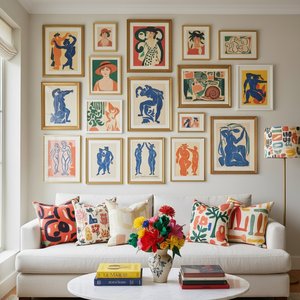
Utforska Henri Matisse' 25 mest ikoniska målningar! Lär känna Fauvismens färgstarka värld och hans tidlösa konst. Upptäck historien bakom varje mästerverk & hitta inspiration för din inredning på Most-Famous-Paintings.com.

Upptäck fauvismens 10 mästerverk! Fördjupa dig i Henri Matisses och André Derains djärva färger & expressionistiska konst. Köp reproduktioner av kända målningar online hos Most-Famous-Paintings – museumkvalitet för ditt hem. Utforska samlingen nu!
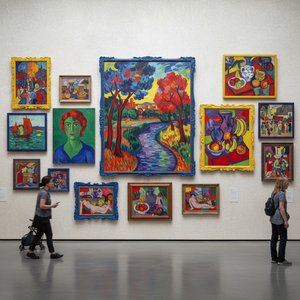
Utforska fauvismens 10 mest ikoniska mästerverk! Lär känna Matisse, Derain och andra pionjärer. Starka färger & djärva penseldrag definierade epoken. Hitta konsttryck av högsta kvalitet på Most-Famous-Paintings.com – för din heminredning.

Utforska de 10 mest ikoniska målningarna dominerade av nyansen 'skifferblått'. Lär känna Monet, Van Gogh & andra mästare. Hitta inspiration för din inredning och köp museumkvalitativa konsttryck på Most-Famous-Paintings.com – din källa till tidlös skönhet.

Explore the rich history & symbolism of green in art! Discover iconic paintings, techniques, and how to bring verdant harmony into your home with Most-Famous-Paintings's expert guide.


Håll dig uppdaterad med de senaste konstnyheterna, exklusiva erbjudanden och inredningsidéer.
Berätta om ditt projekt så kommer våra konstexperter att ge dig 3 personliga konstförslag.
Vi skapar ett urval av 3 alternativ helt anpassat för dig – gratis!


 Förhandsvisa
 Skicka
 Dela
Dela
 Visa detaljer

 Ladda ner
 Liknande objekt
 Röntgen
 Bildspel
 Visa mer







 Glasalternativet är endast tillgängligt i storlekar under 110 cm.


