


x

 Olja på pannåEarly Netherlandish Painting
 1432Renässansen
 12.0 x 19.0 cm
Giclée- eller canvasprint av museumskvalitet med snabb produktion och flexibla ytbehandlingsalternativ. ( Beställ handmålad reproduktion Köp högupplöst bild)





























Välj bland våra förinställda storlekar som motsvarar konstverkets ursprungliga proportioner.

Du kan ange egna mått för att passa en specifik ram eller yta. Om det valda måttet inte överensstämmer med originalbildens proportioner kommer vi antingen att beskära konstverket eller utöka bilden med en speglad eller enfärgad kant. En digital mockup skickas för ditt godkännande innan produktionen påbörjas.
Vänligen notera att förhandsvisningen på skärmen inte återspeglar den faktiska beskärningen eller utökningen. Endast mockuppen visar den slutgiltiga kompositionen korrekt.
Även om anpassade storlekar är möjliga, rekommenderar vi att du väljer ett mått från den fördefinierade listan för att bevara de ursprungliga proportionerna.
Leverans över hela världen () på 2 veckor istället för standard 4/5 veckor. (22 augusti)


St. Jerome in his Study
Storlek på reproduktion
Jan van Eyck’s St. Jerome in His Study, a remarkably intimate oil painting from 1432, isn't merely a depiction of a saint; it’s a meticulously crafted window into the mind and world of a Renaissance scholar. Measuring just over 12 by 19 centimeters, this diminutive panel commands attention not through its size, but through the sheer density of detail and the profound sense of quiet contemplation it evokes. The scene unfolds within a warmly lit study, dominated by the figure of St. Jerome himself – a man deeply absorbed in his work, surrounded by the tools and trappings of intellectual life. It’s a space both familiar and utterly captivating, inviting us to share in his solitary pursuit of knowledge.
Van Eyck's genius lies not just in his technical prowess—the astonishing realism achieved through his revolutionary use of oil paint—but also in his ability to imbue the scene with layers of symbolic meaning. The composition is carefully balanced, drawing our eye from the saint’s focused expression to the meticulously rendered objects that populate his study. Each element contributes to a narrative of faith, learning, and the quiet dignity of intellectual labor.
To truly appreciate St. Jerome in His Study, one must acknowledge the groundbreaking techniques employed by Van Eyck. He was a pioneer in the application of oil paint on panel, a medium that allowed for unprecedented levels of detail, luminosity, and textural richness. Unlike tempera paints which dry quickly and create a matte finish, oils could be manipulated slowly, building up layers of color and creating subtle gradations of tone. This painstaking process is evident in every brushstroke—the delicate rendering of the folds in Jerome’s robes, the intricate details of the books and instruments on his desk, and the soft glow of light illuminating the scene.
Van Eyck's mastery extends to his use of *sfumato*, a technique borrowed from the East, which creates an atmospheric haze around objects, softening edges and lending a sense of depth. This is particularly noticeable in the background, where the study appears slightly blurred, drawing our attention to the central figure and his immediate surroundings. The painting’s colors are rich and vibrant—deep reds, blues, and greens—but applied with remarkable restraint, creating a harmonious and balanced palette.
Beyond its technical brilliance, St. Jerome in His Study is a treasure trove of symbolism. The lion at the saint’s feet, a recurring motif in his legend, represents his triumph over wild beasts—both literal and metaphorical, symbolizing his ability to subdue temptation and maintain faith. The open books suggest his dedication to biblical scholarship, while the astrolabe and other instruments reflect his interest in astronomy and mathematics – subjects closely linked to theology during the Renaissance.
The hourglass, a potent symbol of mortality, reminds us of the fleeting nature of time and the importance of dedicating one’s life to virtuous pursuits. Even the simple gesture of Jerome's hand—holding a quill pen poised above his work— speaks volumes about his commitment to intellectual labor. The inclusion of a small jar labeled “TYRIRICA,” an antidote to snakebite, hints at the saint’s struggles against temptation and his reliance on divine grace.
St. Jerome in His Study stands as a pivotal work in the history of art, marking a crucial transition from the Gothic to the Renaissance style. Van Eyck's innovations with oil paint profoundly influenced subsequent generations of artists, paving the way for the development of Northern European painting and shaping the course of Western art. Alongside works like *The Ghent Altarpiece* and *Isabella Borluut*, this intimate portrait offers a profound insight into the mind of a master craftsman and a testament to the enduring power of symbolism in visual storytelling.

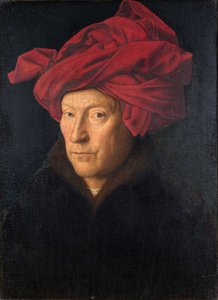
1390 - 1441 , Nederländerna

Utforska de 10 mästerverk som definierade tidig nederländsk målning! Lär känna Jan van Eyck, Rogier van der Weyden och andra flamländska mästare. Upptäck symbolik, teknik & färgpaletter. Köp reproduktioner av högsta kvalitet på Most-Famous-Paintings.com.

Explore the revolutionary art of Jan van Eyck! Discover his groundbreaking oil painting techniques, hidden symbolism, and lasting impact on the Early Netherlandish Renaissance. A deep dive for art enthusiasts.

Utforska 10 ikoniska mästerverk från den tidiga nederländska renässansen! Lär känna Jan van Eyck, Rogier van der Weyden och andra flamländska mästare. Högkvalitativa konsttryck & inspiration för ditt hem – upptäck samlingen på Most-Famous-Paintings.com

Explore the captivating world of Early Netherlandish painting! Discover Jan van Eyck & other Flemish masters, their revolutionary techniques, hidden symbolism, and lasting legacy. A comprehensive guide for art enthusiasts.
Utforska Rembrandts 25 mest ikoniska målningar! Lär känna historien bakom mästerverken, hans unika teknik och barockens ljusspel. Köp exklusiva konsttryck & tavlor online på Most-Famous-Paintings.com – för en tidlös inredning.


Håll dig uppdaterad med de senaste konstnyheterna, exklusiva erbjudanden och inredningsidéer.
Berätta om ditt projekt så kommer våra konstexperter att ge dig 3 personliga konstförslag.
Vi skapar ett urval av 3 alternativ helt anpassat för dig – gratis!


 Förhandsvisa
 Skicka
 Dela
Dela
 Visa detaljer

 Ladda ner
 Liknande objekt
 Röntgen
 Bildspel
 Visa mer







 Glasalternativet är endast tillgängligt i storlekar under 110 cm.


