


x

Giclée- eller canvasprint av museumskvalitet med snabb produktion och flexibla ytbehandlingsalternativ. ( Beställ handmålad reproduktion Köp högupplöst bild)





























Välj bland våra förinställda storlekar som motsvarar konstverkets ursprungliga proportioner.

Du kan ange egna mått för att passa en specifik ram eller yta. Om det valda måttet inte överensstämmer med originalbildens proportioner kommer vi antingen att beskära konstverket eller utöka bilden med en speglad eller enfärgad kant. En digital mockup skickas för ditt godkännande innan produktionen påbörjas.
Vänligen notera att förhandsvisningen på skärmen inte återspeglar den faktiska beskärningen eller utökningen. Endast mockuppen visar den slutgiltiga kompositionen korrekt.
Även om anpassade storlekar är möjliga, rekommenderar vi att du väljer ett mått från den fördefinierade listan för att bevara de ursprungliga proportionerna.
Leverans över hela världen () på 2 veckor istället för standard 4/5 veckor. (21 augusti)


Liebre
Storlek på reproduktion
In the evocative depths of Joan Miró’s "Liebre" (Rabbit), viewers are transported into a dreamscape where the boundaries between reality and the subconscious dissolve. Painted during the tumultuous years between 1943 and 1945, this masterpiece serves as a window into the artist's profound ability to distill complex emotions into simplified, primal forms. The canvas presents a desolate, desert-like environment, an expanse that feels both vast and intimate. Within this arid landscape, a carefully choreographed dance of life unfolds: two birds drift through the composition, while three cows wander across the terrain. This arrangement of animals is not merely a depiction of fauna but a symbolic arrangement of life forces moving through a void, creating a visual paradox that captures the very essence of Surrealist imagination.
The atmosphere of the piece is defined by its hauntingly beautiful palette. Miró employs a sophisticated interplay of ochres, oranges, and deep blues to construct a world that feels both ancient and otherworldly. The vibrant orange sky acts as a dramatic backdrop, casting a warm yet melancholic light over the scene, which heightens the sense of solitude and metamorphosis. For the collector or interior designer, this painting offers a captivating focal point; its ability to command attention through color and space makes it an ideal centerpiece for spaces that require a touch of intellectual depth and emotional resonance.
Miró’s approach in "Liebre" exemplifies his departure from traditional realism toward a more liberated, gestural technique. Eschewing the rigid constraints of academic painting, he utilizes thick, expressive brushstrokes that imbue the canvas with a palpable, rhythmic energy. The style is a masterful blend of Abstract Expressionism and Surrealist symbolism, where geometric shapes—circles, lines, and squares—are used to communicate intuition rather than literal accuracy. This technique allows the viewer to experience the painting not as a static image, but as a living, breathing entity.
The fluidity of his hand is evident in how the forms of the birds and cows are rendered; they are stripped of unnecessary detail, leaving behind only the essential essence of their being. This reductionist approach invites the observer to participate in the creation of meaning, filling the gaps with their own subconscious projections. Such a technique ensures that the artwork remains eternally fresh, offering new layers of interpretation upon every viewing.
To truly appreciate "Liebre," one must consider the shadows cast by the era in which it was conceived. Created amidst the global upheaval of World War II and the oppressive atmosphere of Franco’s dictatorship in Spain, the painting carries a weight of resilience. The desolate landscape can be read as a metaphor for the isolation felt during times of conflict, yet the presence of the animals suggests a persistent, defiant vitality. Miró uses his Catalan identity to anchor these abstract forms, weaving a narrative of survival and cultural endurance through visual metaphors that bypassed the censors of his time.
For those seeking to adorn their homes or galleries with a piece of art history, "Liebre" offers more than just aesthetic beauty. It provides an emotional sanctuary—a space for contemplation and wonder. Whether it is used to add a sophisticated pop of color to a modern minimalist room or to serve as a conversation starter in a curated collection, this reproduction brings the profound, transformative power of Miró’s vision into the contemporary living space. It is an invitation to embrace the mystery of the unknown and to find beauty in the most unexpected of dreamscapes.

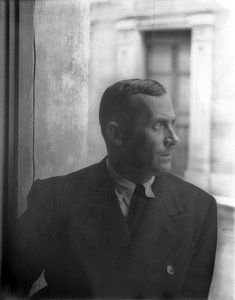
1893 - 1983 , Spanien
Explore the profound emotional depth of Lyrical Abstraction. Discover how masters like Raymond Parker used color and form to bridge Impressionism and Abstract Expressionism. Learn about this pivotal movement through our expert-led art history guide.

Explore the profound emotional depth of Color Field painting. Discover the history of mid-century abstraction, from Rothko to Newman, and learn how pure color transforms the viewer's experience through our expert art history guide.

Explore the profound history of Surrealist Expressionism. Discover how artists blended dream logic with raw emotion to navigate post-war trauma through masterful, evocative imagery and psychological depth.

Explore the profound history and emotional depth of Abstract Expressionism. From Jackson Pollock to Mark Rothko, master the nuances of the New York School through our expert art history guide. Discover museum-quality hand-painted reproductions for your collection.

Explore the profound impact of Abstract Expressionism. Discover how post-war artists used gesture and emotion to redefine modern art through Action Painting and the New York School. A definitive guide for students and collectors seeking deep historical context.


Håll dig uppdaterad med de senaste konstnyheterna, exklusiva erbjudanden och inredningsidéer.
Berätta om ditt projekt så kommer våra konstexperter att ge dig 3 personliga konstförslag.
Vi skapar ett urval av 3 alternativ helt anpassat för dig – gratis!


 Förhandsvisa
 Skicka
 Dela
Dela
 Visa detaljer

 Ladda ner
 Liknande objekt
 Röntgen
 Bildspel

 Visa mer







 Glasalternativet är endast tillgängligt i storlekar under 110 cm.


