


x

Giclée- eller canvasprint av museumskvalitet med snabb produktion och flexibla ytbehandlingsalternativ. ( Beställ handmålad reproduktion Köp högupplöst bild)





























Välj bland våra förinställda storlekar som motsvarar konstverkets ursprungliga proportioner.

Du kan ange egna mått för att passa en specifik ram eller yta. Om det valda måttet inte överensstämmer med originalbildens proportioner kommer vi antingen att beskära konstverket eller utöka bilden med en speglad eller enfärgad kant. En digital mockup skickas för ditt godkännande innan produktionen påbörjas.
Vänligen notera att förhandsvisningen på skärmen inte återspeglar den faktiska beskärningen eller utökningen. Endast mockuppen visar den slutgiltiga kompositionen korrekt.
Även om anpassade storlekar är möjliga, rekommenderar vi att du väljer ett mått från den fördefinierade listan för att bevara de ursprungliga proportionerna.
Leverans över hela världen () på 2 veckor istället för standard 4/5 veckor. (14 augusti)


Ben (prototyp)
Storlek på reproduktion
Joris Laarman’s “Bone” armchair isn't merely a chair; it’s an audacious proposition—a meditation on how we perceive form, function, and material conservation within the framework of contemporary design. Initially conceived as a conceptual exploration rooted in scientific observation – specifically, the structural growth patterns of bone and trees – this piece transcends stylistic trends, firmly establishing itself as a testament to the transformative potential of digital fabrication.
The chair’s design draws inspiration from Art Nouveau furniture designs, hinting at a nostalgic yearning for organic curves and flowing lines. However, this echoes isn't superficial; it represents a deliberate engagement with artistic history. Laarman’s approach leverages computer software developed for the automotive industry—a sector renowned for its focus on optimizing structural integrity—to mimic the natural processes of bone growth and tree branching. This translates into a strikingly skeletal silhouette, prioritizing essential elements while minimizing material usage – a conscious decision to confront the geometric aesthetic often associated with minimalist design.
The rapid prototyping process, utilizing stereolithography (SLP), played a crucial role in realizing this vision. SLP allows for the creation of complex three-dimensional models from digital designs, transforming theoretical concepts into tangible prototypes. This technique underscores Laarman’s commitment to innovation and material conservation, mirroring the ethos of sustainable design.
Furthermore, “Bone” embodies a profound symbolic resonance. Its delicate yet resilient form evokes notions of fragility intertwined with inherent strength—a visual metaphor for overcoming challenges while embracing natural beauty. The chair's minimalist aesthetic communicates a sense of serenity and purposeful simplicity, inviting contemplation on the relationship between art, science, and human experience.
Finally, Laarman’s work stands as an acknowledgement of artistic legacies. By reimagining familiar motifs—the organic curves of Art Nouveau—through the lens of cutting-edge technology, he elevates design beyond mere ornamentation, transforming it into a powerful tool for conveying ideas and emotions. “Bone” serves as a reminder that inspiration can be found in unexpected intersections between past and present, fostering creativity and enriching our understanding of the world around us.

1979 - , Netherlands
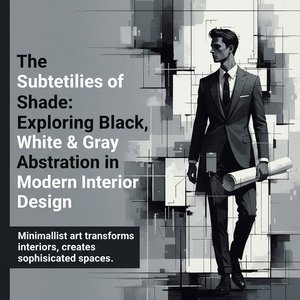
Upptäck hur svartvitt och grå abstraktion kan lyfta din inredning! Expertguider om expressionism, surrealism & mer. Hitta konst som skapar harmoni och elegans – för hemmet eller hotellet.

Explore the exquisite world of Georges Barbier, a leading Art Nouveau illustrator celebrated for his opulent fashion designs & masterful pochoir technique. Discover his legacy and find collectible art at Most-Famous-Paintings.

Utforska de 10 mest ikoniska målningarna i benvita toner – från impressionism till kubism. Lär känna konstnärer och tekniker bakom tidlösa verk. Hitta inspiration & köp museumkvalitativa konsttryck på Most-Famous-Paintings.com.

Discover the profound psychological impact of minimalist Color Field paintings for luxury villas. Explore Rothko & curated art reproductions with Most-Famous-Paintings.com – expert guidance, museum-quality prints, and investment advice.

Utforska Art Nouveau-rörelsens 10 mest ikoniska mästerverk! Lär känna Alphonse Mucha, Gustav Klimt & andra nyckelartister. Vackra konsttryck och inspiration för din inredning – upptäck tidlösa symbolik och organiska former på Most-Famous-Paintings.com.


Håll dig uppdaterad med de senaste konstnyheterna, exklusiva erbjudanden och inredningsidéer.
Berätta om ditt projekt så kommer våra konstexperter att ge dig 3 personliga konstförslag.
Vi skapar ett urval av 3 alternativ helt anpassat för dig – gratis!


 Förhandsvisa
 Skicka
 Dela
Dela
 Visa detaljer

 Ladda ner
 Liknande objekt
 Röntgen
 Bildspel

 Visa mer







 Glasalternativet är endast tillgängligt i storlekar under 110 cm.


