x


 Acrylic On CanvasWallArtNaive Art / Primitivism
 1963
1963 32.0 x 24.0 cm
Giclée- eller canvasprint av museumskvalitet med snabb produktion och flexibla ytbehandlingsalternativ. ( Switch to hand made Painting Switch to Image)





























Välj bland våra förinställda storlekar som motsvarar konstverkets ursprungliga proportioner.

Du kan ange egna mått för att passa en specifik ram eller yta. Om det valda måttet inte överensstämmer med originalbildens proportioner kommer vi antingen att beskära konstverket eller utöka bilden med en speglad eller enfärgad kant. En digital mockup skickas för ditt godkännande innan produktionen påbörjas.
Vänligen notera att förhandsvisningen på skärmen inte återspeglar den faktiska beskärningen eller utökningen. Endast mockuppen visar den slutgiltiga kompositionen korrekt.
Även om anpassade storlekar är möjliga, rekommenderar vi att du väljer ett mått från den fördefinierade listan för att bevara de ursprungliga proportionerna.
Leverans över hela världen () på 2 veckor istället för standard 4/5 veckor. (29 juli)


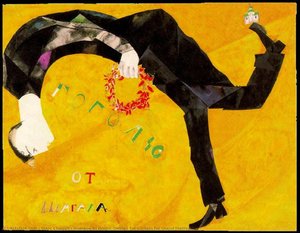
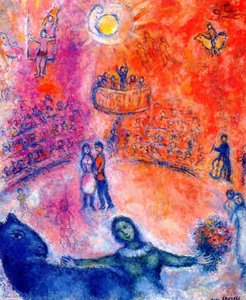
Acrobatics
Storlek på reproduktion
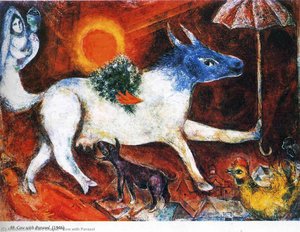
Marc Chagall’s “Acrobatics,” completed in 1963, stands as a testament to the artist's enduring fascination with dreams, memory, and the fantastical realm of childhood. Painted in Naïve Art style—a movement characterized by its rejection of academic conventions and embrace of childlike spontaneity—the canvas captures a moment suspended between earthly constraints and boundless aspiration.
Unlike Impressionism or Cubism, which sought to dissect reality into fragmented perspectives, Chagall’s approach prioritizes emotional expression over meticulous representation. Thickly applied paint—a hallmark of Naïve Art—creates a textured surface that pulsates with color and conveys an immediacy rarely achieved in more polished artistic styles. The artist eschews linear perspective, opting instead for flattened planes that heighten the sense of illusion and invite viewers into Chagall’s subjective experience.
"Acrobatics" is deeply rooted in Chagall's formative years spent in Vitebsk, Belarus—a town that served as a constant source of inspiration throughout his prolific career. The painting reflects the cultural landscape of Vitebsk during the period, where Jewish and Orthodox traditions intertwined, shaping artistic sensibilities. Furthermore, it emerged against the backdrop of Soviet repression following World War II, when Chagall faced censorship and endured personal hardship—experiences that undoubtedly informed the artwork’s melancholic undertones.
The composition is replete with symbolic imagery typical of Chagall's oeuvre. Dominating the scene are figures engaged in acrobatic maneuvers, representing a defiance of gravity and an upward striving for transcendence—themes central to Jewish mysticism and Chagall’s broader artistic vision. Surrounding these dancers are stylized flowers—particularly lilies—which symbolize purity and resurrection—references to biblical narratives and Chagall's own spiritual beliefs. The inclusion of a clock and vase adds layers of meaning, prompting contemplation on time, mortality, and the beauty of nature.
"Acrobatics" resonates with viewers not merely as an aesthetically pleasing artwork but also as a conduit to Chagall's innermost feelings. The painting evokes a sense of wonderment mingled with sadness—a poignant reminder of the passage of time and the fragility of human existence. Yet, its vibrant colors and dynamic movement instill optimism and convey a conviction that beauty persists even amidst adversity—a message conveyed powerfully by Chagall’s masterful manipulation of color and form.
This captivating artwork exemplifies Chagall’s unparalleled ability to transform personal experience into universal symbolism—a legacy that continues to inspire artists and collectors worldwide.

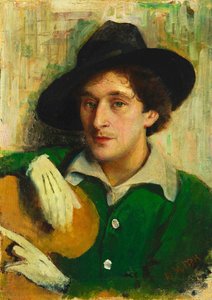
1887 - 1985 , Belarus


Håll dig uppdaterad med de senaste konstnyheterna, exklusiva erbjudanden och inredningsidéer.
Berätta om ditt projekt så kommer våra konstexperter att ge dig 3 personliga konstförslag.
Vi skapar ett urval av 3 alternativ helt anpassat för dig – gratis!


 Preview
 Skicka
 Dela
Dela
 Visa detaljer

 Ladda ner
 Liknande objekt
 Röntgen
 Bildspel
 Visa mer







 Glasalternativet är endast tillgängligt i storlekar under 110 cm.