x

Giclée- eller canvasprint av museumskvalitet med snabb produktion och flexibla ytbehandlingsalternativ. ( Beställ handmålad reproduktion Köp högupplöst bild)





























Välj bland våra förinställda storlekar som motsvarar konstverkets ursprungliga proportioner.

Du kan ange egna mått för att passa en specifik ram eller yta. Om det valda måttet inte överensstämmer med originalbildens proportioner kommer vi antingen att beskära konstverket eller utöka bilden med en speglad eller enfärgad kant. En digital mockup skickas för ditt godkännande innan produktionen påbörjas.
Vänligen notera att förhandsvisningen på skärmen inte återspeglar den faktiska beskärningen eller utökningen. Endast mockuppen visar den slutgiltiga kompositionen korrekt.
Även om anpassade storlekar är möjliga, rekommenderar vi att du väljer ett mått från den fördefinierade listan för att bevara de ursprungliga proportionerna.
Leverans över hela världen () på 2 veckor istället för standard 4/5 veckor. (14 augusti)


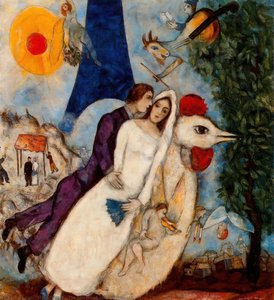
Self-portrait
Storlek på reproduktion
Marc Chagall’s 1963 “Self-portrait” is not merely a depiction of the artist; it’s an immersion into the very soul of his enduring vision. This striking black and white lithograph, capturing a moment of quiet contemplation, reveals a man – undoubtedly Chagall himself – holding a guitar with a thoughtful gaze directed towards the viewer. The image immediately draws us in with its stark contrasts and the inherent vulnerability conveyed by the subject’s posture. It's a work that speaks volumes about the artist’s lifelong preoccupation with memory, loss, and the enduring power of dreams.
Born Moishe Shagal in 1887 in the Belarusian town of Liozna, Chagall’s artistic journey was inextricably linked to his origins. The lithograph subtly evokes this formative landscape – a place that would forever haunt his imagination and infuse his work with a profound sense of nostalgia. The presence of the guitar itself is laden with symbolic weight; it represents not just musical expression but also a connection to Jewish folklore, particularly the tradition of storytelling and song within the Hasidic community. The hat adds another layer of visual interest, hinting at both formality and a certain rustic charm, elements frequently found in Chagall’s depictions of rural life.
Beyond the immediate portrait, the composition is rich with symbolic cues. The other figures visible in the background, though less prominent, likely represent memories or aspects of Chagall's personal history – perhaps family members, fellow artists, or scenes from his childhood. The additional guitar to the right could symbolize a continuation of artistic expression or a yearning for lost harmonies. Chagall’s use of black and white further amplifies the emotional impact, stripping away any distractions and focusing our attention on the raw essence of human emotion. This deliberate choice aligns with Chagall's frequent exploration of themes like death, spirituality, and the search for meaning in a world often perceived as chaotic.
Created in 1963, towards the end of his extraordinarily long career, this “Self-portrait” reflects Chagall’s profound engagement with his past. The work stands as a testament to his unwavering commitment to personal expression and his ability to translate deeply felt emotions into powerful visual narratives. It's a poignant reminder of the artist's lifelong struggle to reconcile his Jewish heritage with the broader currents of 20th-century art, and it invites us to contemplate our own relationship with memory, identity, and the enduring human need for connection. This reproduction offers a unique opportunity to possess a piece of Chagall’s legacy – a window into the soul of one of the 20th century's most beloved artists.

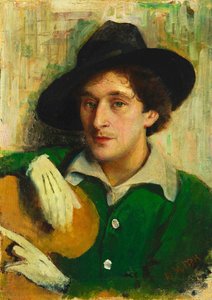
1887 - 1985 , Belarus

Explore the profound artistry of black and white photography. From the chemistry of gelatin silver to the chiaroscuro of the Old Masters, discover how monochrome captures the eternal essence of light, form, and emotion for the discerning art collector.

Explore the profound history and technical mastery of woodcut relief printing. From ancient origins to German Expressionism, discover how artists use the subtractive process to create iconic works. A definitive guide for art students, collectors, and historians.


Håll dig uppdaterad med de senaste konstnyheterna, exklusiva erbjudanden och inredningsidéer.
Berätta om ditt projekt så kommer våra konstexperter att ge dig 3 personliga konstförslag.
Vi skapar ett urval av 3 alternativ helt anpassat för dig – gratis!


 Förhandsvisa
 Skicka
 Dela
Dela
 Visa detaljer

 Ladda ner
 Liknande objekt
 Röntgen
 Bildspel

 Visa mer







 Glasalternativet är endast tillgängligt i storlekar under 110 cm.