x

 35.0 x 43.0 cm
 Royal West of England Academy
Köp en högupplöst, förbättrad digital bild med betydligt högre kvalitet än förhandsvisningen online.
Varje fil är noggrant förberedd av våra interna specialister med hjälp av avancerade verktyg och professionell manuell retuschering. Vi säkerställer att varje bild har exceptionell skärpa, exakt färgåtergivning och fina detaljer.
Den slutgiltiga filen levereras via e-post inom 72 timmar, optimerad för omedelbar användning i professionella sammanhang, redaktionellt bruk och tryckmiljöer. Detta är samma kvalitet som med förtroende används av ledande designstudior, förlag och gallerier.
Ladda ner en högupplöst fil för personlig visning, utskrift och kreativa projekt. ( Beställ tryck Beställ handmålad reproduktion)
När du väljer Most-Famous-Paintings.com får du inte bara en bild – du får ett professionellt förädlat digitalt konstverk, skapat med precision och med en garanterad tillfredsställelse. Här är allt som ingår i din beställning, automatiskt:

Din högupplösta digitala bild skickas till dig via e-post inom 72 timmar efter beställning – redo för omedelbar användning.

Ditt konstverk optimeras professionellt med hjälp av avancerade AI-verktyg och manuell redigering, vilket garanterar maximal detaljrikedom, skärpa och färgnoggrannhet.

Har du råkat radera eller tappa bort din fil? Ingen oro – vi skickar den kostnadsfritt till dig när som helst.

Njut av ditt konstverk omedelbart utan tull, importavgifter eller leveranskostnader – digitala nedladdningar är alltid skattefria.

Vi säkerställer att din digitala bild återger de ursprungliga färgerna så exakt som möjligt med hjälp av professionella verktyg och färghantering.

Om du inte är nöjd med din digitala bild kommer vi att revidera den eller återbetala 100% inom 60 dagar – utan frågor.

Inte nöjd? Få full återbetalning inom 60 dagar efter att du har tagit emot din digitala fil – utan frågor och diskussioner.

Köp 3 bilder, spara 10% – Köp 5, spara 15% – Köp 10+, spara 20%. Perfekt för kreativa projekt, gallerier och byråer.

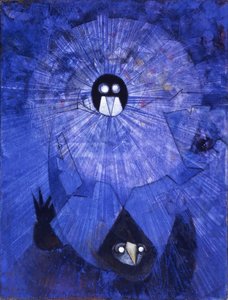
Margaret Gregory (1927-2011) wasn’t merely an artist; she was a chronicler, a storyteller deeply rooted in the folklore and landscape of County Galway. Her work, particularly her monumental “Homage to Joseph Beuys” series, transcends simple abstraction, becoming intricate tapestries woven with personal memory, Irish mythology, and a profound engagement with the social and political currents of her time. Born Margaret Parry in Cheltenham, England, she inherited a rich artistic lineage through her mother’s family, steeped in Victorian art patronage and a deep appreciation for the visual arts. This early exposure fostered a lifelong fascination with color, texture, and the evocative power of image – elements that would become central to her distinctive style.
Gregory's formative years were spent largely at Coole Park, the ancestral home of Lady Gregory, a pivotal figure in the Irish Literary Revival. Living within this vibrant intellectual community—a gathering place for Yeats, Joyce, Synge, and countless others—shaped her artistic sensibilities profoundly. She witnessed firsthand the struggles for cultural identity and independence that defined Ireland’s 20th-century experience. This engagement with national narratives, coupled with a deep connection to the rural landscape, fueled a desire to capture not just visual appearances but also the spirit of place – the whispers of history embedded within the stones and fields of Galway.
Her artistic journey began in earnest after marrying Robert Gregory, son of Lady Gregory, in 1907. This union brought her firmly into the heart of Irish cultural life, providing access to a wealth of knowledge and experience. She initially worked as an illustrator for her mother-in-law’s books, meticulously rendering scenes from Irish mythology – tales of fairies, giants, and ancient heroes—with a remarkable attention to detail and a subtle infusion of personal interpretation. These early illustrations reveal a nascent talent for layering symbolism and creating images that resonate with both the literal and the metaphorical.
Gregory’s most celebrated work, the “Homage to Joseph Beuys” series (1986-1993), represents a significant shift in her artistic practice. Inspired by the German artist's concept of ‘shamanic art,’ which sought to connect with ancestral spirits and revitalize communities through ritualistic creation, Gregory developed a complex visual language that blended abstract expressionism with elements of Irish folk art. The panels—each measuring approximately six feet tall—are not simply representations of Beuys’s work; they are layered meditations on his ideas, filtered through her own experiences and memories.
The series is characterized by a rich palette of earthy tones – ochres, siennas, and umbers – punctuated by bursts of vibrant color. Gregory employed a variety of techniques: layering acrylic paint, incorporating collage elements (including fragments of Irish newspapers and textiles), and applying textured surfaces to create a tactile and immersive experience for the viewer. Recurring motifs—circles, spirals, and animal figures—evoke ancient symbols and connect her work to the pre-Christian traditions of Ireland. The deliberate ambiguity of these images invites multiple interpretations, suggesting a dialogue between past and present, personal and collective memory.
Alongside the “Homage” series, Gregory produced a body of smaller, more restrained works—often referred to as her minimalist compositions. These pieces, exemplified by "Floating Circle" (1998), demonstrate a remarkable control over color and form. She pared down her palette to its essential elements – often just two or three colors – and employed simple geometric shapes to create visually arresting arrangements. The “Floating Circle,” for instance, is a deceptively complex work that suggests both stability and movement, inviting the viewer to contemplate the relationship between interiority and exteriority.
These minimalist works can be seen as a counterpoint to the more elaborate scale of her larger paintings. They represent a distillation of her artistic principles—a commitment to clarity, precision, and the power of suggestion. They also reflect a growing interest in exploring the fundamental elements of visual perception – color, line, and space – without relying on narrative or symbolic content.
Margaret Gregory’s work occupies a unique position within the history of Irish art. She was part of a generation grappling with questions of national identity in the wake of independence, yet she resisted easy categorization. Her paintings are not simply portraits of Ireland; they are reflections on its past, present, and future—a complex tapestry woven from personal memory, folklore, and social commentary.
Her engagement with Joseph Beuys’s ideas is particularly significant. Beuys's emphasis on the transformative power of art resonated deeply with Gregory’s own belief in the potential of creativity to heal and revitalize communities. Her “Homage” series can be interpreted as a gesture of solidarity—a recognition of shared struggles and aspirations across generations and cultures. Margaret Gregory died in 2011, leaving behind a substantial body of work that continues to inspire and challenge viewers today. Her paintings serve as a powerful reminder of the enduring relevance of folklore, myth, and memory in shaping our understanding of the world.

1927 - 2011


Håll dig uppdaterad med de senaste konstnyheterna, exklusiva erbjudanden och inredningsidéer.
Berätta om ditt projekt så kommer våra konstexperter att ge dig 3 personliga konstförslag.
Vi skapar ett urval av 3 alternativ helt anpassat för dig – gratis!


 Förhandsvisa
 Skicka
 Dela
Dela
 Visa detaljer

 Ladda ner
 Liknande objekt
 Röntgen
 Bildspel
 Visa mer