x
 Oil On CanvasWallArtAbstract Expressionism
 1964Modern
 236.0 x 194.0 cm
Giclée- eller canvasprint av museumskvalitet med snabb produktion och flexibla ytbehandlingsalternativ. ( Beställ handmålad reproduktion Köp högupplöst bild)
Välj bland våra förinställda storlekar som motsvarar konstverkets ursprungliga proportioner.

Du kan ange egna mått för att passa en specifik ram eller yta. Om det valda måttet inte överensstämmer med originalbildens proportioner kommer vi antingen att beskära konstverket eller utöka bilden med en speglad eller enfärgad kant. En digital mockup skickas för ditt godkännande innan produktionen påbörjas.
Vänligen notera att förhandsvisningen på skärmen inte återspeglar den faktiska beskärningen eller utökningen. Endast mockuppen visar den slutgiltiga kompositionen korrekt.
Även om anpassade storlekar är möjliga, rekommenderar vi att du väljer ett mått från den fördefinierade listan för att bevara de ursprungliga proportionerna.
Leverans över hela världen () på 2 veckor istället för standard 4/5 veckor. (17 augusti)


No. 7
Storlek på reproduktion
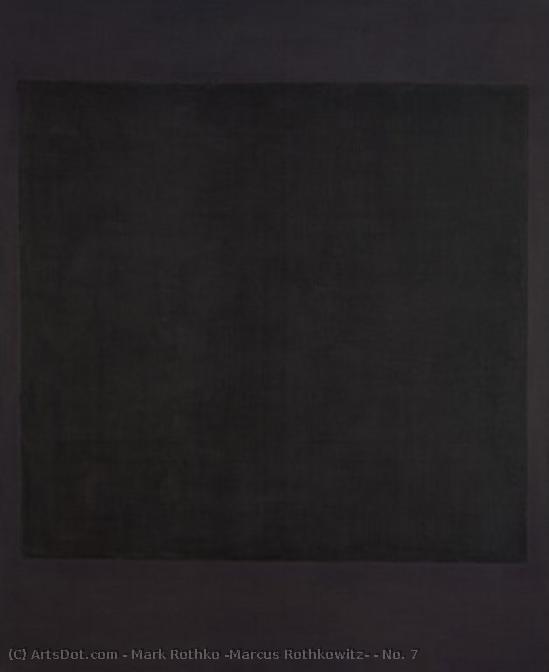
To stand before Mark Rothko’s No. 7 is to enter a sanctuary of silence. Executed in 1964, this monumental canvas serves as a profound meditation on the weight of existence and the depth of the human psyche. As a cornerstone of the Abstract Expressionist movement, specifically within the realm of Color Field painting, the work eschews all representational distractions. There are no figures to guide the eye, no landscapes to provide context; instead, the viewer is met with a vast, immersive expanse of deep blacks and charcoal grays. This deliberate use of a monochromatic palette does not merely present a color; it creates an atmosphere—a heavy, velvety shroud that invites a state of solemn contemplation and existential reflection.
The composition is a masterclass in minimalist tension. Rothko utilizes a flattened plane where a central, commanding rectangular field of dark hue dominates the visual field, subtly encircled by a thinner band of slightly lighter tone. This delicate boundary creates a soft, hazy perimeter that prevents the darkness from feeling static. Instead, the edges seem to vibrate with a quiet energy, suggesting a portal or a window into an infinite void. The lack of traditional perspective forces the viewer to confront the painting as a physical presence in the room, making it an ideal centerpiece for spaces designed for introspection, such as a private study, a minimalist gallery, or a sophisticated lounge where mood and atmosphere are paramount.
The emotional potency of No. 7 is inextricably linked to Rothko’s meticulous technical approach. The surface of the canvas reveals the artist's hand through visible, layered brushstrokes that imbue the work with a tactile, breathing quality. By applying thin washes of oil paint in successive layers, Rothko achieved a luminous depth that defies the flatness of the medium. These subtle tonal shifts—the way a deep black transitions into a smoky gray—create an illusion of receding space, as if the painting possesses its own internal gravity. This layering technique is what allows the light to appear trapped within the pigment, giving the dark fields a soft, inner glow that changes as the viewer moves around the piece.
For the discerning collector or interior designer, the allure of a high-quality reproduction lies in capturing this very nuance. The interplay between the textured central mass and the smoother surrounding borders is essential to replicating the "breathing" effect of the original. When placed in a well-lit environment, the subtle variations in the dark tones can catch ambient light, creating highlights and shadows that lend the artwork a dynamic, living presence. It is this mastery of material and light that transforms No. 7 from a mere object of decoration into a profound emotional instrument capable of anchoring an entire interior design concept with its quiet, commanding strength.
Born in Latvia and shaped by the turbulent migrations of the early 20th century, Mark Rothko’s personal history of displacement and loss is woven into the very fabric of his late-period works. By 1964, his style had matured into this distilled, elemental form of expression. The darkness found in No. 7 is not a void of nothingness, but a vessel for complex human emotions: grief, ecstasy, and the search for meaning amidst the shadows. This period of his career represents the pinnacle of his ability to use color as a language for the intangible.
Integrating such a powerful piece into a contemporary collection offers more than just aesthetic prestige; it provides an emotional anchor. Whether used to complement a modern, monochromatic interior or to provide a somber contrast to a brightly lit architectural space, No. 7 commands respect through its understated power. It remains a timeless testament to the idea that art does not need to show us the world to make us feel it; sometimes, all it requires is the courage to look into the dark and find the beauty within.
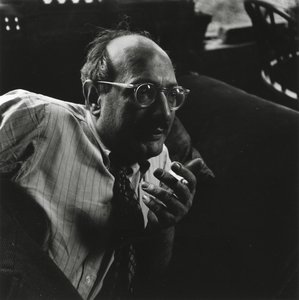
1903 - 1970 , Lettland

Explore the profound emotional depth of Color Field painting. Discover the history of mid-century abstraction, from Rothko to Newman, and learn how pure color transforms the viewer's experience through our expert art history guide.

Explore the profound emotional depth of Color Field painting. Our expert guide delves into the post-war origins of Abstract Expressionism, analyzing masterpieces by Rothko and Newman. Discover museum-grade, hand-painted oil reproductions that bring art history to your walls.

Explore the profound history and emotional depth of Color Field painting. From Mark Rothko to Barnett Newman, discover how pure color redefined modern art through our expert-led guide for students and collectors alike.

Explore the profound history and emotional depth of Abstract Expressionism. From Jackson Pollock to Mark Rothko, master the nuances of the New York School through our expert art history guide. Discover museum-quality hand-painted reproductions for your collection.
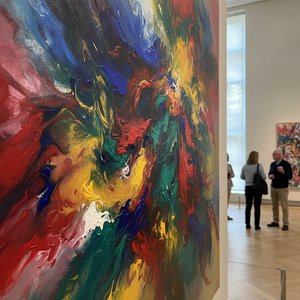
Explore the profound emotional depth of Lyrical Abstraction. Discover how masters like Raymond Parker used color and form to bridge Impressionism and Abstract Expressionism. Learn about this pivotal movement through our expert-led art history guide.


Håll dig uppdaterad med de senaste konstnyheterna, exklusiva erbjudanden och inredningsidéer.
Berätta om ditt projekt så kommer våra konstexperter att ge dig 3 personliga konstförslag.
Vi skapar ett urval av 3 alternativ helt anpassat för dig – gratis!


 Förhandsvisa
 Skicka
 Dela
Dela
 Visa detaljer

 Ladda ner
 Liknande objekt
 Röntgen
 Bildspel
 Visa mer




































 Glasalternativet är endast tillgängligt i storlekar under 110 cm.