x

Giclée- eller canvasprint av museumskvalitet med snabb produktion och flexibla ytbehandlingsalternativ. ( Beställ handmålad reproduktion Köp högupplöst bild)
Välj bland våra förinställda storlekar som motsvarar konstverkets ursprungliga proportioner.

Du kan ange egna mått för att passa en specifik ram eller yta. Om det valda måttet inte överensstämmer med originalbildens proportioner kommer vi antingen att beskära konstverket eller utöka bilden med en speglad eller enfärgad kant. En digital mockup skickas för ditt godkännande innan produktionen påbörjas.
Vänligen notera att förhandsvisningen på skärmen inte återspeglar den faktiska beskärningen eller utökningen. Endast mockuppen visar den slutgiltiga kompositionen korrekt.
Även om anpassade storlekar är möjliga, rekommenderar vi att du väljer ett mått från den fördefinierade listan för att bevara de ursprungliga proportionerna.
Leverans över hela världen () på 2 veckor istället för standard 4/5 veckor. (19 augusti)


The ceiling
Storlek på reproduktion
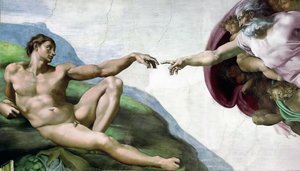
To stand beneath the expanse of the Sistine Chapel ceiling is to witness one of the most profound dialogues between humanity and the divine ever captured in pigment. Painted between 1508 and 1512, this monumental fresco cycle by Michelangelo Buonarroti transcends the boundaries of mere decoration, serving instead as a breathtaking window into the High Renaissance soul. The ceiling does not merely cover a space; it expands it, creating an illusionistic heavens that seems to pulse with the very breath of creation. Through his masterful application of the fresco technique—applying pigments directly onto wet plaster—Michelangelo achieved a luminosity and anatomical precision that remains unparalleled. Each panel, meticulously planned within a complex pyramidal composition, guides the viewer's eye through a labyrinth of biblical narratives, from the primordial dawn of Genesis to the weight of human mortality.
The artistry is anchored in an extraordinary command of the human form. Michelangelo, a sculptor by nature, approached the ceiling with a painter’s tools but a carver’s eye, imbuing every figure with a muscularity and sculptural presence that feels almost tactile. The scenes from the Book of Genesis, most notably the iconic Creation of Adam, are not merely illustrations of scripture; they are studies in tension, grace, and the spark of life. As one wanders through the intricate arrangement of prophets, sibyls, and ancestral figures, there is a palpable sense of movement and drama. The artist’s ability to balance the immense physical scale of the work with the delicate emotional nuances of his subjects—capturing both the vulnerability of Adam and the terrifying grandeur of divine power—creates an immersive experience that continues to captivate the modern imagination.
Commissioned by Pope Julius II during a period of intense papal ambition, the ceiling was conceived as a symbol of spiritual renewal and the enduring authority of the Church. This was an era defined by Humanism, where the rediscovery of classical antiquity met a fervent religious devotion. Michelangelo’s work sits at the heart of this intersection, blending the idealized beauty of Greek and Roman sculpture with the profound theological mysteries of Christianity. The ceiling serves as a complex symbolic map; the central panels recount the history of the world from the moment of creation to the fall of man, while the surrounding architectural frameworks and figures provide a structural and spiritual scaffolding that connects the earthly realm to the celestial.
For the discerning collector or interior designer, a reproduction of this masterpiece offers more than just aesthetic beauty; it brings a sense of historical weight and intellectual depth to any space. The ceiling’s palette, though subject to the ravages of time and subsequent restorations, retains a powerful emotional resonance through its use of light and shadow. To possess an image of this work is to invite a conversation about human potential, the struggle between sin and redemption, and the eternal quest for meaning. It is a piece that demands attention, serving as a focal point that inspires awe and provides a sophisticated layer of storytelling to even the most contemporary of environments.

1475 - 1564 , Italien
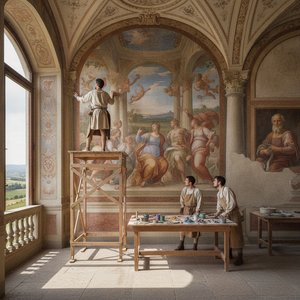
Explore the profound history and technical mastery of fresco painting. From ancient Roman murals to Michelangelo's Sistine Chapel, discover the enduring chemistry and artistry behind this timeless wall painting technique used by the world's greatest masters.


Håll dig uppdaterad med de senaste konstnyheterna, exklusiva erbjudanden och inredningsidéer.
Berätta om ditt projekt så kommer våra konstexperter att ge dig 3 personliga konstförslag.
Vi skapar ett urval av 3 alternativ helt anpassat för dig – gratis!


 Skicka
 Dela
Dela
 Visa detaljer

 Ladda ner
 Liknande objekt
 Bildspel


 Visa mer




































 Glasalternativet är endast tillgängligt i storlekar under 110 cm.