


x
Köp en högupplöst, förbättrad digital bild som är vida överlägsen förhandsvisningen online.
Varje fil är noggrant förberedd av våra interna specialister med hjälp av avancerade verktyg och professionell manuell retuschering. Vi säkerställer att varje bild har exceptionell skärpa, exakt färgåtergivning och fina detaljer.
Den slutgiltiga filen levereras via e-post inom 72 timmar, optimerad för omedelbar användning i professionella sammanhang, redaktionellt bruk och tryckmiljöer. Detta är samma kvalitet som med förtroende används av ledande designstudior, förlag och gallerier.
Ladda ner en högupplöst fil för personlig visning, utskrift och kreativa projekt. ( Köp tryck Köp handgjord målning)
När du väljer Most-Famous-Paintings.com får du inte bara en bild – du får ett professionellt förädlat digitalt konstverk, skapat med precision och med en garanterad tillfredsställelse. Här är allt som ingår i din beställning, automatiskt:

Din högupplösta digitala bild skickas till dig via e-post inom 72 timmar efter beställning – redo för omedelbar användning.

Ditt konstverk optimeras professionellt med hjälp av avancerade AI-verktyg och manuell redigering, vilket garanterar maximal detaljrikedom, skärpa och färgnoggrannhet.

Har du råkat radera eller tappa bort din fil? Ingen oro – vi skickar den kostnadsfritt till dig när som helst.

Njut av ditt konstverk omedelbart utan tull, importavgifter eller leveranskostnader – digitala nedladdningar är alltid skattefria.

Vi säkerställer att din digitala bild återger de ursprungliga färgerna så exakt som möjligt med hjälp av professionella verktyg och färghantering.

Om du inte är nöjd med din digitala bild kommer vi att revidera den eller återbetala 100% inom 60 dagar – utan frågor.

Inte nöjd? Få full återbetalning inom 60 dagar efter att du har tagit emot din digitala fil – utan frågor och diskussioner.

Köp 3 bilder, spara 10% – Köp 5, spara 15% – Köp 10+, spara 20%. Perfekt för kreativa projekt, gallerier och byråer.

In the vibrant, shifting landscape of nineteenth-century France, few artists captured the delicate interplay between human emotion and social grace as intimately as Nicolas Eustache Maurin. Born in the historic town of Perpignan in 1799, Maurin was a child of artistic lineage, the son of the painter Pierre Maurin. This early immersion in the scent of oil paints and the tactile nature of the studio laid the foundation for a career that would eventually bridge the worlds of fine painting and the burgeoning medium of lithography. His journey from the quiet corners of southern France to the prestigious salons of Paris was fueled by a rigorous technical training, most notably under the guidance of Henri Regnault, whose influence helped shape Maurin’s ability to infuse even the simplest line with profound psychological depth.
As Maurin established himself in the Parisian art scene, he became a master of the lithographic stone, an artist capable of translating the fleeting nuances of a facial expression into permanent, striking imagery. His work during the 1830s and 1840s reflected the spirit of Romanticism, a movement that sought to explore the depths of individual feeling and the dramatic beauty of the human condition. Whether through his celebrated portraits or his more playful, observational prints, Maurin possessed a rare gift for capturing the "spirit of the age." His hands were skilled not just in the mechanical precision required for engraving, but in the artistic interpretation that allowed him to breathe life into his subjects, making them feel like contemporaries to anyone viewing his work decades later.
Maurin’s legacy is perhaps most vibrantly felt through his ability to document the faces and fashions of his era. He was a painter of manners, an observer of the subtle social cues that defined nineteenth-century life. His portfolio contains a remarkable breadth of subject matter, ranging from the deeply personal to the broadly historical. One cannot discuss his contributions without mentioning his ability to distill complex personalities into singular, evocative compositions. His work often touched upon themes of intimacy and domesticity, seen in titles such as Love, Modesty, and Tender Avowal, where he utilized tonal gradations and soft shading to create a sense of warmth and vulnerability.
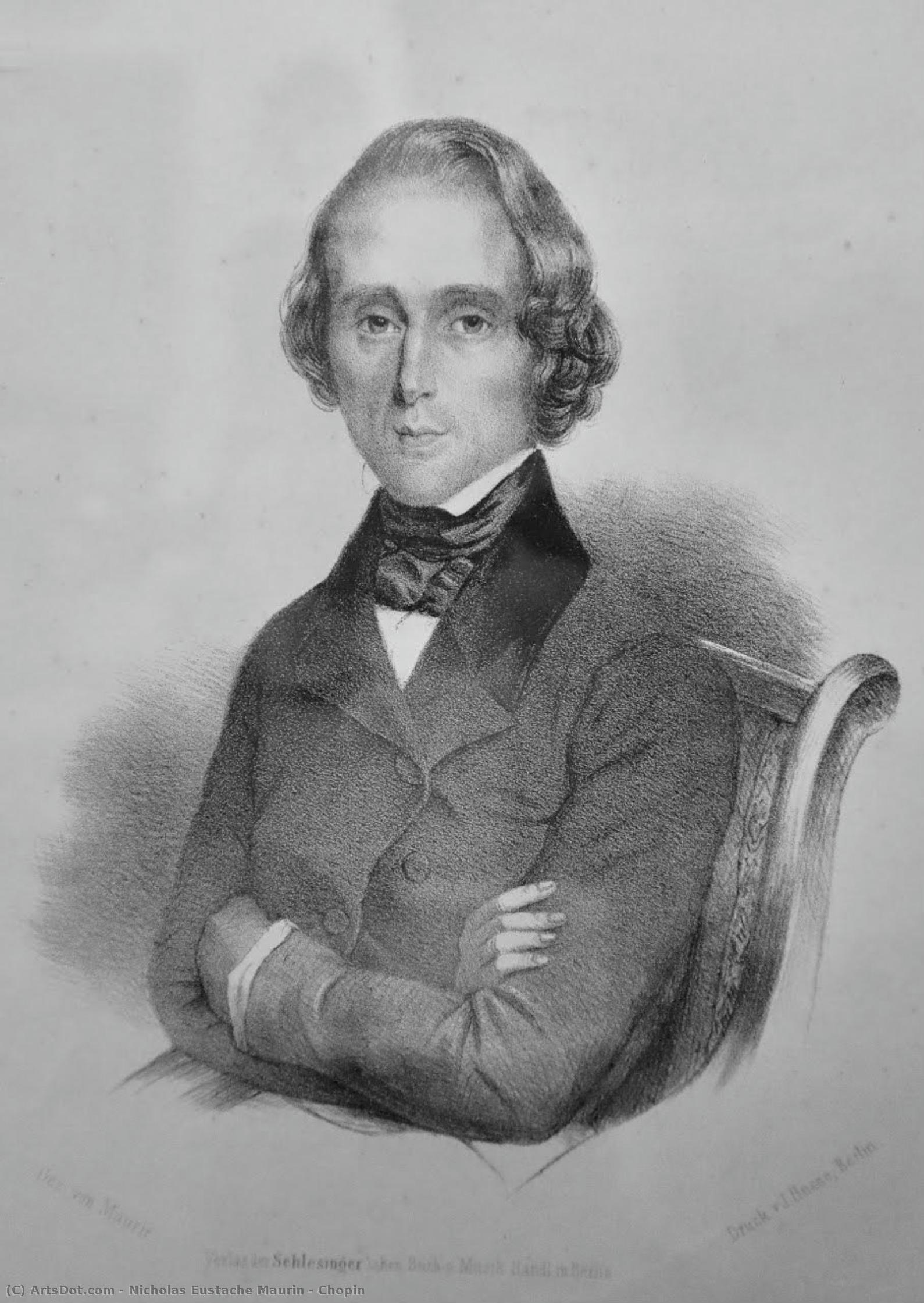
Beyond the domestic sphere, Maurin’s talent for portraiture allowed him to immortalize some of the most significant figures of his time. His ability to capture the essence of a person—the weight of their thoughts or the spark of their intellect—is evident in his depictions of legendary figures such as Chopin and James Madison. These were not merely likenesses; they were character studies that utilized the unique textures of lithography to suggest depth and movement. His work often appeared in prestigious collections, including the National Portrait Gallery in London and The Metropolitan Museum of Art, ensuring that his vision of the nineteenth century would endure long after his passing in 1850.
What truly set Maurin apart from his contemporaries was his elevation of lithography from a reproductive tool to a primary medium of artistic expression. While many used the technique to simply copy existing paintings, Maurin approached the stone with the eye of a painter. He understood how light could be manipulated through varying pressures on the lithographic crayon, creating a sense of atmosphere that mimicked the soft glow of candlelight or the dramatic shadows of a studio portrait. This technical prowess allowed him to participate in significant series, such as his Iconography of Contemporaries, which served as a visual encyclopedia of the era's most notable individuals.
The historical significance of Nicolas Eustache Maurin lies in his role as a visual chronicler. Through his meticulous attention to detail and his empathetic approach to his subjects, he provided a window into the social fabric of nineteenth-century France. His work remains a testament to the power of printmaking to capture both the grand narratives of history and the quiet, intimate moments of human existence. Today, collectors and historians alike look to his prints not just as beautiful objects of art, but as essential fragments of a lost world, preserved through the enduring magic of stone and ink.

1799 - 1850 , France


Håll dig uppdaterad med de senaste konstnyheterna, exklusiva erbjudanden och inredningsidéer.
Berätta om ditt projekt så kommer våra konstexperter att ge dig 3 personliga konstförslag.
Vi skapar ett urval av 3 alternativ helt anpassat för dig – gratis!


 Visa i rummet
 Skicka
 Dela
Dela
 Detaljer

 Ladda ner
 Liknande objekt
 Röntgen
 Bildspel
 Läs mer





