


x

 Oil On CanvasWallArtSynthetist Painting
 189419th Century
 110.0 x 101.0 cm
 Dallas Museum of Art
Giclée- eller canvasprint av museumskvalitet med snabb produktion och flexibla ytbehandlingsalternativ. ( Beställ handmålad reproduktion Köp högupplöst bild)





























Välj bland våra förinställda storlekar som motsvarar konstverkets ursprungliga proportioner.

Du kan ange egna mått för att passa en specifik ram eller yta. Om det valda måttet inte överensstämmer med originalbildens proportioner kommer vi antingen att beskära konstverket eller utöka bilden med en speglad eller enfärgad kant. En digital mockup skickas för ditt godkännande innan produktionen påbörjas.
Vänligen notera att förhandsvisningen på skärmen inte återspeglar den faktiska beskärningen eller utökningen. Endast mockuppen visar den slutgiltiga kompositionen korrekt.
Även om anpassade storlekar är möjliga, rekommenderar vi att du väljer ett mått från den fördefinierade listan för att bevara de ursprungliga proportionerna.
Leverans över hela världen () på 2 veckor istället för standard 4/5 veckor. (14 augusti)


Celtic Tale
Storlek på reproduktion
Paul Sérusier's "Celtic Tale," painted in 1894, isn’t merely a depiction of a forest scene; it’s a profound exploration of light, color, and the nascent principles of abstract art. This oil on canvas, now residing within the Dallas Museum of Art, offers a captivating glimpse into the artist's innovative approach to capturing the essence of nature – a style he would later define as Synthetism. Born in Paris in 1864, Sérusier’s artistic journey was marked by a restless pursuit of new forms of expression, culminating in his groundbreaking work with the Nabis movement and his pioneering experiments with Cloisonnism.
The painting immediately draws the eye with its vibrant palette. Bold swathes of emerald green, sapphire blue, and ochre yellow dominate the composition, creating a sense of luminous intensity. These colors aren’t applied realistically; instead, Sérusier employs them in a flattened, almost geometric manner – a hallmark of Synthetism. He deliberately rejects traditional perspective, opting for simplified forms and strong contours that delineate shapes rather than mimicking their three-dimensional appearance. This technique, reminiscent of the decorative art of cloisonné enamelwork (hence “Cloisonnism”), creates an arresting visual effect, pulling the viewer into the heart of the scene.
Sérusier’s artistic evolution was profoundly shaped by his summer sojourn in 1888 to Pont-Aven, a small village in Brittany. There, he encountered Paul Gauguin, who became a mentor and introduced him to the principles of Synthetism. Gauguin encouraged Sérusier to abandon academic realism and instead focus on capturing the *feeling* of a subject – its essence rather than its literal representation. This shift is powerfully evident in "Celtic Tale," where the forest itself becomes a symbolic entity, imbued with an almost mystical quality.
The painting’s composition echoes the work of Seurat and Signac, key figures in Pointillism and Neo-Impressionism, both movements that influenced Sérusier's development. However, unlike their meticulous application of tiny dots of color, Sérusier utilizes broader brushstrokes and bolder blocks of pigment to achieve a similar effect – creating an impression of light and atmosphere through the manipulation of color itself. The figures within the scene are deliberately simplified, almost dissolving into the surrounding landscape, further emphasizing the painting’s abstract qualities.
Beyond its formal innovations, “Celtic Tale” is rich in symbolic meaning. The gathering of individuals amidst the forest evokes a sense of community and shared experience – a celebration of life and connection with nature. The two dogs present add to this feeling of warmth and conviviality. However, there’s also an underlying current of mystery and perhaps even melancholy. The cloaked figures, their faces obscured, suggest a ritualistic gathering, hinting at ancient Celtic traditions and the enduring power of myth.
The dappled sunlight filtering through the trees creates a sense of ethereal beauty, while the dark, rocky outcrop in the background provides a stark contrast, representing both obstacles and hidden depths. The painting’s overall mood is one of serene contemplation – an invitation to lose oneself in the beauty of the natural world and reflect on its timeless mysteries. It's a testament to Sérusier's ability to translate complex emotions and ideas into a visually arresting and deeply resonant work of art.
Paul Sérusier’s “Celtic Tale” stands as a pivotal work in the history of modern art. It represents a crucial step towards abstraction, demonstrating the power of color and form to convey emotion and meaning independently of representational accuracy. His pioneering use of Synthetism paved the way for subsequent movements such as Fauvism and Cubism, solidifying his place as one of the most important figures in the development of 20th-century art. Reproductions of this captivating painting continue to inspire artists and collectors alike, offering a window into the visionary world of Paul Sérusier.


1864 - 1927 , Frankrike
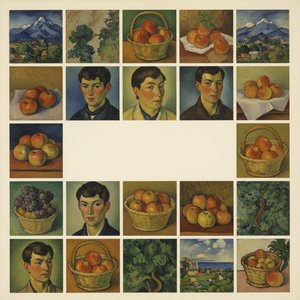
Utforska Paul Cézannes 25 mest ikoniska målningar! Fördjupa dig i impressionismens värld, från Mont Sainte-Victoire till stillsben. Hitta inspiration & museumkvalitativa konsttryck på Most-Famous-Paintings.com.

Utforska Paul Klees 25 mest ikoniska målningar! Fördjupa dig i hans abstrakta värld av färg, expressionism och unik konstnärlig stil. Hitta inspiration till ditt hem med reproduktioner av högsta kvalitet på Most-Famous-Paintings.com – din källa för tidlös konst.

Discover Paul Sérusier's pivotal role in the Nabis movement & the birth of Synthetism. Explore 'The Talisman,' his influence on modern art, and a deeper understanding of this symbolic revolution. Expert analysis & insights.

Upptäck impressionismens magi! Utforska 10 ikoniska verk av Monet, Renoir & Degas. Lär känna historien bakom mästerverken och hitta inspiration till din inredning med konsttryck från Most-Famous-Paintings.com.

Explore the profound emotional depth & innovative techniques of Post-Impressionism with Most-Famous-Paintings. Discover Cézanne, Van Gogh, Gauguin & more – and their lasting impact on modern art.


Håll dig uppdaterad med de senaste konstnyheterna, exklusiva erbjudanden och inredningsidéer.
Berätta om ditt projekt så kommer våra konstexperter att ge dig 3 personliga konstförslag.
Vi skapar ett urval av 3 alternativ helt anpassat för dig – gratis!


 Förhandsvisa
 Skicka
 Dela
Dela
 Visa detaljer

 Ladda ner
 Liknande objekt
 Röntgen
 Bildspel
 Visa mer







 Glasalternativet är endast tillgängligt i storlekar under 110 cm.


