


x


Giclée- eller canvasprint av museumskvalitet med snabb produktion och flexibla ytbehandlingsalternativ. ( Switch to hand made Painting Switch to Image)
Välj bland våra förinställda storlekar som motsvarar konstverkets ursprungliga proportioner.

Du kan ange egna mått för att passa en specifik ram eller yta. Om det valda måttet inte överensstämmer med originalbildens proportioner kommer vi antingen att beskära konstverket eller utöka bilden med en speglad eller enfärgad kant. En digital mockup skickas för ditt godkännande innan produktionen påbörjas.
Vänligen notera att förhandsvisningen på skärmen inte återspeglar den faktiska beskärningen eller utökningen. Endast mockuppen visar den slutgiltiga kompositionen korrekt.
Även om anpassade storlekar är möjliga, rekommenderar vi att du väljer ett mått från den fördefinierade listan för att bevara de ursprungliga proportionerna.
Leverans över hela världen () på 2 veckor istället för standard 4/5 veckor. (29 juli)


Untitled
Storlek på reproduktion

Born in the historic German city of Lübeck on August 18, 1935, Peter Klasen emerged as a profound witness to the transformations of the twentieth century. His early life was steeped in an environment sensitive to the arts; he grew up in a family where creative inclinations were nurtured, boasting an uncle who was a pupil of the legendary expressionist Otto Dix and a grandfather who served as a dedicated patron of art. This rich lineage provided the fertile soil from which his complex artistic vision would grow. Between 1956 and 1959, Klasen refined his technical prowess at the avant-garde Berlin University of the Arts, an experience that laid the groundwork for his later explorations into the friction between humanity and the machine.
Following his studies, a scholarship granted him passage to Paris in 1959, a move that would expand his horizons beyond German borders. It was during the 1960s that Klasen established himself as a pivotal figure in the Nouvelle Figuration, or Narrative Figuration, movement. This era marked the beginning of his lifelong interrogation of the modern landscape. He did not merely paint scenes; he constructed visual metaphors that critiqued the rapid standardization of Western society. His work began to capture the signs of our urban existence, utilizing the language of mass media to condemn the creeping uniformity of a consumer-driven world.
As his career progressed into the 1970s, Klasen achieved international renown through his groundbreaking "binary paintings." These works are characterized by a haunting tension, often presenting a stark opposition between fragments of the human body and industrial or commercial objects. Through this technique, he explored the profound anxiety of a contemporary society split between the concept of being and the impulse of having. His canvases became battlegrounds where the sensuality of the human form collided with the cold, often "disgusting" reality of industrial progress.
His mastery of photorealism serves as more than a technical feat; it is a deliberate tool for confrontation. By rendering factories, workshops, and technological advancements with breathtaking precision, he forces the viewer to confront the dehumanizing effects of mass production. In his most evocative works, the human figure often appears fragmented or intertwined with machinery, existing within environments that feel devoid of warmth or organic connection. This meticulous detail serves to highlight the hostility of the modern city, where the individual is frequently reduced to a mere commodity within a larger, impersonal system.
The significance of Peter Klasen’s contribution to modern art lies in his ability to translate the complexities of technological advancement into a visceral visual language. His work transcends simple representation, acting as a sociological critique of the late twentieth century. Whether through his expansive paintings or his striking industrial sculptures—which utilize materials like steel, aluminum, and vibrant orange accents to evoke urban installations—Klasen remains a master of contrast.
His enduring impact can be summarized through several key artistic pillars:
Today, Klasen stands as a pioneer whose work continues to resonate in an era still grappling with the consequences of digital and industrial saturation. He remains an essential voice for anyone seeking to understand the intersection of human identity and the relentless march of progress.

1935 - , Germany

Utforska de 25 mest ikoniska konstverken på Metropolitan Museum of Art i New York! Upptäck van Gogh, Monet, Rembrandt och mer – deras historia, teknik & inspiration. Hitta museumskvalitativa tryck och inred ditt hem med tidlös skönhet hos Most-Famous-Paintings.com.
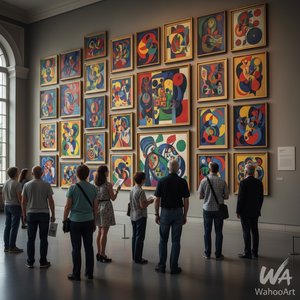
Utforska Wassily Kandinskys 25 mest ikoniska verk – från expressionism till abstrakt konst. Lär känna historien bakom mästerverken och hitta inspiration för din heminredning med Most-Famous-Paintings.com. Upptäck hela samlingen online!
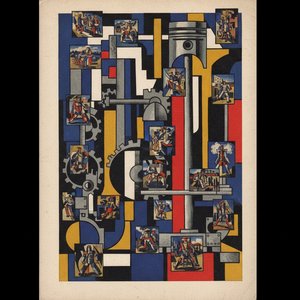
Utforska Fernand Légers 25 mest ikoniska målningar! Fördjupa dig i kubismens värld, maskinålderns färgstarka estetik och tidlösa konstverk. Köp reproduktioner av högsta kvalitet på Most-Famous-Paintings.com – för din inredning.

Upptäck 10 legendariska brons skulpturer som revolutionerade konsthistorien! Lär känna Rodin, Michelangelo och andra mästare. Köp museumkvalitativa repliker & hitta inspiration för din inredning på Most-Famous-Paintings.com.
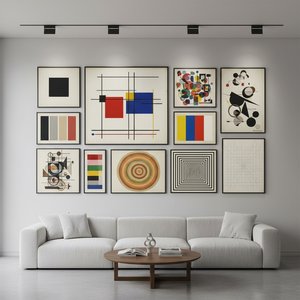
Utforska de 10 mästerverk som definierade geometrisk abstraktion! Lär känna Mondrian, Kandinsky & Malevich. Hitta inspiration och museumskvalitativa konsttryck för ditt hem på Most-Famous-Paintings.com. Upptäck hela samlingen online!


Håll dig uppdaterad med de senaste konstnyheterna, exklusiva erbjudanden och inredningsidéer.
Berätta om ditt projekt så kommer våra konstexperter att ge dig 3 personliga konstförslag.
Vi skapar ett urval av 3 alternativ helt anpassat för dig – gratis!


 Preview
 Skicka
 Dela
Dela
 Visa detaljer

 Ladda ner
 Liknande objekt
 Röntgen
 Bildspel


 Visa mer




































 Glasalternativet är endast tillgängligt i storlekar under 110 cm.


