x

 Oil On PanelEarly Netherlandish Renaissance
 1445Renaissance
 91.0 x 89.0 cm
 Staatliche Museen zu Berlin
Giclée- eller canvasprint av museumskvalitet med snabb produktion och flexibla ytbehandlingsalternativ. ( Beställ handmålad reproduktion Köp högupplöst bild)





























Välj bland våra förinställda storlekar som motsvarar konstverkets ursprungliga proportioner.

Du kan ange egna mått för att passa en specifik ram eller yta. Om det valda måttet inte överensstämmer med originalbildens proportioner kommer vi antingen att beskära konstverket eller utöka bilden med en speglad eller enfärgad kant. En digital mockup skickas för ditt godkännande innan produktionen påbörjas.
Vänligen notera att förhandsvisningen på skärmen inte återspeglar den faktiska beskärningen eller utökningen. Endast mockuppen visar den slutgiltiga kompositionen korrekt.
Även om anpassade storlekar är möjliga, rekommenderar vi att du väljer ett mått från den fördefinierade listan för att bevara de ursprungliga proportionerna.
Leverans över hela världen () på 2 veckor istället för standard 4/5 veckor. (15 augusti)


Bladelin Triptych
Storlek på reproduktion
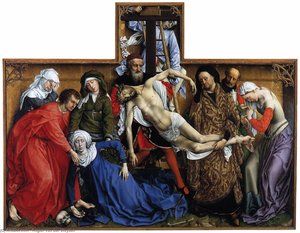
The Bladelin Triptych, formally known as the Middelburg Altarpiece, stands as a testament to Rogier van der Weyden's unparalleled skill in capturing human emotion and conveying profound theological ideas. Completed around 1450, this monumental painting transcends mere visual representation; it’s an immersive experience into the spiritual landscape of its time—a period marked by burgeoning humanist thought alongside unwavering faith.
At first glance, the triptych presents a seemingly simple scene – the birth of Jesus – yet Van der Weyden’s genius lies in layering narratives and symbolism within its framework. The central panel depicts Mary and Joseph kneeling before a crumbling Romanesque chapel, representing the transition from pagan antiquity to Christian dogma. Tiny figures depict angels announcing the divine miracle, while on the right, a cityscape subtly underscores the universality of Christ's reign. Each element contributes to a larger story about redemption and hope.
What distinguishes this artwork is Van der Weyden’s masterful use of oil paint on oak panel—a technique that revolutionized painting at the time. Unlike tempera, which dries quickly and lacks vibrancy, oil allowed for gradual blending and layering, resulting in astonishingly rich colors and textures. The artist meticulously rendered every detail – from the folds of Mary's robe to the expressions etched upon Joseph’s face – achieving a level of realism previously unattainable. This dedication to meticulous observation is evident throughout the entire composition.
Beyond its visual splendor, the Bladelin Triptych overflows with symbolic significance. The ruined chapel symbolizes the decline of pagan beliefs and the ascendancy of Christianity. The shepherds represent humility and faith—the first witnesses to Jesus’s birth. Furthermore, the depiction of Augustus and Sibyl speaks to the interconnectedness of pagan mythology and Christian scripture, highlighting the transformative power of divine revelation.
Originally commissioned for the Middelburg church by Pieter Bladelin, a prominent Bruges burgher, the triptych has traveled through history, culminating in its current residence at the Gemäldegalerie, Berlin. Its enduring appeal lies not only in its artistic brilliance but also in its ability to evoke contemplation and inspire awe—a testament to Van der Weyden’s legacy as one of the foremost painters of his era.
Most-Famous-Paintings.com offers exceptional reproductions that allow you to experience the beauty and depth of this iconic artwork firsthand. Capture the emotional resonance of Van der Weyden's masterpiece in your home!

1400 - 1464 , Belgien

Explore the profound history and technical brilliance of oil on panel painting. From Renaissance masters to modern techniques, discover why this rigid support offers unparalleled precision and permanence for fine art lovers and collectors.


Håll dig uppdaterad med de senaste konstnyheterna, exklusiva erbjudanden och inredningsidéer.
Berätta om ditt projekt så kommer våra konstexperter att ge dig 3 personliga konstförslag.
Vi skapar ett urval av 3 alternativ helt anpassat för dig – gratis!


 Förhandsvisa
 Skicka
 Dela
Dela
 Visa detaljer

 Ladda ner
 Liknande objekt
 Röntgen
 Bildspel
 Visa mer







 Glasalternativet är endast tillgängligt i storlekar under 110 cm.