


x
Köp en högupplöst, förbättrad digital bild med betydligt högre kvalitet än förhandsvisningen online.
Varje fil är noggrant förberedd av våra interna specialister med hjälp av avancerade verktyg och professionell manuell retuschering. Vi säkerställer att varje bild har exceptionell skärpa, exakt färgåtergivning och fina detaljer.
Den slutgiltiga filen levereras via e-post inom 72 timmar, optimerad för omedelbar användning i professionella sammanhang, redaktionellt bruk och tryckmiljöer. Detta är samma kvalitet som med förtroende används av ledande designstudior, förlag och gallerier.
Ladda ner en högupplöst fil för personlig visning, utskrift och kreativa projekt. ( Beställ tryck Beställ handmålad reproduktion)
När du väljer Most-Famous-Paintings.com får du inte bara en bild – du får ett professionellt förädlat digitalt konstverk, skapat med precision och med en garanterad tillfredsställelse. Här är allt som ingår i din beställning, automatiskt:

Din högupplösta digitala bild skickas till dig via e-post inom 72 timmar efter beställning – redo för omedelbar användning.

Ditt konstverk optimeras professionellt med hjälp av avancerade AI-verktyg och manuell redigering, vilket garanterar maximal detaljrikedom, skärpa och färgnoggrannhet.

Har du råkat radera eller tappa bort din fil? Ingen oro – vi skickar den kostnadsfritt till dig när som helst.

Njut av ditt konstverk omedelbart utan tull, importavgifter eller leveranskostnader – digitala nedladdningar är alltid skattefria.

Vi säkerställer att din digitala bild återger de ursprungliga färgerna så exakt som möjligt med hjälp av professionella verktyg och färghantering.

Om du inte är nöjd med din digitala bild kommer vi att revidera den eller återbetala 100% inom 60 dagar – utan frågor.

Inte nöjd? Få full återbetalning inom 60 dagar efter att du har tagit emot din digitala fil – utan frågor och diskussioner.

Köp 3 bilder, spara 10% – Köp 5, spara 15% – Köp 10+, spara 20%. Perfekt för kreativa projekt, gallerier och byråer.
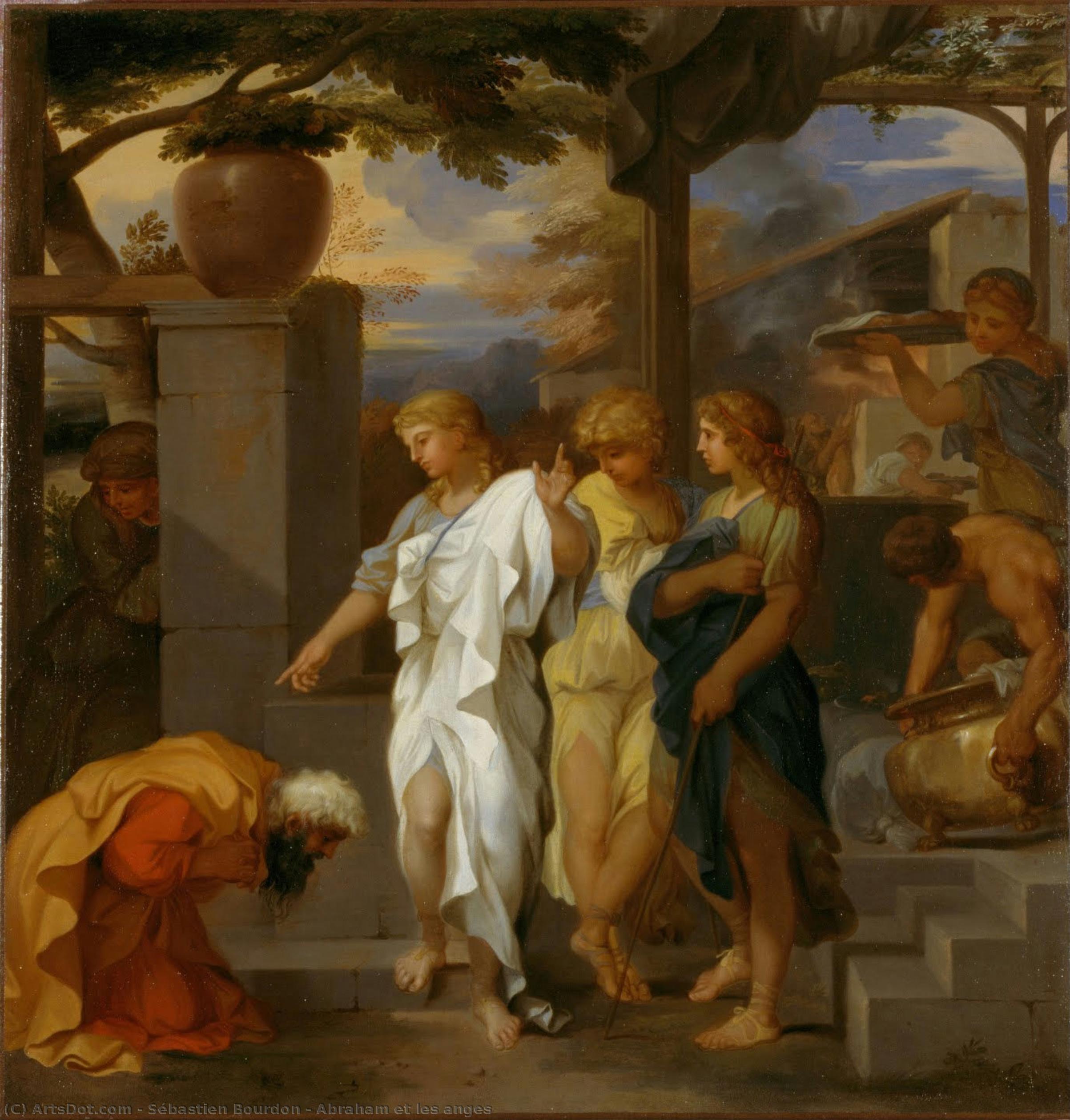
Sébastien Bourdon’s “Abraham et les anges” (Abraham and the Angels) is not merely a biblical depiction; it's a profound meditation on faith, generosity, and divine intervention rendered with the dramatic intensity characteristic of the late 17th-century Baroque. Painted between 1653 and 1657 during Bourdon’s Parisian period – a time when he was working for the influential Duke de Chevreuse – this small-scale oil painting offers a glimpse into a world where religious narrative intertwined seamlessly with aristocratic patronage. The scene, drawn from Genesis chapter 18, captures a pivotal moment: Abraham's extraordinary hospitality to three angelic visitors who announce the imminent birth of his son Isaac. It’s a tableau brimming with layered symbolism and executed with a masterful command of light, shadow, and human form.
Bourdon’s artistic lineage is immediately apparent. He was deeply influenced by the Roman Baroque masters – particularly Caravaggio – and this influence manifests in the painting's stark contrasts and dramatic use of chiaroscuro. The composition is carefully constructed to draw the viewer’s eye towards Abraham, a figure kneeling in humble deference before the radiant angels. Their forms are sculpted with meticulous detail, each fold of drapery rendered with an almost sculptural quality. Notice how Bourdon uses light not just to illuminate figures but also to create a sense of depth and atmosphere – the warm glow emanating from the angels contrasts sharply with the darker recesses of the courtyard setting, emphasizing the sacredness of the encounter.
The painting’s setting—a courtyard or porch, likely inspired by classical Roman architecture—is crucial to its meaning. The reference to “Mambré” (a biblical figure associated with a sacred oak) immediately anchors the scene in the Old Testament narrative. This architectural detail subtly elevates the earthly realm of Abraham's home into something imbued with divine significance. The arrangement of figures within this space is deliberate; Abraham, at the center, represents humanity’s capacity for faith and obedience. The angels, messengers of God, embody divine grace and intervention. And Sarah, though unseen, is the silent recipient of this miraculous promise – a symbol of hope and future fertility.
Beyond the immediate narrative, the scene resonates with broader themes of hospitality and welcoming the stranger. Abraham’s willingness to offer food and shelter to uninvited guests reflects a core tenet of Jewish faith: treating all people with kindness and compassion, regardless of their background or status. This act of generosity is not simply an earthly gesture; it's presented as a demonstration of Abraham’s unwavering loyalty to God.
Bourdon’s skill lies in his ability to synthesize diverse influences into a distinctly personal style. While he clearly admired Caravaggio’s dramatic lighting, he also incorporated elements of the French courtly tradition – evident in the refined drapery and the elegant poses of the figures. His brushwork is remarkably controlled, creating a surface that is both luminous and textured. The use of rich pigments—particularly golds and reds—contributes to the painting's overall sense of opulence and grandeur.
Furthermore, “Abraham et les anges” provides valuable insight into the artistic climate of Paris during Bourdon’s time. It exemplifies the flourishing Baroque movement that was transforming the city’s art scene. Bourdon’s work reflects a shift away from the more restrained Mannerism of earlier periods and towards a greater emphasis on emotional expression, dramatic composition, and dynamic movement – characteristics that would define the French Baroque for decades to come.
Despite its historical context, “Abraham et les anges” continues to resonate with viewers today. The painting’s depiction of faith, generosity, and divine grace transcends time and culture. It invites us to contemplate the meaning of hospitality, the importance of compassion, and the enduring power of belief. The subtle expressions on Abraham's face—a mixture of humility, wonder, and anticipation—capture a profound human experience: the recognition of something greater than oneself. It’s a work that speaks not only to the eye but also to the heart, offering a timeless meditation on the mysteries of faith and the enduring values of humanity.


1616 - 1671 , Frankrike


Håll dig uppdaterad med de senaste konstnyheterna, exklusiva erbjudanden och inredningsidéer.
Berätta om ditt projekt så kommer våra konstexperter att ge dig 3 personliga konstförslag.
Vi skapar ett urval av 3 alternativ helt anpassat för dig – gratis!


 Förhandsvisa
 Skicka
 Dela
Dela
 Visa detaljer

 Ladda ner
 Liknande objekt
 Röntgen
 Bildspel


 Visa mer


