x

 Neoclassicism
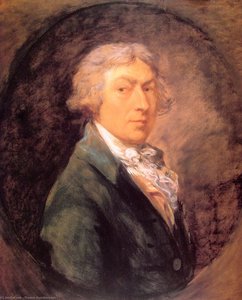
 71.0 x 62.0 cm
 Abbot Hall Art Gallery
Köp en högupplöst, förbättrad digital bild med betydligt högre kvalitet än förhandsvisningen online.
Varje fil är noggrant förberedd av våra interna specialister med hjälp av avancerade verktyg och professionell manuell retuschering. Vi säkerställer att varje bild har exceptionell skärpa, exakt färgåtergivning och fina detaljer.
Den slutgiltiga filen levereras via e-post inom 72 timmar, optimerad för omedelbar användning i professionella sammanhang, redaktionellt bruk och tryckmiljöer. Detta är samma kvalitet som med förtroende används av ledande designstudior, förlag och gallerier.
Ladda ner en högupplöst fil för personlig visning, utskrift och kreativa projekt. ( Beställ tryck Beställ handmålad reproduktion)
När du väljer Most-Famous-Paintings.com får du inte bara en bild – du får ett professionellt förädlat digitalt konstverk, skapat med precision och med en garanterad tillfredsställelse. Här är allt som ingår i din beställning, automatiskt:

Din högupplösta digitala bild skickas till dig via e-post inom 72 timmar efter beställning – redo för omedelbar användning.

Ditt konstverk optimeras professionellt med hjälp av avancerade AI-verktyg och manuell redigering, vilket garanterar maximal detaljrikedom, skärpa och färgnoggrannhet.

Har du råkat radera eller tappa bort din fil? Ingen oro – vi skickar den kostnadsfritt till dig när som helst.

Njut av ditt konstverk omedelbart utan tull, importavgifter eller leveranskostnader – digitala nedladdningar är alltid skattefria.

Vi säkerställer att din digitala bild återger de ursprungliga färgerna så exakt som möjligt med hjälp av professionella verktyg och färghantering.

Om du inte är nöjd med din digitala bild kommer vi att revidera den eller återbetala 100% inom 60 dagar – utan frågor.

Inte nöjd? Få full återbetalning inom 60 dagar efter att du har tagit emot din digitala fil – utan frågor och diskussioner.

Köp 3 bilder, spara 10% – Köp 5, spara 15% – Köp 10+, spara 20%. Perfekt för kreativa projekt, gallerier och byråer.

Thomas Stewardson, born in the picturesque town of Kendal, England, in August 1781, emerged from a family rooted in the quiet traditions of the Quaker community. His early life was shaped by this upbringing, fostering a sense of introspection that would later permeate his artistic endeavors. While details surrounding his initial education remain somewhat scarce, it is known that he began his formal training with John Fothergill, a local painter who provided him with foundational skills in the art of representation. However, Stewardson’s true artistic awakening came through his association with George Romney, a leading portraitist of the era. He became a student under Romney's tutelage, absorbing not only technical expertise but also a refined aesthetic sensibility that would define his own style.
Driven by ambition and a desire to hone his craft further, Stewardson relocated to London in 1803. He quickly established himself within the vibrant art scene, making his debut at the Royal Academy in 1804 with works that demonstrated a growing mastery of portraiture. The influence of John Opie is also noted during this period, though it was Sir Thomas Lawrence’s elegant style that appears to have left a more lasting impression on Stewardson's approach. He settled initially in Leadenhall Street, where he rapidly gained recognition for his detailed and accurate depictions of the human form. His portraits were not merely likenesses; they captured character and social standing with remarkable sensitivity.
Stewardson’s success stemmed from his ability to appeal to a discerning clientele, including members of prominent families such as the Dukes of Marlborough and Marquesses of Winchester. He painted portraits of Sir Thomas S. Pasley, Right Hon. George Canning (engraved for the National Portrait Gallery), Lord Skelmersdale, and the Earl of Liverpool—figures who shaped the political and social landscape of Victorian London. His work became synonymous with refined elegance and a meticulous attention to detail. Beyond his official commissions, Stewardson also explored other subjects, including exotic Orientalist scenes like ‘The Indian Serpent Charmer,’ exhibited in 1818, which showcased his versatility and willingness to experiment.
Stewardson’s artistic style is characterized by a remarkable clarity of form and a subtle yet effective use of color. His portraits are notable for their well-defined drawing and the lifelike quality of the skin tones, achieved through careful layering and blending techniques. While influenced by Lawrence's elegance, Stewardson developed his own distinct voice—one that prioritized accuracy and psychological insight over flamboyant display. He possessed a keen eye for capturing the nuances of expression, imbuing his sitters with a sense of dignity and presence. His portraits often feature muted tones and a sfumato technique, creating a soft, atmospheric effect.
Unfortunately, Stewardson’s career was cut short by illness, which prevented him from practicing his profession for the last thirty years of his life. He passed away in 1859 at his lodgings in Pall Mall, leaving behind a legacy of finely executed portraits that offer a fascinating glimpse into the world of Victorian society. His work can be found in museums such as those in Strasbourg and Cherbourg, and examples continue to grace private collections worldwide. Though perhaps not as widely celebrated as some of his contemporaries, Thomas Stewardson remains an important figure in British portraiture—a testament to his skill, dedication, and ability to capture the essence of his subjects.

1781 - 1859


Håll dig uppdaterad med de senaste konstnyheterna, exklusiva erbjudanden och inredningsidéer.
Berätta om ditt projekt så kommer våra konstexperter att ge dig 3 personliga konstförslag.
Vi skapar ett urval av 3 alternativ helt anpassat för dig – gratis!


 Förhandsvisa
 Skicka
 Dela
Dela
 Visa detaljer

 Ladda ner
 Liknande objekt
 Röntgen
 Bildspel
 Visa mer