


x
Giclée- eller canvasprint av museumskvalitet med snabb produktion och flexibla ytbehandlingsalternativ. ( Beställ handmålad reproduktion Köp högupplöst bild)
Välj bland våra förinställda storlekar som motsvarar konstverkets ursprungliga proportioner.

Du kan ange egna mått för att passa en specifik ram eller yta. Om det valda måttet inte överensstämmer med originalbildens proportioner kommer vi antingen att beskära konstverket eller utöka bilden med en speglad eller enfärgad kant. En digital mockup skickas för ditt godkännande innan produktionen påbörjas.
Vänligen notera att förhandsvisningen på skärmen inte återspeglar den faktiska beskärningen eller utökningen. Endast mockuppen visar den slutgiltiga kompositionen korrekt.
Även om anpassade storlekar är möjliga, rekommenderar vi att du väljer ett mått från den fördefinierade listan för att bevara de ursprungliga proportionerna.
Leverans över hela världen () på 2 veckor istället för standard 4/5 veckor. (18 augusti)


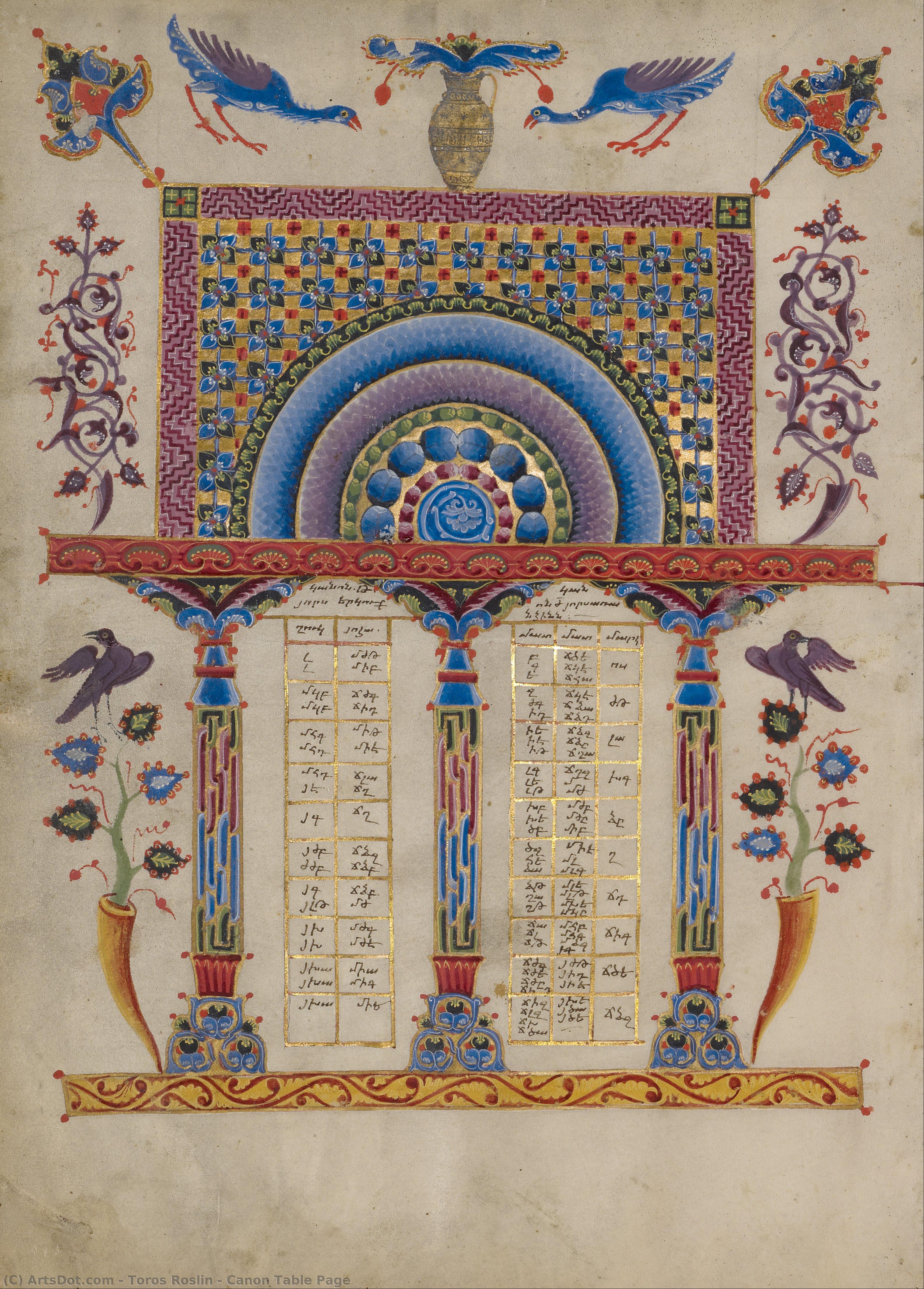
Canon Table Page
Storlek på reproduktion

In the golden era of the High Middle Ages, a luminous figure emerged from the vibrant cultural landscape of Cilician Armenia to redefine the boundaries of manuscript illumination. Toros Roslin, active during the mid-13th century, stands as the most preeminent master of his age, a creator whose brushstrokes breathed life into the sacred texts of his era. Born in Chromia around 1210, Roslin operated within a period of profound artistic synthesis, where the ancient traditions of Armenian iconography met the burgeoning influences of Western European aesthetics. His work was not merely decorative; it was a sophisticated theological and narrative endeavor that transformed the humble manuscript page into a window onto the divine.
The artistry of Roslin is defined by an unparalleled elegance of line and a delicate, nuanced use of color. Unlike many of his predecessors who adhered to rigid, static iconographic forms, Roslin introduced a sense of movement and psychological depth that was revolutionary for his time. His figures are characterized by a classical treatment, possessing a grace in their gestures and a fluidity in the drapery of their garments that suggests a deep familiarity with the evolving artistic currents of the Mediterranean world. Through his mastery, the human form became a vessel for profound emotion, capable of expressing everything from quiet devotion to intense spiritual struggle.
Roslin’s contribution to the Armenian tradition was marked by a bold expansion of narrative scope. He possessed a unique ability to weave complex stories into the very fabric of the manuscript, often allowing his illustrations to dominate the page or integrate seamlessly with the liturgical text in a harmonious dance of image and word. His repertoire expanded significantly through the introduction of new, dramatic themes that challenged the traditional boundaries of Armenian art. Some of his most notable thematic achievements include:
Beyond these specific scenes, Roslin’s genius lay in his ability to innovate without abandoning the spiritual essence of his heritage. He breathed new life into the genre of royal portraiture, creating some of the first true depictions of Cilician royalty that balanced political prestige with artistic refinement. His work serves as a bridge between the austere traditions of early Christian art and a more humanistic, narrative-driven approach that anticipated the shifts in European art history.
The legacy of Toros Roslin is etched into the very parchment of the surviving Armenian manuscripts. His influence extended far beyond his own lifetime, setting a standard for excellence that subsequent generations of illuminators sought to emulate. By integrating Western European stylistic elements—such as more naturalistic figure treatments—with the deeply rooted symbolic language of Armenia, he created a unique visual dialect that was both cosmopolitan and profoundly local.
Today, Roslin is remembered not just as an illustrator, but as a visionary who elevated the manuscript from a vessel of text to a masterpiece of fine art. His ability to capture the anima—the soul—of his subjects ensures that his work remains captivating centuries after the ink has dried. In every delicate curve of a saint's robe and every vibrant hue of a celestial landscape, the spirit of Roslin continues to illuminate the history of medieval art, reminding us of a time when the intersection of faith and artistry reached its most exquisite zenith.

Armenia


Håll dig uppdaterad med de senaste konstnyheterna, exklusiva erbjudanden och inredningsidéer.
Berätta om ditt projekt så kommer våra konstexperter att ge dig 3 personliga konstförslag.
Vi skapar ett urval av 3 alternativ helt anpassat för dig – gratis!


 Förhandsvisa
 Skicka
 Dela
Dela
 Visa detaljer

 Ladda ner
 Liknande objekt
 Röntgen
 Bildspel

 Visa mer




































 Glasalternativet är endast tillgängligt i storlekar under 110 cm.


