x

Giclée- eller canvasprint av museumskvalitet med snabb produktion och flexibla ytbehandlingsalternativ. ( Beställ handmålad reproduktion Köp högupplöst bild)





























Välj bland våra förinställda storlekar som motsvarar konstverkets ursprungliga proportioner.

Du kan ange egna mått för att passa en specifik ram eller yta. Om det valda måttet inte överensstämmer med originalbildens proportioner kommer vi antingen att beskära konstverket eller utöka bilden med en speglad eller enfärgad kant. En digital mockup skickas för ditt godkännande innan produktionen påbörjas.
Vänligen notera att förhandsvisningen på skärmen inte återspeglar den faktiska beskärningen eller utökningen. Endast mockuppen visar den slutgiltiga kompositionen korrekt.
Även om anpassade storlekar är möjliga, rekommenderar vi att du väljer ett mått från den fördefinierade listan för att bevara de ursprungliga proportionerna.
Leverans över hela världen () på 2 veckor istället för standard 4/5 veckor. (22 augusti)


Rivotril
Storlek på reproduktion
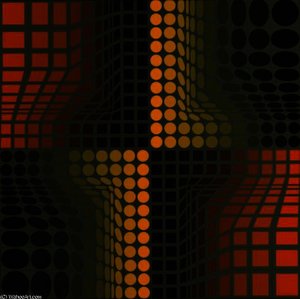
Victor Vasarely's "Rivotril" is not merely a painting; it’s an invitation into the very heart of perception, a testament to the revolutionary impact of Op Art and the burgeoning field of kinetic art. Created by the Hungarian artist, born Károly Vaszary in 1906, this vibrant composition encapsulates his lifelong fascination with geometry and its ability to manipulate our visual experience. The artwork’s genesis lies within the Bauhaus-influenced workshop of Sándor Bortnyik, where Vasarely honed his skills in functional design and geometric abstraction – principles that would become the bedrock of his iconic style. “Rivotril,” painted during a period of intense experimentation with optical illusions, exemplifies this approach perfectly, inviting the viewer to actively participate in constructing the image.
“Rivotril” was created during a pivotal moment in art history – the mid-20th century – when artists began to question traditional representational painting. The rise of Op Art coincided with advancements in psychology, particularly research into visual perception and how the human eye processes information. Vasarely’s work reflects this intellectual climate, engaging directly with these scientific explorations. His art wasn't about depicting a recognizable scene; it was about revealing the underlying mechanisms of seeing itself. The artwork speaks to a broader shift towards abstraction and a greater awareness of the subjective nature of visual experience.
While ostensibly abstract, “Rivotril” evokes a powerful emotional response through its manipulation of form and color. The concentric spheres create a sense of movement, drawing the viewer’s eye across the canvas in a dynamic rhythm. The interplay of colors generates a feeling of energy and excitement, mirroring the artist's intention to stimulate the viewer's senses. Vasarely sought to create art that was not just seen but *felt*, engaging the viewer on a visceral level. The title itself, “Rivotril,” adds an intriguing layer of complexity, referencing a medication known for its calming effects – a subtle juxtaposition within this otherwise stimulating visual experience.

1906 - 1997 , Kroatien

Explore the science of Op Art through the lens of masters like Victor Vasarely. Discover how geometric abstraction uses optical illusions to create movement and delve into the neuroaesthetics of perception with our expert art history guide.


Håll dig uppdaterad med de senaste konstnyheterna, exklusiva erbjudanden och inredningsidéer.
Berätta om ditt projekt så kommer våra konstexperter att ge dig 3 personliga konstförslag.
Vi skapar ett urval av 3 alternativ helt anpassat för dig – gratis!


 Förhandsvisa
 Skicka
 Dela
Dela
 Visa detaljer

 Ladda ner
 Liknande objekt
 Röntgen
 Bildspel

 Visa mer







 Glasalternativet är endast tillgängligt i storlekar under 110 cm.