


x


 Preview
 Beställ målning Köp högupplöst digital bild
 Skicka
 Visa detaljer
 Lägg till i favoriter
 Ladda ner
 Liknande objekt
 Röntgen
 Bildspel
 Acrylic On CanvasWallArt18th-Century Portraiture
 1745
1745 90.0 x 70.0 cm
Giclée- eller canvasprint av museumskvalitet med snabb produktion och flexibla ytbehandlingsalternativ.





























Välj bland våra förinställda storlekar som motsvarar konstverkets ursprungliga proportioner.

Du kan ange egna mått för att passa en specifik ram eller yta. Om det valda måttet inte överensstämmer med originalbildens proportioner kommer vi antingen att beskära konstverket eller utöka bilden med en speglad eller enfärgad kant. En digital mockup skickas för ditt godkännande innan produktionen påbörjas.
Vänligen notera att förhandsvisningen på skärmen inte återspeglar den faktiska beskärningen eller utökningen. Endast mockuppen visar den slutgiltiga kompositionen korrekt.
Även om anpassade storlekar är möjliga, rekommenderar vi att du väljer ett mått från den fördefinierade listan för att bevara de ursprungliga proportionerna.
Leverans över hela världen () på 2 veckor istället för standard 4/5 veckor. (25 juli)


Self portrait
Storlek på reproduktion
William Hogarth’s 1745 self-portrait isn’t merely a likeness; it’s a meticulously crafted window into the mind of one of England’s most astute and satirical observers. Painted during a period of profound social and artistic transformation, this work transcends the conventional portraiture of its time, offering a rare and intimate glimpse into the life and sensibility of the artist himself. The painting immediately draws the eye with Hogarth's direct gaze – a shrewd, almost challenging look that speaks volumes about his intellectual curiosity and unwavering commitment to documenting the realities of London society.

The scene is deceptively simple, yet brimming with carefully orchestrated details. Hogarth, clad in a vibrant red coat – a bold choice that immediately commands attention – sits amidst a clutter of books and artistic paraphernalia: a palette smeared with paint, scattered sketches, and open volumes hinting at his scholarly pursuits. Beside him rests a loyal pug dog, Trump, a constant companion depicted with an air of quiet contemplation, mirroring perhaps the artist’s own thoughtful disposition. This inclusion isn't arbitrary; it speaks to Hogarth’s deep affection for animals and subtly reinforces the theme of domesticity within his broader social commentary.
Hogarth was far more than a painter; he was a visual chronicler of 18th-century London. His earlier works, such as *Marriage A-la-Mode* and *Gin Lane*, exposed the hypocrisy and moral decay lurking beneath the veneer of polite society. This self-portrait, however, offers a different perspective – one of introspection and artistic engagement. It’s a moment captured before the storm of his satirical campaigns, suggesting a quiet contemplation on his role as an artist and observer. The books surrounding him are not simply props; they represent Hogarth's deep engagement with classical literature and philosophy, informing his approach to art and his critical analysis of human behavior.
The inclusion of the palette is particularly significant. It’s a visual declaration of Hogarth’s profession, but also a subtle reminder of the labor involved in creating art – a labor that demanded both skill and relentless observation. The arrangement of objects around him isn't random; it’s carefully constructed to create a sense of domestic comfort and intellectual stimulation, reflecting Hogarth’s own values and priorities.
Painted in the wake of the Neoclassical movement, this self-portrait reflects the influence of classical ideals – particularly in its emphasis on order, clarity, and rational composition. Hogarth's meticulous attention to detail, his use of realistic rendering, and his carefully balanced arrangement of elements are all hallmarks of the Neoclassical style. However, unlike many of his contemporaries who slavishly imitated ancient models, Hogarth infused his work with a distinctly English sensibility, using satire and social commentary to critique contemporary society.
Furthermore, this painting anticipates Hogarth’s later works, particularly *The Rake's Progress* and *The Harlot’s Progress*, which continued his exploration of moral decay and social injustice. It serves as a crucial bridge between his early, more observational work and his later, more overtly satirical output. The self-portrait offers a rare insight into the evolution of Hogarth’s artistic vision – from a keen observer of human nature to a powerful voice of social critique.
Most-Famous-Paintings is proud to offer high-quality, hand-painted reproductions of William Hogarth's Self-Portrait. Each reproduction captures the painting’s rich detail, vibrant colors, and evocative atmosphere with exceptional accuracy. Whether you are a seasoned art collector or simply seeking to add a touch of historical elegance to your home, this reproduction is a stunning addition to any collection. It’s more than just an image; it's a tangible connection to one of England’s most influential artists and a captivating window into the world of 18th-century London.

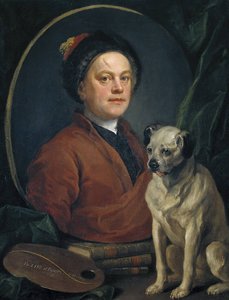
1697 - 1764 , Storbritannien

Upptäck 1700-talets konstnärliga skönhet! Från Boucher till David – utforska 10 ikoniska mästerverk, deras historia och stil. Hitta inspiration & museumkvalitativa reproduktioner på Most-Famous-Paintings.com.
Utforska 25 ikoniska porträtt av Sir Joshua Reynolds – en mästare inom engelsk rokokokon och neoclassicism. Upptäck historierna bakom hans eleganta oljemålningar och finn inspiration till din heminredning med Most-Famous-Paintings.com. Se hela samlingen online!

Utforska porträttkonstens historia med 10 ikoniska verk! Från Mona Lisa till Frida Kahlo – lär känna berättelserna bakom mästerverken och deras unika stil. Köp museumkvalitativa konsttryck på Most-Famous-Paintings.com och förvandla ditt hem med tidlös skönhet. Upptäck hela samlingen online!

Utforska Paul Cézannes 25 mest ikoniska målningar! Fördjupa dig i impressionismens värld, från Mont Sainte-Victoire till stillsben. Hitta inspiration & museumkvalitativa konsttryck på Most-Famous-Paintings.com.
Utforska Rembrandts 25 mest ikoniska målningar! Lär känna historien bakom mästerverken, hans unika teknik och barockens ljusspel. Köp exklusiva konsttryck & tavlor online på Most-Famous-Paintings.com – för en tidlös inredning.


Håll dig uppdaterad med de senaste konstnyheterna, exklusiva erbjudanden och inredningsidéer.
Berätta om ditt projekt så kommer våra konstexperter att ge dig 3 personliga konstförslag.
Vi skapar ett urval av 3 alternativ helt anpassat för dig – gratis!


 Dela
Dela

 Visa mer







 Glasalternativet är endast tillgängligt i storlekar under 110 cm.


