


x

Handmålad olja på duk i din valda storlek och ram, tillverkad efter beställning av våra konstnärer. ( Beställ tryck Köp högupplöst bild)





























Välj bland våra förinställda storlekar som motsvarar konstverkets ursprungliga proportioner.

Du kan ange egna mått för att passa en specifik ram eller yta. Om den valda storleken inte matchar originalbildens proportioner kommer vi antingen att beskära konstverket eller utöka målningen med ytterligare handmålade element. En digital skiss skickas till dig för godkännande innan produktionen påbörjas.
Observera att förhandsvisningen på skärmen inte återspeglar den faktiska beskärningen eller utökningen. Endast skissen visar den slutgiltiga kompositionen korrekt.
Även om anpassade storlekar är möjliga, rekommenderar vi att du väljer en dimension från den fördefinierade listan för att bevara originalproportionerna.
Leverans över hela världen () på 3–4 veckor istället för standard 5 veckor. (15 augusti). Inga kompromisser med kvaliteten.


Two Horses
Storlek på reproduktion
Xu Beihong's "Two Horses," painted in 1948, is more than just a depiction of equine figures; it’s a poignant meditation on balance, energy, and the quiet beauty of the natural world. Born Xu Shoukang in 1895 in Yixing, Jiangsu province, Beihong was a pivotal figure in bridging Eastern tradition with Western innovation, fundamentally reshaping Chinese art in the 20th century. His journey from humble beginnings – his father’s struggles as a struggling artist instilled within him a deep respect for craft and an ambition to elevate Chinese painting—led him through Europe, where he embraced modern techniques, ultimately returning to China to champion a new artistic language.
"Two Horses" exemplifies this synthesis. Painted during a period of relative calm amidst the turmoil of World War II, Beihong sought refuge in the serene landscapes of Santiniketan, India, a place that profoundly influenced his work. The painting captures two horses – one a striking black, the other a pristine white – standing together on a grassy field beneath a weeping willow tree. They are not depicted in dynamic action, but rather in a state of relaxed contemplation; their heads lowered as if drinking from a nearby stream, one lifting its front leg to scratch its flank. This deliberate stillness contrasts sharply with the vibrant energy typically associated with horses in art, creating an unexpected and deeply affecting tableau.
Beihong’s masterful use of *hua tang* (ink wash painting) is central to the artwork's power. The technique relies on layering diluted ink – varying shades of black, grey, and brown – to build up tones and textures with remarkable subtlety. Notice how he employs loose, expressive brushstrokes to capture the texture of the horses’ coats, the swaying branches of the willow, and the undulating grass. The artist's control over the fluidity of the ink creates a sense of movement and atmosphere, suggesting not just the physical presence of the horses but also their inner state—a quietude born of connection and shared experience.
The composition itself is carefully considered. The placement of the horses – one slightly to the left, the other to the right – establishes a visual equilibrium, mirroring the harmony between the two animals. The willow tree, rendered with delicate washes of green and grey, provides a grounding element, anchoring the scene in the natural world. The background is deliberately muted, drawing attention to the central figures and emphasizing their connection to each other.
Beyond its aesthetic qualities, “Two Horses” carries significant symbolic weight. The choice of horses themselves—a traditional symbol of strength, nobility, and loyalty—suggests a deeper message about companionship and mutual respect. The setting in Santiniketan, a center for artistic and intellectual exchange founded by Rabindranath Tagore, further enriches the painting’s meaning. Beihong's time there was marked by a renewed appreciation for nature and a desire to create art that reflected the values of peace and harmony.
Interestingly, this particular scene—two horses beneath a willow tree—echoes ancient Chinese folklore and mythology, referencing the legend of the “Six Steeds of Zhao Mausoleum,” a set of magnificent warhorses immortalized in stone reliefs from the Tang dynasty. Beihong’s painting subtly alludes to this historical precedent while simultaneously forging its own unique interpretation. The inscription accompanying the work—a poem reflecting on the beauty of flowing water and the serenity of the Ganges River—underscores the artist's connection to his cultural heritage.
"Two Horses" is a testament to Xu Beihong’s artistic vision – a harmonious blend of Eastern tradition and Western innovation. It invites viewers to contemplate not only the beauty of the natural world but also the profound connections that bind us together. Its quiet elegance, masterful technique, and evocative symbolism make it a truly enduring work of art, capable of resonating with audiences across generations. Reproductions capture this essence beautifully, offering a window into a moment of tranquility and artistic brilliance.

1895 - 1953 , Kina
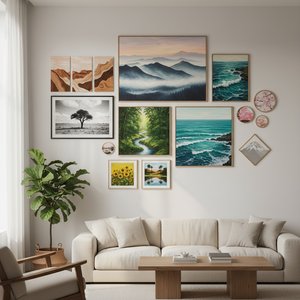
Upptäck de 10 mest ikoniska landskapskonstverken! Från Monet till Van Gogh – utforska naturens skönhet, konsthistorien och tekniken bakom mästerverken. Hitta din perfekta tavla för heminredningen på Most-Famous-Paintings.com.
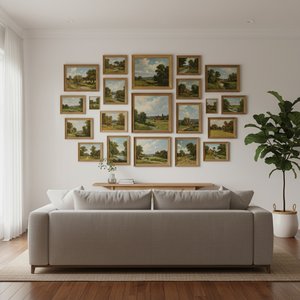
Utforska John Constables 25 mest ikoniska målningar – romantikens mästare av det engelska landskapet. Upptäck historien, tekniken & skönheten i verk som 'Hay Wain'. Köp exklusiva konsttryck på Most-Famous-Paintings.com.

Explore the rich history of trees in painting! Discover symbolism, Romantic masterpieces by Caspar David Friedrich & beyond. A curated journey for art enthusiasts.

Utforska de 10 mest ikoniska mästerverken inom romantisk landskapsmålning! Lär känna Caspar David Friedrich, Turner & andra. Hitta inspiration och köp museumkvalitativa konsttryck på Most-Famous-Paintings.com.

Explore the rich history of trees in painting! Discover symbolism, Romantic masterpieces by Caspar David Friedrich & beyond. A curated journey for art enthusiasts.


Håll dig uppdaterad med de senaste konstnyheterna, exklusiva erbjudanden och inredningsidéer.
Berätta om ditt projekt så kommer våra konstexperter att ge dig 3 personliga konstförslag.
Vi skapar ett urval av 3 alternativ helt anpassat för dig – gratis!


 Förhandsvisa
 Skicka
 Dela
Dela
 Visa detaljer

 Ladda ner
 Liknande objekt
 Röntgen
 Bildspel

 Visa mer







 Glasalternativet är endast tillgängligt i storlekar under 110 cm.


